
Best Funny School Series for Early Readers – Ranked
ⓘ When you purchase through links on our site, we may earn an affiliate commission.
Getting early readers hooked on chapter books often comes down to finding stories that mirror their own daily lives while delivering genuine laughs. School-based series work especially well during the K-3 years because they transform the setting where kids spend most of their time into a place of adventure and comedy. When a reluctant reader picks up a book about classroom chaos or playground schemes, they’re seeing their own experiences reflected back with humor. This list focuses on series that have proven themselves as gateways to reading fluency—each centered on school life and each delivering laugh-out-loud moments that keep kids turning pages.

The series here—Junie B. Jones, Horrible Harry, Ivy and Bean, and the Wayside School books—share a few things that make them work for emerging chapter book readers. They feature authentic kid voices that don’t condescend. Junie B.’s grammatically creative narration, for instance, captures exactly how many kindergarteners actually think and speak. They recognize that school provides endless comedy: the social dynamics of choosing partners, cafeteria mysteries, the peculiar rules that govern classroom behavior. And they’re structured as true series where characters develop across multiple books, so once a child connects with Harry or Ivy or Junie B., there’s built-in motivation to keep reading.
The distinction between general funny books for kids and humor grounded in school matters for early readers because familiarity breeds confidence. A child who struggles with decoding can lean on their knowledge of how school works to help comprehend the story. They already understand recess, what it means when the teacher gives “the look,” or why a spelling test causes anxiety. This background knowledge reduces cognitive load, letting young readers focus more energy on actually reading. School-based humor also tends to be episodic—problems that resolve within a single book or chapter—which gives developing readers frequent completion moments that build confidence.
The books span a range of reading levels within the early chapter book category. Ivy and Bean features simpler sentence structures and more illustrations, making it accessible to late kindergarteners and first graders just graduating from easy readers. Horrible Harry assumes more reading stamina and vocabulary, positioning it better for second and third graders. The Wayside School books introduce more absurdist humor that some children grasp immediately while others grow into. This range means you can use this list throughout early elementary years. For more guidance, our books for K and Grade 1 kids and must-read books for 2nd graders lists provide additional context.
One practical note: these series were published over several decades. The first Junie B. Jones appeared in 1992, the first Horrible Harry in 1988, and the Wayside School books in the 1970s. Some elements may feel dated while the core humor remains timeless. What persists is the fundamental truth of school social dynamics—the weird kid who collects things, the troublemaker with a good heart, the fierce friendships that form and reform. Children today still laugh at situations their parents found funny decades ago.
The ranking that follows weighs each book’s effectiveness as an entry point to its series, its appeal across the K-3 age range, the strength of its humor, and its track record in getting reluctant readers engaged. Some choices represent the most popular titles in their series, while others showcase particularly relatable school situations. The goal is to help you navigate these series efficiently, starting with the titles most likely to hook your particular reader.
📚 More Reading Lists from Kiddometer
Does your child read these books?
Kids who take reading comprehension quizzes retain significantly more of what they read. Kiddometer turns every book into a mini-challenge — free to try.
Start a free quiz →
1
Horrible Harry and the Scarlet Scissors by Suzy Kline
Horrible Harry and the Scarlet Scissors by Suzy Kline
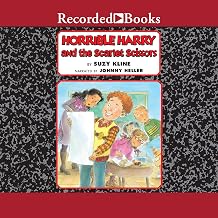
This Horrible Harry book centers on scarlet scissors, which become important in some way to Harry or his classmates. The series often involves classroom supplies, projects, or small objects that take on significance in the social world of second grade. Harry's curiosity and willingness to push boundaries usually drive the plot, while his friend Doug provides narration that's both sympathetic and occasionally exasperated. Suzy Kline writes realistic classroom interactions and captures the way small incidents can feel enormous when you're seven or eight years old. The Horrible Harry books maintain a consistent level of mild mischief without crossing into truly problematic territory, making them acceptable to most parents while still feeling slightly transgressive to young readers. The series works well for readers in the 6-9 age range who are comfortable with chapter books and enjoy school-based stories. The vocabulary is accessible, the chapters are short enough to prevent fatigue, and the illustrations provide regular visual breaks. A solid choice for readers who want realistic fiction with humor and a bit of edge.
2
Junie B. Jones Has a Monster Under Her Bed by Barbara Park
Junie B. Jones Has a Monster Under Her Bed by Barbara Park
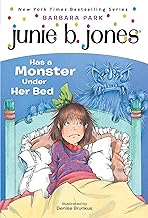
In this Junie B. Jones book, Junie B. becomes convinced there's a monster living under her bed. Barbara Park handles this common childhood fear with humor, filtering everything through Junie B.'s distinctive and often illogical perspective. The story explores how fears can grow when you're young and how imagination can make ordinary things seem threatening. Junie B.'s solutions to problems are rarely what adults would recommend, which is part of the series' appeal for young readers who recognize the gap between kid logic and grown-up expectations. The books are written in Junie B.'s voice, complete with invented words and grammatical creativity that some parents appreciate for its authenticity and others find concerning as a model. For readers in the 5-8 range, particularly those transitioning to chapter books, the format is welcoming: large print, short chapters, and frequent illustrations. The stories move quickly and focus on situations most young kids have experienced or can easily imagine. This particular book might resonate with children navigating their own bedtime fears.
3
Magic Crystal? by Louis Sachar
Magic Crystal? by Louis Sachar
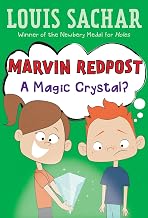
Another entry in Louis Sachar's Marvin Redpost series, this book appears to involve a magic crystal of some kind. The question mark in the title suggests the magical element might be ambiguous or up for debate, which fits with Sachar's tendency to write realistic fiction that occasionally flirts with the fantastical. Marvin typically faces situations that feel significant to him even if they seem small to adults, and Sachar treats his protagonist's concerns with respect. The series works well for readers in the 6-9 age range who want something more substantial than early readers but aren't quite ready for complex middle-grade novels. Sachar's prose is clean and accessible, his chapters are short, and his plots move at a comfortable pace. The books often explore Marvin's inner life and his attempts to make sense of the world around him. They're good choices for thoughtful readers who enjoy characters who worry and wonder about things, and who appreciate stories that resolve without relying on obvious lessons.
4
Horrible Harry Bugs the Three Bears by Suzy Kline
Horrible Harry Bugs the Three Bears by Suzy Kline
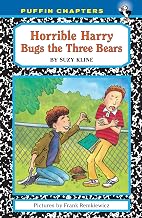
This Horrible Harry story involves a connection to the fairy tale "Goldilocks and the Three Bears," though how exactly Harry "bugs" the three bears will depend on the specific plot. The series often incorporates classroom activities like plays or projects, which could provide the fairy tale connection here. Harry's interest in bugs and creepy-crawlies is a recurring element throughout the series, so the title might be working on multiple levels. Suzy Kline keeps the stories grounded in recognizable second-grade experiences while giving Harry room to be the kind of kid who pushes boundaries just enough to be interesting. The books are narrated by Harry's classmate Doug, who serves as both friend and occasional voice of reason. For readers in the 6-9 age range, these books offer an accessible entry point to chapter books with familiar school settings and age-appropriate humor. The vocabulary is straightforward, the conflicts are resolved within a single book, and the illustrations help break up the text for readers still building confidence.
5
Horrible Harry and the Triple Revenge by Suzy Kline
Horrible Harry and the Triple Revenge by Suzy Kline
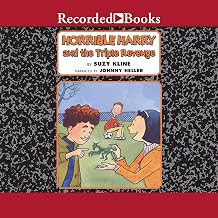
This Horrible Harry book focuses on revenge schemes and the complications that arise when kids try to get even with each other. Harry's plans tend to backfire in ways that create humor rather than genuine harm, which keeps the tone light. The "triple" in the title suggests an escalating series of revenge attempts, which gives the plot built-in momentum. Suzy Kline writes classroom dynamics well, capturing the way second-graders navigate friendships, rivalries, and the occasional hurt feelings. The Horrible Harry series maintains a consistent tone across books: mildly mischievous, never mean-spirited, and resolved by the end of each story. Doug's narration provides a steady perspective on Harry's more chaotic impulses. These books work for readers in the 6-9 range who want something entertaining without high stakes or complex emotional arcs. The chapters are manageable for building reading stamina, and the classroom setting is immediately familiar to most readers. A reliable choice for kids who enjoy school stories with a bit of edge.
6
Junie B. Jones #19: Boss of Lunch by Barbara Park
Junie B. Jones #19: Boss of Lunch by Barbara Park
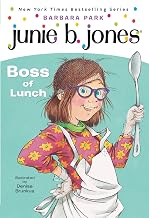
By the nineteenth book in the Junie B. Jones series, Junie B. has moved up to first grade and her concerns have evolved slightly, though her distinctive voice remains the same. In this story, she's navigating lunchroom politics and power dynamics, which is familiar territory for any kid who's experienced the social pecking order of the cafeteria. Barbara Park understands how enormous these small-scale conflicts feel to young children. The humor comes from Junie B.'s interpretations of events and her creative problem-solving, which doesn't always align with adult expectations. The series maintains a consistent format throughout: short chapters, frequent illustrations, and Junie B.'s stream-of-consciousness narration. For readers who have enjoyed earlier books in the series, this one delivers more of what they're looking for. For newcomers, the series is generally accessible at any point, though starting with earlier books provides more context for Junie B.'s family and classmates. Best suited for readers 5-8 who enjoy character-driven humor.
7
Junie B. Jones and a Little Monkey Business by Barbara Park
Junie B. Jones and a Little Monkey Business by Barbara Park
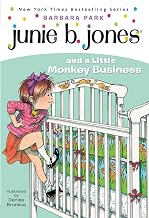
In this Junie B. Jones installment, Junie B. is dealing with the arrival of a new baby in her family. Barbara Park captures the mixed feelings many kids experience when they're no longer the only child, and Junie B.'s reactions are both funny and recognizable. Junie B. speaks in a distinctive voice full of malapropisms and kindergarten logic, which some adults find grating but many young readers find hilarious. The books work best for readers in the 5-8 age range who are transitioning to chapter books and enjoy a chatty, conversational narrative style. The stories are told entirely from Junie B.'s perspective, which means readers see her justifications for behavior that adults might find troublesome. This can be a point of discussion between kids and parents. The chapters are short, the print is large, and there are occasional black-and-white illustrations. These books have strong appeal for reluctant readers who want something funny and fast-paced, though they're not for everyone.
8
Super Fast, Out of Control! by Louis Sachar
Super Fast, Out of Control! by Louis Sachar
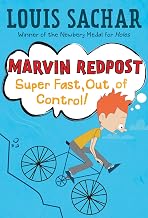
Part of the Marvin Redpost series by Louis Sachar, this book follows Marvin as he deals with everyday third-grade concerns. Sachar writes with a clean, straightforward style that makes his books easy to follow for readers in the 6-9 age range who are building confidence with chapter books. The Marvin Redpost series focuses on realistic childhood worries and misunderstandings, often with a humorous angle. Marvin is a relatable character who makes mistakes, worries about what other kids think, and navigates the social landscape of elementary school. The plots tend to resolve in ways that feel earned rather than overly tidy. These books sit comfortably between early readers and middle-grade novels, offering short chapters and age-appropriate situations without talking down to young readers. The humor comes from Marvin's perspective and the small misunderstandings that feel enormous when you're eight years old. A good choice for readers who want realistic fiction without heavy emotional themes.
9
Horrible Harry and the June Box by Suzy Kline
Horrible Harry and the June Box by Suzy Kline
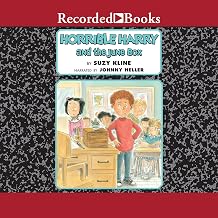
This Horrible Harry installment centers on Harry's mysterious June Box and the curiosity it stirs up in his second-grade classroom. Harry is the kind of kid who loves bugs, science, and anything slightly gross or surprising, which makes him both entertaining and occasionally exasperating to his classmates. The June Box becomes a source of speculation as the school year winds down, giving the story a natural arc tied to the end of the school year. Suzy Kline's series works well for readers in the 6-9 range who enjoy classroom-based humor and relatively straightforward plots. The chapters are short, the vocabulary is accessible, and Harry's antics are just mischievous enough to be funny without crossing into truly problematic behavior. The books are narrated by Harry's friend Doug, which gives readers a slight distance from Harry's schemes while still keeping them entertaining. This is solid comfort reading for early chapter book fans.
10
Ivy and Bean 1 by Annie Barrows
Ivy and Bean 1 by Annie Barrows
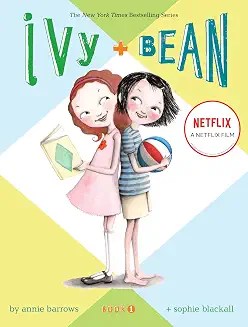
The first book in the Ivy and Bean series introduces two second-grade girls who start out convinced they can't be friends. Ivy is quiet and loves to read, while Bean is loud and impulsive. When Bean needs a place to hide from her sister, Ivy's backyard seems like the perfect spot, and an unlikely friendship begins. The story moves quickly and the short chapters make it accessible for early chapter book readers who are ready to move beyond heavily illustrated books. The friendship feels genuine because both girls maintain their distinct personalities rather than becoming identical best friends. This works well for readers in the 6-8 age range who are building reading stamina and enjoy realistic school and neighborhood stories. The humor is grounded in the girls' different approaches to problem-solving, and the black-and-white illustrations by Sophie Blackall appear frequently enough to support newer independent readers without overwhelming the text.