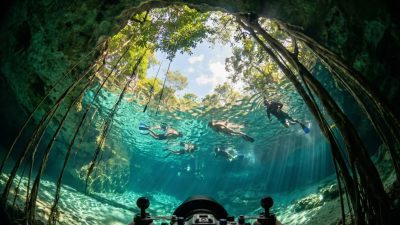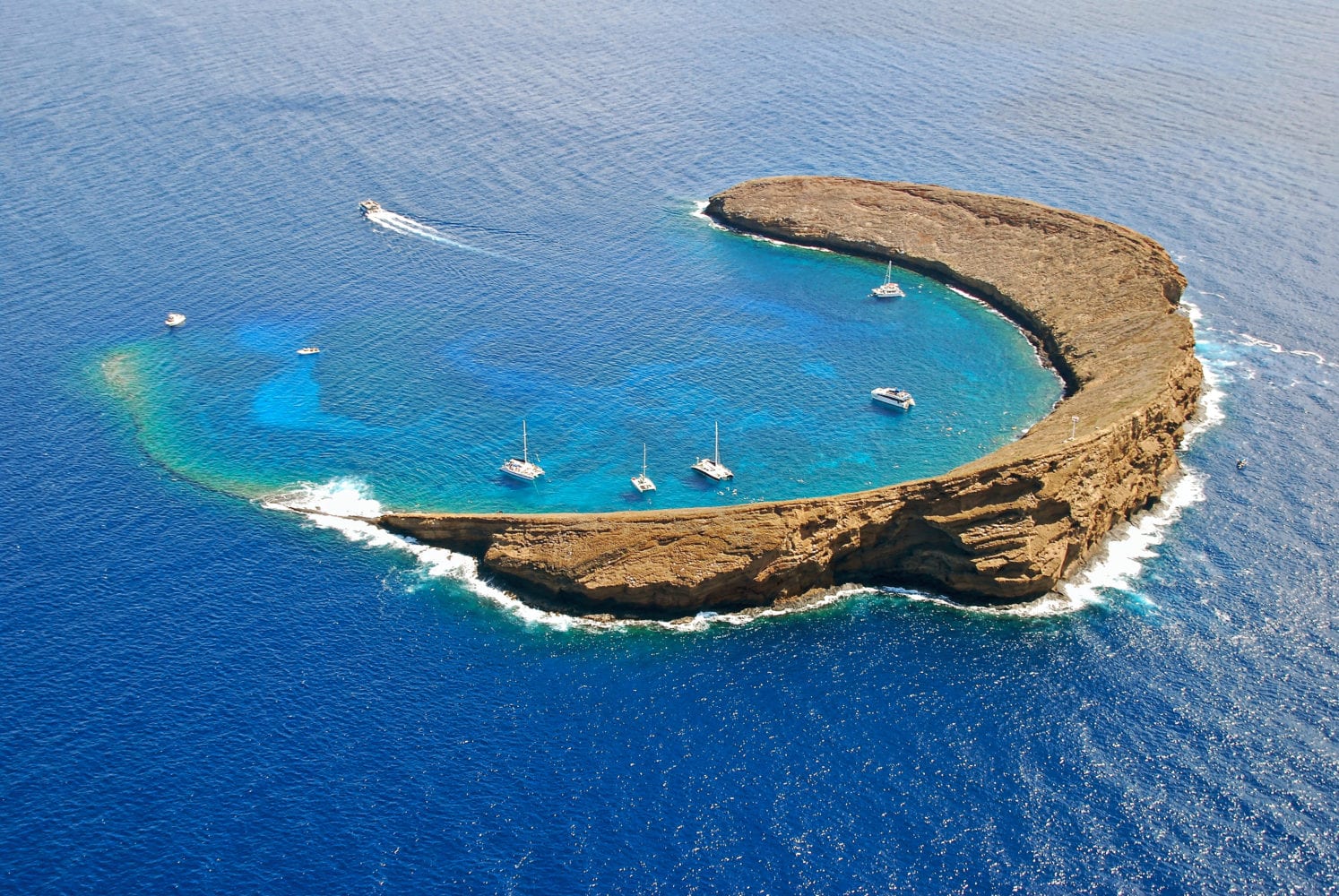
Molokini Crater is a crescent-shaped, partially submerged volcanic caldera located about 3–8 miles off Maui’s coast. Its unique shape forms a naturally sheltered inner bowl with consistently calm water and reported visibility ranging from 100 to 150 feet on clear days. The inner crater area is relatively shallow, typically 15–40 feet deep along the rim where boats position for snorkeling. This protected environment, coupled with excellent clarity, makes it a favored spot for boat operators catering to families with children, as currents are generally mild inside the caldera. The main reason Molokini stands out is this natural protection from open ocean conditions, offering a more predictable and often calmer experience than many shore-based Maui snorkeling spots. The one honest downside families need to know before committing is that Molokini is a highly popular destination, meaning boats converge on the crater, and it can feel crowded, particularly during late morning departures or peak holiday periods.
Filter out the noise and find what works for your family.
Every resort we review gets one of four Family Fit ratings. The rating is based on kids programming, amenities, vibe, and who the resort actually markets to - not just whether they allow children.
Discover My Ideal Resort →Key Highlights
- Calm, shallow water in inner crater—suitable for younger kids.
- Visibility typically 100-150 feet.
- Protected inner bowl with mild currents.
- Ease of Access: Boat trip required (Moderate effort for families).
- Best For: Families with kids aged 5+ who are comfortable entering water from a boat.
- Marine Life: Widespread reef fish (e.g., parrotfish, triggerfish), various hard corals.
- Water Conditions: Calm mornings, low surge in crater, visibility 100-150 ft.
II. Getting to the Departure Point and Parking
Accessing Molokini Crater is exclusively by boat from Maui. Most day trips depart from Ma’alaea Harbor in South Maui, or from Kihei/Wailea areas. Some West Maui operators also offer trips, typically from Lahaina Harbor. Parking is available at the specific marina facilities used by your tour company. For instance, Ma’alaea Harbor provides designated paid parking lots; these can begin to fill up as early as 7:30-8:00 AM for popular morning departures. Always confirm exact parking arrangements, including cost and expected fill times, directly with your chosen operator when booking. Some larger companies may offer shuttle services from nearby resorts. Once parked at the marina, the walk to the boat slip is typically a flat, paved path, usually less than 100 yards. This is an easy walk, even when carrying bags and snorkel gear. While focusing on snorkeling, families can also consider combining this trip with Maui whale watching tours during whale season, as many boats offer both.
Stroller Status: All-Terrain Friendly (for marina paths, but not on the boat itself)
Nearby Hotels and Resorts
- Grand Wailea, A Waldorf Astoria Resort — Best for families.
Booking.com | Expedia | Hotels.com - Fairmont Kea Lani, Maui — Luxury choice near the beach.
Booking.com | Expedia | Hotels.com - Wailea Beach Resort – Marriott, Maui — Great value with a pool.
Booking.com | Expedia | Hotels.com
III. Getting Kids in the Water Safely
You will enter the water directly from your tour boat, typically using a ladder or a small platform, into the inner Molokini Crater. There is no sandy beach entry; children will need to be comfortable with direct entry into deeper water (15-40 feet deep) from the boat. Tour operators generally position their vessels along the crater’s rim, where water is shallower for snorkeling. Before entry, operators provide a safety briefing covering current conditions and how to use the equipment. Morning departures typically offer the calmest water conditions with minimal currents inside the crater. Visibility frequently ranges from 100 to 150 feet. Afternoon conditions may see increased wind and surface chop, potentially reducing visibility and making swimming more challenging for younger or less experienced children. Trips may be cancelled or redirected to alternative family-friendly beaches in Maui if sea conditions outside the crater are deemed unsafe by the boat captain.
One safety note: The inner crater experiences heavy boat traffic throughout the day. Ensure your children remain close to your group or the boat, and confirm the boat crew is aware of all swimmers, especially during re-boarding procedures.
IV. Where the Fish Live
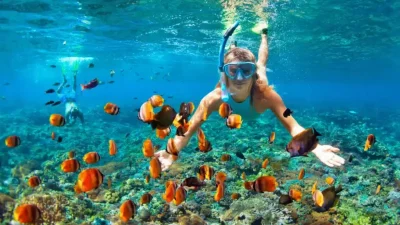
Once you’ve entered the water from your tour boat, the best viewing areas are typically along the inner rim of the crescent-shaped caldera. Your boat guide will usually instruct you to stay within a specific zone, generally within 20-30 yards of the vessel. The depth in these prime snorkeling areas averages between 15 and 40 feet. The reef structure here consists primarily of hard corals, providing habitat for numerous reef fish. Expect to encounter common species such as the Moorish Idol, various parrotfish (e.g., Spectacled Parrotfish), triggerfish (e.g., Picasso Triggerfish), surgeonfish (e.g., Achilles Tang), butterflyfish (e.g., Raccoon Butterflyfish), and damselfish (e.g., Hawaiian Dascyllus). While Molokini is celebrated for its water clarity and coral formations, it is not primarily known for frequent sea turtle sightings; other Maui coastal sites often offer higher chances for spotting turtles.
In-water parent tip: Equip all family members, especially children, with brightly colored swim vests or rash guards. This significantly increases their visibility to you and the boat crew, which is important given the number of snorkelers often in the water simultaneously.
V. On-Board Facilities and Shade
Molokini Crater itself has no land-based facilities. All amenities are provided on the tour boats. Most reputable operators include marine restrooms (heads) onboard. Freshwater rinse showers are also typically available on the vessel for after your snorkeling session. Tour boats usually feature shaded seating areas on deck where families can relax before and after entering the water. While snorkeling in the crater, there is no natural shade, so comprehensive sun protection is essential for everyone in your family.
Pro Tip: To experience Molokini with fewer crowds, book the earliest available morning departure, often between 6:30 AM and 7:00 AM. These early trips generally encounter the calmest seas and fewer boats initially. If conditions at Molokini are too rough, some operators will reroute to an alternative snorkeling location along the Maui coast.
For more family activity ideas, consult our guide to things to do in Maui with kids.
VI. Essential Gear for Molokini
- Ensure you pack reef-safe sunscreen for kids’ travel to protect skin from sun exposure and prevent harm to the delicate coral ecosystem.
- Consider bringing your own properly fitted kids’ snorkel gear (mask, snorkel, fins): While most boats offer rentals, personal gear ensures comfort and a correct fit, reducing frustration for children.
- For added security and ease, especially in deeper water, a kids’ inflatable snorkel vest or personal flotation device is highly recommended.
- Rash guards for all family members: Offers UPF 50+ sun protection, minimizing the need for constant sunscreen reapplication while in the water.
- Underwater camera with a float strap: Captures marine life without the risk of losing your device in the crater’s depths.
Ready to Plan Your Maui Trip?
Get a personalized family itinerary built around your kids’ ages, interests, and travel style — free.