
Best Books for First Graders Top Picks for Ages 6-7
ⓘ When you purchase through links on our site, we may earn an affiliate commission.
First graders (ages 6-7) are at a pivotal stage in their reading journey, transitioning from emergent readers who are decoding words to more confident individuals beginning to read independently. This period is marked by significant growth in phonics awareness, sight word vocabulary, and comprehension skills. Selecting appropriate books for this age group is crucial for fostering a lifelong love of reading and solidifying foundational literacy abilities. The curated list of books for 1st graders provides a diverse selection designed to support these developmental milestones. These recommendations are chosen based on several key criteria: their ability to engage young readers, their literary merit, and their suitability for the cognitive and emotional development typical of a 6-7 year old.
The books on this list include titles that offer simple narratives with clear plot structures, enabling children to follow stories independently and build confidence. Many selections feature relatable characters and situations, which resonate with the experiences of first graders, making reading a more personal and enjoyable activity. The language used in these books often incorporates repetition and predictable patterns, which are instrumental in developing fluency and reinforcing new vocabulary. This approach allows children to recognize familiar words and infer the meaning of new ones, thereby expanding their active reading repertoire without overwhelming them. Parents seeking further guidance for their child’s reading development may find our collection of expert-recommended books for beginner readers particularly helpful as their children navigate this crucial stage.
Beyond developing fundamental reading mechanics, the chosen books also aim to cultivate essential comprehension strategies. They include stories that encourage critical thinking, problem-solving, and emotional intelligence. For example, some titles present scenarios where characters face challenges and must find solutions, prompting readers to consider different perspectives and outcomes. Other books explore themes of friendship, family, courage, and perseverance, which are vital for a child’s social and emotional growth. These narratives provide opportunities for parents and educators to discuss deeper meanings and values, enriching the reading experience beyond mere word recognition. Families looking for highly regarded options can explore our award-winning 1st and 2nd grade books to ensure a quality selection.
The collection encompasses a range of genres to cater to varying interests. Early chapter books are featured to provide a stepping stone for children ready for longer narratives, helping them build stamina and follow more complex storylines over multiple sittings. These books typically have larger fonts, generous spacing, and illustrations to aid comprehension, making the transition from picture books smoother. For a more structured approach to early reading, a compilation of Geisel Award books offers titles specifically recognized for their ability to help children learn to read. Additionally, the list includes high-quality picture books that, while seemingly simple, offer sophisticated themes, rich vocabulary, and intricate illustrations that captivate older readers and encourage inferential thinking. Non-fiction selections are also present, designed to introduce young learners to various subjects like science, history, and nature, sparking curiosity and expanding their knowledge base in an accessible format. These informational texts often utilize engaging visuals and simplified explanations to present complex ideas, making learning an interactive adventure. Parents interested in books for younger or slightly older children might also refer to lists such as books every 6-year-old should read or recommended books for Kindergarten and First Grade, which offer a broader perspective on age-appropriate reading. The ultimate goal of this comprehensive list is to empower first graders with the skills and enthusiasm needed to become lifelong readers, equipping them with the tools to explore new worlds and ideas through the power of books.
Useful resources:
- Classic Chapter Books Kids Ages 5-7
- Award Winning 1st-2nd Grade Books Ages 5-7
- Best Books for 6 Year Olds Ages 5-7
- Expert Books Beginner Readers 5-7
- How to Choose Elementary School Books
- Wonderful Book Recommendations for 7 Year Olds
- Every 6 Year Old Should Read These Books
- Geisel Award Books Beginner Readers
- Best Books Kindergarten First Grade 5-7
- ALA page
Does your child read these books?
Kids who take reading comprehension quizzes retain significantly more of what they read. Kiddometer turns every book into a mini-challenge — free to try.
Start a free quiz →
1
Little Bear (An I Can Read Book)
Little Bear (An I Can Read Book) by Else Holmelund Minarik

Little Bear, an enduring classic in the I Can Read Book series, invites young readers into the tender and imaginative world of a curious bear cub. Authored by Else Holmelund Minarik and featuring iconic illustrations by Maurice Sendak, this beloved book comprises four charming stories designed for emergent readers. Each narrative captures Little Bear's innocent perspective on everyday adventures, from wishing for a winter suit to celebrating his birthday on the moon, and patiently waiting for a special visitor. The simple, repetitive language and engaging plotlines are carefully crafted to support children as they develop independent reading skills, building confidence with every turn of the page. Themes of family warmth, friendship, and the power of imagination are woven throughout, providing both entertainment and comfort. This timeless book remains a cornerstone for early literacy, offering delightful tales that resonate with the wonder and curiosity of childhood.
2
The Snowy Day
The Snowy Day by Ezra Jack Keats

"The Snowy Day," written and illustrated by Ezra Jack Keats, is a beloved children's picture book that won the Caldecott Medal in 1963. The story follows Peter, a young boy, as he awakens to discover that a thick layer of snow has fallen overnight. Throughout the day, Peter ventures outside to experience the fresh snow, engaging in various activities such as making footprints, creating snow angels, and attempting to save a snowball in his pocket. The narrative gently portrays the simple joys and sensory details of a child's interaction with winter, from the satisfying crunch of snow underfoot to the quiet beauty of a snow-covered landscape. Keats' distinctive collage artwork, characterized by vibrant colors and bold lines against the pristine white snow, perfectly complements the innocent wonder of Peter's adventure. This influential book is celebrated for its pioneering representation of an African American child as its protagonist, offering a universal tale of exploration and discovery that continues to resonate with young readers.
3
Ira Sleeps Over
Ira Sleeps Over by Bernard Waber

Ira Sleeps Over by Bernard Waber is a beloved children's classic that explores the universal anxieties and excitement surrounding a child's first sleepover. Ira is invited to sleep over at his friend Reggie's house, a milestone event filled with anticipation. However, a significant dilemma arises: should Ira bring his beloved teddy bear, Tah Tah? His sister advises against it, fearing Reggie might mock him, while his parents offer comforting words. As Ira navigates this internal conflict, readers witness his charming vulnerability and the importance of self-acceptance. The narrative beautifully captures the mix of bravery and hesitation often experienced by young children facing new social situations. Waber’s simple yet profound storytelling, accompanied by his distinctive illustrations, effectively conveys Ira's emotional journey from apprehension to joy, ultimately teaching a gentle lesson about being true to oneself. This book is an excellent resource for parents and educators to discuss feelings about growing up, friendship, and overcoming minor fears with young readers.
4
Danny and the Dinosaur
Danny and the Dinosaur by Syd Hoff

Danny, a curious young boy, embarks on an extraordinary adventure when he visits a museum and encounters a real, talking dinosaur. Much to Danny's delight, the friendly dinosaur expresses a wish to play, leading them on a day-long escapade through the town. Together, they experience a variety of activities, from playing hide-and-seek and swinging on a playground to enjoying a picnic and even visiting a zoo, where the dinosaur's large presence creates amusing situations. Despite its impressive size, the dinosaur demonstrates a remarkably gentle and cooperative nature, often surprising onlookers with its politeness. This charming narrative, penned by Syd Hoff, beautifully illustrates themes of unusual friendship, acceptance, and the power of imagination. The story culminates in a touching farewell as the dinosaur returns to the museum, leaving Danny with unforgettable memories of their shared day. This beloved classic is ideal for young readers, offering a straightforward and heartwarming tale of a boy and his unique prehistoric companion.
5
Magic Tree House Boxed Set, Books 1-4: Dinosaurs Before Dark, The Knight at Dawn, Mummies in the Morning, and Pirates Past Noon

The Magic Tree House Boxed Set, Books 1-4, introduces readers to the adventures of Jack and Annie, a brother and sister duo who discover a magical tree house capable of transporting them through time and space. In *Dinosaurs Before Dark*, their first journey takes them back to the prehistoric age where they encounter various dinosaurs. *The Knight at Dawn* transports them to a medieval castle, presenting challenges involving knights and dragons. Next, *Mummies in the Morning* finds them in ancient Egypt, deciphering hieroglyphs and navigating pyramids. Finally, *Pirates Past Noon* sends them to the Caribbean for an encounter with a pirate crew and a search for buried treasure. This collection offers an engaging entry point into historical fantasy, blending education with exciting narratives suitable for young readers beginning their independent reading journey. Each book presents a new historical setting and a mystery for Jack and Annie to solve.
6
Nate the Great
“Nate the Great” by Marjorie Weinman Sharmat introduces young readers to the titular character, Nate, a budding detective with a particular fondness for pancakes. In this delightful first installment of the acclaimed series, Nate embarks on his initial case: locating a missing painting belonging to his friend, Annie. The artwork, a vibrant depiction of Annie’s dog, Fang, has mysteriously vanished. Nate, with his keen observational skills and logical mind, sets out to investigate, carefully examining his surroundings and interviewing potential witnesses. As he methodically gathers clues, he navigates the quirks of his neighborhood and its inhabitants, piecing together the puzzle with precision. Sharmat’s straightforward prose and engaging narrative style make this an ideal read for children developing their reading fluency. The book not only delivers a satisfying mystery but also subtly teaches the value of critical thinking, persistence, and the importance of friendship. It establishes Nate as a memorable character, laying the groundwork for many more intriguing cases to come in this enduring children's mystery series.
Nate the Great by Marjorie Weinman Sharmat

7
Elephant and Piggie Complete Collection: A perfect gift set for early readers (An Elephant and Piggie Book)

Elephant & Piggie: The Complete Collection offers a comprehensive treasury of 25 beloved stories featuring the endearing duo, Gerald the Elephant and Piggie the Pig, crafted by acclaimed author Mo Willems. This boxed set compiles every title from the highly popular series, providing hours of engaging content for young readers. Gerald, cautious and prone to worrying, often serves as a humorous counterpoint to Piggie's boundless enthusiasm and optimistic outlook. Their contrasting personalities create a dynamic friendship that resonates with children. Each book within the collection is characterized by its minimalist text, speech bubble format, and expressive cartoon illustrations, which work together to facilitate reading comprehension and build vocabulary. The series is celebrated for its ability to tackle relatable themes such as friendship, sharing, disappointment, and joyful discovery in an accessible and entertaining manner. Designed specifically to encourage independent reading, this complete collection is a valuable resource for developing literacy skills while simultaneously delighting children with its witty narratives and charming characters. The sturdy packaging ensures the books remain protected for years of enjoyment.
8
Corduroy

Corduroy, a classic children's picture book by Don Freeman, tells the heartwarming story of a teddy bear living in a department store. One afternoon, a young girl named Lisa is captivated by Corduroy, but her mother points out that the bear is missing a button on his green overalls. Overhearing their conversation, Corduroy decides to find his lost button so he can be perfect for Lisa. After the store closes, he embarks on a quiet nighttime adventure, exploring the various departments in search of a replacement. His journey leads to a series of discoveries and a minor mishap with a lamp. The next morning, Lisa returns with money from her piggy bank, purchases Corduroy, and brings him to her home. There, she carefully sews a new button onto his overalls, providing him with a loving home and the companionship he desired. The book gently explores themes of friendship, perseverance, and the importance of finding a place to belong.
9
Frog and Toad Are Friends
Frog and Toad Are Friends by Arnold Lobel

Frog and Toad Are Friends, written and illustrated by Arnold Lobel, is a cherished classic in children's literature, first published in 1970. This delightful book presents five endearing short stories that explore the day-to-day adventures and deep bond between two best friends, Frog and Toad. The narratives depict the pair engaging in common activities, from patiently awaiting spring and writing letters to sharing warm tea and navigating minor dilemmas. Lobel's distinctive artwork complements the clear, accessible prose, making this an ideal selection for emergent readers. The stories subtly convey themes of friendship, empathy, and acceptance through relatable scenarios. Each chapter offers a gentle glimpse into their lives, celebrating the simple joys and challenges of companionship and mutual understanding. As a foundational title in the I Can Read! series, it continues to captivate young audiences and remains a timeless testament to the power of enduring friendship, making it a valuable addition to any early reader's library.
10
Press Here: Board Book Edition
Press Here: Board Book Edition by Hervé Tullet

"Press Here" by Hervé Tullet presents a unique and captivating interactive experience tailored for young readers, now available in a durable board book format. This innovative book encourages children to actively participate in the narrative by following simple, explicit instructions on each page. Readers are prompted to perform actions like pressing colorful dots, shaking the book, tilting it in different directions, or blowing on a page. Each physical interaction yields a delightful and surprising visual transformation on the subsequent spread, establishing a playful and immediate sense of cause and effect. The book's distinctive minimalist artwork, predominantly featuring vibrant dots, prioritizes imagination and direct engagement over intricate storylines. It serves as an excellent tool for developing fine motor skills and introducing fundamental concepts of sequencing and prediction in an accessible and entertaining manner. "Press Here" transforms traditional reading into a dynamic game, fostering curiosity, creativity, and an early love for books through hands-on discovery, making it ideal for toddlers and preschoolers. Its robust construction ensures longevity for frequent handling.
11
How to Clean a Hippopotamus: A Look at Unusual Animal Partnerships
How to Clean a Hippopotamus: A Look at Unusual Animal Partnerships by Robin Page

How to Clean a Hippopotamus: A Look at Unusual Animal Partnerships delves into the intriguing world of interspecies relationships. This book presents a collection of surprising and mutually beneficial collaborations found in the natural kingdom, moving beyond common perceptions to reveal the intricate ways animals coexist. Readers will encounter diverse examples of symbiosis, exploring how creatures provide each other with essentials such as food, protection from predators, improved hygiene, or even transportation across environments. Each partnership is examined to illustrate its ecological significance and the adaptive strategies involved. The book illuminates the complex web of life, demonstrating how these unique alliances contribute to the survival and flourishing of various species, offering a fresh perspective on biodiversity and the interconnectedness of ecosystems. Written in an accessible style, it serves as an informative resource for anyone interested in the remarkable cooperative behaviors found in the animal world.
12
Bats at the Beach
Bats at the Beach by Brian Lies

Bats at the Beach invites readers to join a group of bats as they embark on an imaginative nighttime excursion to the seaside. With the moon as their guide, these nocturnal creatures experience a beach day in their own unique way. The story details their arrival, the playful chaos of finding the perfect spot, and their engagement in various activities like swimming in the ocean, building sand sculptures, and enjoying the cool night air. Illustrations accompany the narrative, depicting the bats participating in games, flying across the starry sky, and encountering other nocturnal elements of the beach. As the first light of dawn approaches, the bats prepare for their journey home, concluding their memorable nocturnal outing. This book offers a fresh perspective on beach fun, showcasing the possibility of adventure and camaraderie in an unexpected setting, while introducing young readers to the concept of nocturnal life.
13
Morris and Boris: Three Stories
Morris and Boris: Three Stories by Bernard Wiseman

Morris and Boris: Three Stories by Bernard Wiseman offers a delightful collection of three short, humorous narratives featuring a moose named Morris and a bear named Boris. This book explores the dynamics of friendship, problem-solving, and communication through a series of engaging and accessible scenarios. The first story, "A Tricky Riddle," showcases Boris attempting to outsmart Morris with a clever riddle, leading to an amusing interaction between the two. In "A Surprise," Boris endeavors to create a special surprise for Morris, resulting in an unexpected and comical turn of events. The final tale, "Hide-and-Seek," follows Morris and Boris as they play the classic game, highlighting their distinct personalities and playful approaches. Designed for young readers, this collection provides lighthearted narratives that encourage laughter and foster a positive reading experience. Its simple prose and focus on relatable situations make it an enjoyable choice for children developing their reading skills, either independently or with adult guidance.
14
Recess: A Picture Book
Recess: A Picture Book by Lane Smith

"Recess: A Picture Book" by acclaimed author and illustrator Lane Smith delves into the world of a young protagonist named Sue as she navigates the vibrant chaos of recess. Initially, Sue interprets recess through the lens of classroom structure, expecting rules and defined activities. However, her observations of other children reveal a realm of uninhibited play, where peers engage in spontaneous games, imaginative scenarios, and physical exertion. Smith's signature artistic style brings to life the bustling playground, illustrating moments of swinging high, collaborative building, energetic chasing, and quiet contemplation. The narrative subtly underscores the essential role of unstructured play in a child's development, providing opportunities for self-expression, social learning, problem-solving, and the cultivation of imagination independent of adult direction. This book offers a thoughtful and humorous exploration of the contrast between structured academic environments and the liberating freedom of the playground, celebrating the intrinsic value of free play for young learners.
15
Make Way for Ducklings
Make Way for Ducklings by Robert McCloskey

Make Way for Ducklings is a classic children's picture book first published in 1941, written and illustrated by Robert McCloskey. The story follows a pair of mallard ducks, Mr. and Mrs. Mallard, as they search for a suitable place to raise their family. After exploring various locations around Boston, they decide on an island in the Charles River. Mrs. Mallard eventually lays her eggs and hatches eight ducklings: Jack, Kack, Lack, Mack, Nack, Ouack, Pack, and Quack. The book details the challenges and adventures faced by Mrs. Mallard and her ducklings as they navigate the busy streets of Boston to reach the tranquil Public Garden. With the help of a friendly policeman, Michael, the ducklings safely make their way through traffic and find their new home. The narrative offers a gentle introduction to themes of family, safety, and urban wildlife, accompanied by McCloskey's detailed and charming sepia-toned illustrations.
16
Polar Bear, Polar Bear, What Do You Hear? (Brown Bear and Friends)
Polar Bear, Polar Bear, What Do You Hear? (Brown Bear and Friends) by Bill Martin Jr.

Polar Bear, Polar Bear, What Do You Hear? is a children's picture book written by Bill Martin Jr. and illustrated by Eric Carle, originally published in 1991. This book follows a cumulative question-and-answer format, similar to its predecessor, Brown Bear, Brown Bear, What Do You See?. Each page introduces a different animal and the unique sound it makes, prompting the reader to guess the next animal based on its auditory characteristic. The narrative progresses through various zoo animals, from a roaring lion to a snorting hippopotamus, engaging young readers with repetitive text and vibrant collage illustrations. The book is designed to aid in the development of early language skills, animal recognition, and sound association for preschool and kindergarten-aged children. Its rhythmic text and distinct artwork have made it a popular choice for read-aloud sessions and early literacy education.
17
The Grouchy Ladybug
The Grouchy Ladybug by Eric Carle

The Grouchy Ladybug, written and illustrated by Eric Carle, is a classic children's picture book that follows a very ill-tempered ladybug on its journey through the day. From morning until evening, the ladybug encounters various animals, each progressively larger, attempting to pick a fight and assert its dominance. Despite repeated opportunities for friendship, the grouchy ladybug continuously declines, believing itself to be superior. As it travels, encountering everything from a yellow jacket to a whale, the ladybug's demeanor remains unchanged. This repetitive structure introduces young readers to concepts of time, animal sizes, and social interactions. Ultimately, the ladybug's persistent rudeness leads to a surprising turn of events, culminating in a valuable lesson about humility, good manners, and the importance of being kind. Carle's vibrant collage illustrations bring the diverse animal cast and the ladybug's expressive journey vividly to life, making it an engaging read for preschoolers and early elementary students.
18
When Will I Read?
When Will I Read? by Miriam Cohen

"When Will I Read?" by Miriam Cohen tells the story of Jim, a first-grader who is eagerly looking forward to learning how to read. While some of his classmates begin to pick up words and sentences with ease, Jim finds himself struggling to keep up, leading to feelings of frustration and a desire to understand why reading doesn't come as naturally to him. The narrative beautifully captures the common anxieties and hopes associated with early literacy development in children. As Jim observes his friends progressing, he grapples with his own pace of learning, wondering when his turn will come. The book explores themes of individual development, the value of persistence, and the supportive environment of a classroom where teachers and peers encourage each other. Cohen's portrayal offers a relatable experience for young readers who might feel impatient about mastering new skills, reassuring them that everyone learns at their own unique pace and celebrating the eventual triumph of understanding the written word. It's a gentle and encouraging story about patience and the joy of discovery.
19
The Dot

The Dot by Peter H. Reynolds is a children's book that follows Vashti, a student convinced she lacks artistic talent. When her art teacher encourages her to "just make a mark," Vashti hesitantly draws a small dot on a piece of paper and signs it. This seemingly minor action becomes a pivotal moment, as her teacher frames the dot, giving it importance. Inspired, Vashti begins to explore the possibilities of dots, experimenting with various sizes, colors, and mediums. Her initial frustration transforms into a blossoming confidence and a passion for artistic creation. The story subtly communicates the power of encouragement and the idea that creativity can be found in unexpected places. It highlights how a single, simple step can unlock immense potential and inspire not only the individual but also those around them. This narrative is a gentle reminder for readers of all ages to dare to try, even when faced with self-doubt.
20
Water Boy

Water Boy by David McPhail introduces readers to a young boy possessing an extraordinary connection to water. He perceives its distinct voice and understands its needs, forging a unique bond with various bodies of water, from small streams to vast oceans. As he matures, his special ability becomes a vital resource for his community. He actively assists in managing environmental challenges, such as alleviating the effects of drought and responding to floods, thereby illustrating the critical importance of respect and careful stewardship of natural resources. The boy's journey serves as a compelling exploration of the intricate balance within natural ecosystems and emphasizes the significant positive influence an individual can wield in promoting ecological awareness. The story delicately navigates themes of personal responsibility, the profound interconnectedness with the environment, and the subtle yet powerful impact of empathy, ultimately depicting how a unique talent can be harnessed to achieve beneficial outcomes for all.
Reading more is great. Understanding more is better.
Kiddometer's short comprehension quizzes help kids build deeper recall, stronger vocabulary, and a genuine love of books — one chapter at a time.
2,000+books with quizzes
Grades 1–5all levels covered
Freeto get started
21
Uneversaurus

Uneversaurus invites readers into a captivating world where the extraordinary is commonplace and the journey of self-discovery takes center stage. Written by Aidan Potts, this imaginative story introduces a unique creature, the Uneversaurus, as it embarks on an unforgettable adventure through a richly detailed, prehistoric-inspired landscape. The narrative skillfully weaves together themes of individuality, courage, and the bonds of friendship, making it an engaging read for young audiences. As the Uneversaurus encounters various challenges and learns valuable lessons, readers are encouraged to embrace their own uniqueness and to explore the wonders of the world around them. Potts’s clear and evocative prose brings the vibrant setting and its memorable inhabitants to life, creating a narrative that is both entertaining and thought-provoking. Uneversaurus offers a refreshing take on adventure stories, fostering curiosity and a sense of wonder in a world where anything is possible.
22
Diary of a Worm
Diary of a Worm by Doreen Cronin

Diary of a Worm presents a humorous and insightful look into the daily life of a young worm through his personal diary entries. From the challenges of navigating underground tunnels to attending school and interacting with friends like spiders, the narrative offers a unique perspective on the world. The worm's observations touch upon common childhood experiences, such as learning new skills like digging, the importance of contributing to the environment by recycling leaves, and managing relationships. Readers will discover the simple joys and minor tribulations of a worm's existence, from avoiding the perils of human shoes to understanding why his mother says to "never eat your homework." The book also subtly introduces ecological concepts, highlighting the worm's role in maintaining healthy soil. With a straightforward and engaging narrative style, this title provides an entertaining and educational exploration of the natural world from an unexpected viewpoint, making the mundane remarkable through the eyes of its six-legged protagonist.
23
Tuesday

Tuesday by David Wiesner is a Caldecott Medal-winning wordless picture book that captures a night of extraordinary events. The story unfolds on a quiet Tuesday evening when, around 7:58 PM, lily pads mysteriously lift off from a pond, carrying their resident frogs into the night sky. These airborne amphibians embark on a whimsical, silent journey over a sleeping town, observing homes and briefly startling a few nocturnal creatures and bewildered residents. Their flight is depicted with detailed illustrations that convey both humor and a sense of magical realism. As the first light of dawn approaches, the enchanted flight concludes, and the frogs, along with their lily pads, descend back into their pond. The aftermath leaves behind a trail of curious clues and perplexed humans, hinting at the unexplained occurrences that transpired. The book concludes with a suggestion that such magical phenomena might reappear, promising further fantastical adventures. Wiesner’s acclaimed illustrations are the sole narrative vehicle, effectively conveying the story's charm and fantasy.
24
The Hundred Dresses
The Hundred Dresses by Eleanor Estes

The Hundred Dresses by Eleanor Estes is a poignant children's novel originally published in 1944, focusing on themes of empathy, bullying, and forgiveness. The story revolves around Wanda Petronski, a quiet and imaginative Polish-American girl attending an American school, who faces teasing from her classmates, particularly Peggy and Maddie. Wanda consistently claims to possess a hundred beautiful dresses at home, despite always appearing in the same worn blue dress. This discrepancy becomes a source of ridicule, deeply affecting Wanda. When Wanda and her family abruptly move away due to the ongoing taunts, Maddie, who had been a passive observer of the bullying, experiences profound regret and guilt for not defending her. The narrative sensitively explores the internal conflict of those who witness injustice but fail to act. The book culminates in a touching revelation about Wanda's "hundred dresses," delivering a powerful message about the true value of kindness, self-expression, and understanding the perspectives of others, making it a timeless story about the consequences of prejudice and the capacity for redemption.
25
Little Cliff’s First Day of School
Little Cliff's First Day of School by Clifton L. Taulbert

Little Cliff's First Day of School by Clifton L. Taulbert follows the journey of a young boy named Little Cliff as he experiences the significant milestone of his very first day of school. The narrative captures the relatable mix of anticipation and apprehension Little Cliff feels, from selecting his first-day outfit to packing his lunch. Throughout the morning, his mother offers gentle guidance and unwavering support, helping him to navigate his initial anxieties about encountering new faces and adapting to an unfamiliar learning environment. As Little Cliff arrives at school and steps into his classroom, he gradually begins to acclimate to his new surroundings. He meets new classmates, engages in activities, and ultimately discovers the excitement of learning and the beginnings of new friendships. This story thoughtfully explores universal themes of personal growth, the comforting presence of family support, and the emotional spectrum associated with major transitions during early childhood. It provides a reassuring and warm perspective on a pivotal moment in a child's development, making it an ideal read for young children preparing for their own educational beginnings.
26
Diary of a Wombat
Diary of a Wombat by Jackie French

"Diary of a Wombat," a charming picture book by Jackie French, presents the daily adventures of a rather demanding wombat through her own succinct diary entries. Illustrated by Bruce Whatley, the narrative unfolds from the wombat's unique perspective, chronicling her primary activities: eating, sleeping, digging, and scratching. Each diary entry, dated with a specific day of the week, humorously details her interactions with her environment, particularly with the "humans" she encounters. Her chief goal seems to be the systematic training of these humans to provide a steady supply of carrots and hay, along with facilitating her various tunneling and scratching endeavors. The book's deadpan humor arises from the wombat's straightforward, self-centered view of the world, where her desires dictate the rhythm of her days and her observations are refreshingly devoid of human sentimentality. This engaging story subtly explores themes of animal behavior, persistence, and the amusing disconnect between animal and human priorities. It's a delightful read for children and adults, celebrated for its witty text and expressive illustrations that perfectly capture the wombat’s personality and everyday escapades.
27
Ramona the Pest
Ramona the Pest by Beverly Cleary

Ramona the Pest introduces readers to the spirited and imaginative Ramona Quimby as she embarks on her first year of kindergarten. This classic children's novel delves into Ramona's perspective, chronicling her adventures, challenges, and unique way of interacting with the world. From her initial excitement about school to navigating classroom rules and social dynamics, Ramona's experiences are vividly portrayed. Her vivid imagination and energetic personality often lead to humorous misunderstandings, making everyday situations feel grand and occasionally complicated. The book explores themes of friendship, family life, and the process of learning to adapt to new environments. Readers witness Ramona's attempts to make sense of adult expectations and her earnest efforts to express herself, sometimes with unexpected results. This narrative captures the authentic voice and inner world of a kindergartner, highlighting the trials and triumphs of a young girl with an undeniable zest for life, making it a timeless tale about childhood discovery and growth.
28
There Is a Bird On Your Head!-An Elephant and Piggie Book
There Is a Bird On Your Head!-An Elephant and Piggie Book by Mo Willems

There Is a Bird On Your Head! is a humorous installment in Mo Willems' acclaimed Elephant & Piggie series, specifically crafted for emergent readers. The story unfolds as Gerald the elephant finds himself in an increasingly peculiar situation: a bird has landed on his head, soon to be joined by another, and then more. His ever-observant best friend, Piggie, watches as Gerald struggles with the unexpected avian visitors, who decide to make themselves at home by building a nest. Gerald's attempts to resolve his feathery dilemma are met with comical failure, creating a delightful narrative that highlights the challenges and absurdities of unexpected problems. This book adeptly uses simple language, repetitive phrases, and highly expressive cartoon illustrations to convey emotions and advance the plot. It is an excellent choice for young children developing their reading skills, providing an accessible and engaging story that explores themes of friendship, patience, and humor in the face of the unpredictable.
29
The Boy Who Loved Words
"The Boy Who Loved Words" tells the story of Reuben, a young boy with an extraordinary passion for collecting words. From an early age, Reuben meticulously gathers words, noting their meanings and origins in his personal dictionary. He doesn't just collect them; he savors their sounds, nuances, and the stories they tell. As Reuben matures, his collection grows, transforming him into a walking lexicon. His journey beautifully explores the power and inherent beauty of language, illustrating how words can be discovered, shared, and ultimately used to forge meaningful connections with others. This narrative serves as a celebration of literacy and the profound joy of learning, inspiring readers to appreciate the richness of vocabulary and the intricate art of communication. The book thoughtfully portrays Reuben's distinctive method of engaging with the world through the prism of language, making it an insightful and engaging read for anyone who cherishes the power and magic of words and their ability to shape our understanding.
The Boy Who Loved Words by Roni Schotter

30
Freckle Juice

Freckle Juice by Judy Blume introduces readers to Andrew Marcus, a boy who desperately wants freckles, just like his classmate Nicky Lane. Feeling plain without them, Andrew becomes an easy target for Sharon, a cunning classmate who offers to sell him a secret recipe for "freckle juice." The ingredients are an unusual mix, including grape juice, olive oil, vinegar, salt, pepper, and mustard. Convinced this concoction will grant him his wish, Andrew secretly prepares and drinks the bizarre mixture, anticipating a morning full of new freckles. The story follows Andrew's hopeful and somewhat misguided attempt to change his appearance, exploring themes of childhood longing, peer influence, and the humorous consequences of believing in quick fixes.
31
There’s an Alligator under My Bed (There’s Something in My Room Series)
There's an Alligator under My Bed (There's Something in My Room Series) by Mercer Mayer

There's an Alligator under My Bed" by Mercer Mayer presents a concise narrative about a young boy's encounter with a perceived threat in his bedroom. The story unfolds as the boy identifies an alligator under his bed, prompting him to take proactive measures to address the situation. Instead of succumbing to fear, he formulates a strategy to entice the alligator out using food as bait. His plan involves creating a trail of treats, guiding the creature from beneath his bed, through various parts of the house, and eventually outdoors. This book directly tackles the common childhood apprehension of imagined creatures in the dark. It offers a straightforward depiction of a child gaining agency over a scary situation, moving from discovery to resolution. The narrative's strength lies in its simplicity and the relatable nature of the boy's problem-solving approach. It is structured to be accessible for young readers, featuring clear illustrations that enhance the story's progression and the boy's determined actions. The book provides a practical and humorous perspective on managing nocturnal anxieties.
32
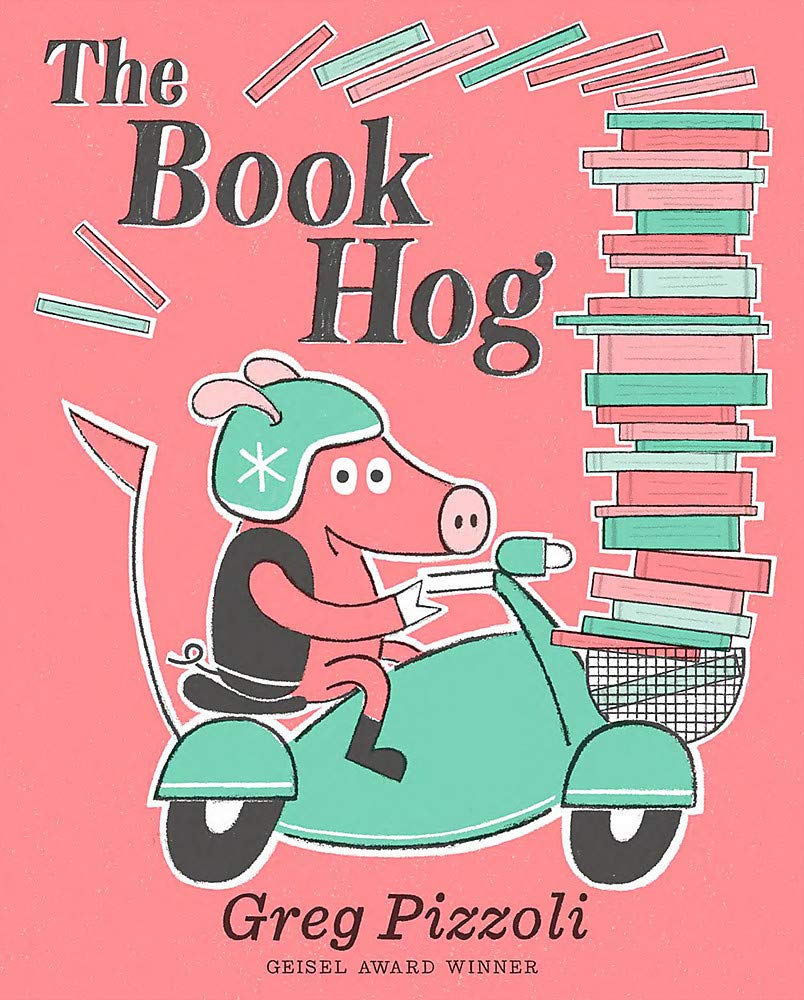
The Book Hog

"The Book Hog" by Greg Pizzoli introduces readers to a unique character, a pig who possesses an immense passion for books—though not for reading them. He meticulously collects tomes of all shapes, sizes, and colors, reveling in the tactile experience of their covers, the scent of their pages, and the sheer joy of possessing them. His home is a grand, chaotic library, overflowing with unread stories, creating a whimsical monument to his peculiar hobby. This pattern persists until a small, unforeseen incident compels him to finally crack open a book. What follows is a delightful revelation as he discovers the captivating worlds and profound insights hidden within the pages, forever changing his relationship with his cherished collection. This humorous and heartwarming picture book is a celebration of the journey from mere acquisition to genuine appreciation, gently reminding audiences about the true magic and transformative power of storytelling.
33
Blue Sky White Stars
Blue Sky White Stars by Sarvinder Naberhaus
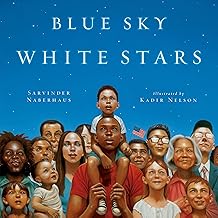
Blue Sky White Stars by Sarvinder Naberhaus is a picture book that explores the symbolism and history of the American flag. The book guides readers through the significance of the flag's colors—red, white, and blue—and its components: the stars and stripes, each representing specific aspects of the nation's values and heritage. It illustrates how the flag is present in various aspects of American life, from schoolyards and parades to important national moments and memorials. The narrative fosters an understanding and appreciation for this national symbol by explaining its representation of ideals such as freedom, unity, and hope. This book serves as an introduction to civics, aiming to educate young readers about the enduring message of the flag and its place in American identity, encouraging a sense of connection to national history and shared values. It presents a gentle yet informative exploration, making complex ideas accessible to children.
Does your child read these books?
Kids who take reading comprehension quizzes retain significantly more of what they read. Kiddometer turns every book into a mini-challenge — free to try.
Start a free quiz →