Introduction: Why Book Choice Matters for 1st Graders
First grade is a magical yet pivotal year in a child’s reading journey. At ages 5–7, many children begin to transition from learning to read to reading to learn. This progression doesn’t just mark an improvement in decoding letters and sounds — it reflects growing confidence, curiosity, comprehension, and a genuine love for stories. The books children read during this stage can profoundly influence their language skills, vocabulary development, critical thinking, and self-expression.
At this age, children are rapidly expanding their ability to recognize sight words, blend sounds, and read short sentences independently. They also start to understand narrative structure — beginning, middle, and end — and can follow character motives and sequences of events. Selecting books that align with these emerging skills while still being fun and accessible helps motivate young readers and builds a positive reading self-image.
However, not all books are created equal for beginning readers. Books appropriate for first graders should balance readability with richness — simple enough in language for early success, yet engaging enough in story and theme to spark imagination. Repetitive text patterns, predictable sentences, engaging illustrations that support understanding, and topics that kids care about all help young readers stay engaged and successful.
In addition to supporting decoding skills, great first-grade books build comprehension by encouraging kids to make predictions, recall events, interpret character feelings, and connect the story to their own experiences. Some books also build knowledge about science, math, or emotional growth, adding depth to the reading experience.
Parents and caregivers play a crucial role too. Reading together (even when kids can read on their own) continues to strengthen fluency and listening comprehension, and talking about a story increases deeper understanding. Asking questions such as “Why do you think the character did that?” or “What do you think will happen next?” encourages kids to think actively as they read.
The following list showcases books that are not only age-appropriate in terms of reading level but also enjoyable and encouraging for first-grade readers. Many of these titles are classroom favorites, beloved recommendations from literacy experts, or timeless classics. They support early reading development through humor, rhythm, relatable characters, and inviting illustrations.
Whether you’re helping a child learn to read independently or pairing books with nightly read-aloud time, these 20 books will help young readers grow in confidence, joy, and skill.
20 Best Books for 1st Graders (Ages 5–7) to Boost Reading Skills
1. We Are in an ARTivity Book! (An Elephant and Piggie Book) by Mo Willems
We Are in an ARTivity Book! (An Elephant and Piggie Book)

The Elephant & Piggie series is designed specifically for emerging readers who are just beginning to read independently. The books rely heavily on short sentences, repeated sight words, and clear speech bubbles, which help children focus on decoding text without feeling overwhelmed. The expressive illustrations closely match the text, allowing young readers to confirm meaning visually as they read. Humor and strong character emotions keep children engaged while reinforcing reading confidence.
2. The Frog and Toad Collection Box Set: A Box Set of 3 Books From the Classic Animal Friendship and Adventure Series, Great for Growing Reading Skills … for Kids [ages 4-8] (I Can Read Level 2) by Arnold Lobel
![The Frog and Toad Collection Box Set: A Box Set of 3 Books From the Classic Animal Friendship and Adventure Series, Great for Growing Reading Skills ... for Kids [ages 4-8] (I Can Read Level 2) by Arnold Lobel](https://m.media-amazon.com/images/I/81kJ+PA0rrL._AC_UY218_.jpg)
The Frog and Toad books feature short, self-contained stories with clear beginnings, middles, and endings. Sentence structures are straightforward, but the vocabulary is rich enough to introduce new words in context. These stories are especially helpful for building comprehension skills, as they emphasize friendship, problem-solving, and emotional awareness. The consistent tone and pacing also support reading fluency.
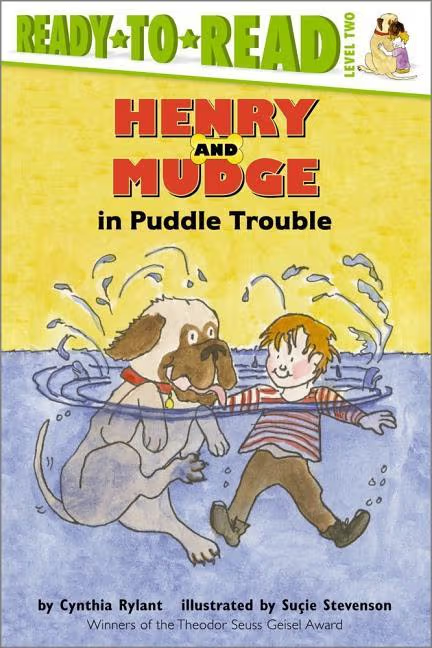
3. Henry and Mudge Ready-to-Read Value Pack by Cynthia Rylant
Henry and Mudge Ready-to-Read Value Pack

This series follows familiar, everyday situations that are easy for first graders to understand and relate to. The text uses repetition and predictable sentence patterns, which help young readers anticipate words and phrases as they read. Chapters are short and manageable, making the books approachable for children transitioning from picture books to early chapter books. The illustrations support comprehension without distracting from the text.
4. Pete the Cat I Love My White Shoes by James Dean and Eric Litwin
Pete the Cat I Love My White Shoes

This book uses repetitive language and a simple storyline to reinforce word recognition and sequencing skills. The predictable rhythm allows children to participate actively in reading, even after just one or two pages. Vocabulary remains accessible, while repetition strengthens confidence and fluency. The story also introduces cause-and-effect concepts in a clear, age-appropriate way.
5. Little Bear (An I Can Read Book) by Else Holmelund Minarik
Little Bear (An I Can Read Book)

Little Bear is composed of short stories that gently increase in complexity, making it well suited for first graders developing stamina. The language is simple but not overly basic, encouraging children to read full sentences with confidence. Themes such as family, friendship, and imagination are easy for young readers to follow. Illustrations are supportive but allow the text to remain the primary focus.
6. The days the crayons quit by Drew Daywalt

This book introduces young readers to a creative narrative structure through letters written by different crayons. While the text is slightly more advanced, it remains accessible due to strong visual cues and engaging humor. The format encourages children to recognize different voices and perspectives, which supports comprehension skills. It works well as a read-aloud or shared reading book for first graders.
7. Amelia Bedelia by Herman Parish

The Amelia Bedelia early reader series helps children understand how language can have multiple meanings. The sentences are short and clear, but the humor comes from Amelia’s literal interpretation of common phrases. This provides opportunities for children to learn new vocabulary and explore context clues. The predictable story structure supports independent reading while encouraging discussion.
8. Clifford the Big Red Friend Story Box by Norman Bridwell
Clifford the Big Red Friend Story Box

Clifford books use simple sentence construction and large print, making them approachable for early readers. The stories focus on everyday challenges and social lessons that are easy for first graders to follow. Illustrations closely reflect the text, helping readers confirm understanding. The familiar character also builds reading confidence through consistency.
9. Biscuit’s Neighborhood: A Box of 5 Stories for Beginning Readers and Dog Lovers (My First I Can Read) by Alyssa Satin Capucilli

The Biscuit series is intentionally written for very early independent readers. Sentences are short, repetitive, and often include familiar sight words. The predictable structure allows children to feel successful while reading on their own. These books are especially helpful for building fluency and reinforcing basic reading skills.
10. Mercy Watson to the Rescue: (A Funny and Heartwarming Chapter Book About a Lovable, Toast-Eating Pig – Perfect for Early Readers and Kids Ages 5-7 in Grades K-3) by Kate DiCamillo

This series introduces first graders to early chapter books with a strong focus on humor and character-driven plots. Chapters are brief, and illustrations appear frequently to support comprehension. Vocabulary is slightly more advanced but well supported by context. The engaging storyline encourages children to read longer texts independently.
11. Dr. Seuss’s Beginner Book Collection[BOXED-DR SEUSSS BEGINNER BK-5V][Boxed Set] by Dr. Seuss
Dr. Seuss’s Beginner Book Collection[BOXED-DR SEUSSS BEGINNER BK-5V][Boxed Set]
![Dr. Seuss's Beginner Book Collection[BOXED-DR SEUSSS BEGINNER BK-5V][Boxed Set] by Dr. Seuss](https://m.media-amazon.com/images/I/41lzNYSL9NL._AC_UY218_.jpg)
Dr. Seuss beginner books use rhyme and repetition to strengthen phonics and sound recognition. The patterned text helps children anticipate words, reinforcing decoding skills. While the vocabulary can be playful and inventive, the rhythm supports reading flow. These books are especially effective for children practicing reading aloud.
12. Clark the Shark: Too Many Treats (I Can Read Level 1) by Bruce Hale
Clark the Shark: Too Many Treats (I Can Read Level 1)

This series offers clearly leveled books, allowing parents and educators to match titles to a child’s reading ability. Level 1 and Level 2 books focus on short sentences, controlled vocabulary, and familiar topics. Many titles feature well-known characters, which helps maintain interest. The gradual progression supports steady reading growth.
13. Hi! Fly Guy by Tedd Arnold

Fly Guy books combine simple sentences with expressive, comic-style illustrations. The humor appeals strongly to young readers, increasing motivation to read independently. The text is broken into manageable chunks, which helps reduce reading fatigue. These books are particularly effective for reluctant readers.
14. Poppleton Series, 5 Books Set, Poppleton: An Acorn Book, Poppleton and Friends, Poppleton in Summer, Poppleton in Winter, Poppleton in Spring by Cynthia Rylant

The Poppleton series features gentle stories with a calm pace and predictable structure. Sentence length and vocabulary are appropriate for early readers who are gaining confidence. The stories emphasize routine, relationships, and small adventures. This makes them ideal for children who prefer quieter narratives.
15. Cam Jansen and the Mystery of the Stolen Diamonds by David A. Adler
Cam Jansen and the Mystery of the Stolen Diamonds

These mystery stories introduce simple problem-solving concepts in an accessible format. Chapters are short, and the language is direct, helping children follow the plot easily. The recurring structure of each mystery supports comprehension and recall. The series works well for readers ready to move beyond basic readers.
16. Dinosaurs Before Dark (Magic Tree House, No. 1) by Mary Pope Osborne
Dinosaurs Before Dark (Magic Tree House, No. 1)

The Magic Tree House series blends fiction with basic historical and scientific facts. While longer than most first-grade books, the language remains straightforward and repetitive. Short chapters help maintain focus and build endurance. These books are best suited for confident or advancing first-grade readers.
17. Chester the Worldly Pig by Bill Peet

This series uses simple language paired with expressive illustrations to tell humorous, character-focused stories. The sentence structure supports early independent reading without oversimplifying content. Themes are familiar and easy to understand. The books encourage both fluency and enjoyment.
18. Planets (National Geographic Kids Readers, Level 2) by Elizabeth Carney
Planets (National Geographic Kids Readers, Level 2)

These nonfiction readers introduce real-world topics using controlled vocabulary and short sentences. High-quality photographs support comprehension and visual learning. The leveled format helps children explore nonfiction independently. These books are especially helpful for building informational reading skills.
19. Just Go to Bed (Little Critter) (Pictureback) by Mercer Mayer
Just Go to Bed (Little Critter) (Pictureback)

The Little Critter books focus on common childhood experiences, making them easy to relate to. Text is simple and direct, with illustrations that clearly reinforce meaning. The stories help children practice sequencing and cause-and-effect. Familiar situations help build comprehension and confidence.
20. Snow Is Fun (I Like to Read) by Nancy I. White

This curated series features well-known characters and authors in carefully leveled formats. The books balance engaging stories with accessible text, making them suitable for independent reading. Vocabulary and sentence length are controlled without feeling overly simplistic. The variety of titles helps maintain long-term reading interest.
How to Make Reading Even Better
Reading with your first grader — whether they’re reading aloud or listening — deepens their comprehension, builds vocabulary, and strengthens your connection. Ask questions about the story, revisit favorite parts, and celebrate progress (even small victories). Above all, let their interests guide you: kids who choose what they love are more likely to become enthusiastic readers.
- Award-Winning And Classic Books For Early Readers
- Popular Books For Toddlers And Young Readers
- Fun Books For 9-12 Year Olds
- Best Beginner Reading Books
- Great Books For Children Learning To Read Ages 5-7
- Best Books For 8 Year Olds Ages 7-9
- Best Books For 6 Year Olds Ages 5-7
- Best Travel Books Elementary Age Kids
- 100 Books Every Child Should Read
- 50 Must-Read Books For Elementary School
- ALA page