Osaka is a dynamic metropolis, a true feast for the senses, and happily, it is incredibly family-friendly when it comes to navigating the city with children. For families wondering about getting around Osaka with kids, you will be pleased to discover an efficient and extensive public transportation system that makes exploring a breeze. Unlike many Western cities where a car is king, driving here isn’t usually the most convenient or cost-effective option for tourists, largely due to dense traffic and expensive parking.
Instead, Osaka’s subway (Osaka Metro) and train networks (JR, along with various private lines) offer a clean, safe, and surprisingly user-friendly experience, even if you are pushing a stroller. While you might encounter crowded conditions during peak hours, traveling off-peak provides a wonderfully smooth journey. Walking is also a fantastic way to experience many districts, particularly the pedestrian-friendly zones like Dotonbori. Japan’s well-known strict safety culture extends to its transit, offering parents genuine peace of mind. Getting familiar with local transit cards and understanding a few points of stroller etiquette will undoubtedly enhance your family’s visit, ensuring seamless exploration of Japan’s vibrant “kitchen” city. For more ideas on how to make the most of your trip, check out our comprehensive guide on Osaka with Kids and our Family Travel Guides.
Filter out the noise and find what works for your family.
Every resort we review gets one of four Family Fit ratings. The rating is based on kids programming, amenities, vibe, and who the resort actually markets to - not just whether they allow children.
Discover My Ideal Resort →Logistics at a Glance: Family Transport Options
Rental Cars
Renting a car in Osaka offers undeniable flexibility, especially if your family plans extensive day trips beyond the city’s well-connected train lines, such as to more remote nature spots. You’ll appreciate the climate control and private space for your kids, as well as the ability to store all your gear conveniently in the trunk.
However, be prepared for left-hand driving, which can be a significant adjustment for some. City parking is notably expensive, often costing ¥300-600 for just 30-60 minutes, and traffic can be heavy. You will also encounter tolls frequently on expressways, for which an ETC (Electronic Toll Collection) card is highly recommended. There might also be a language barrier with some GPS systems or road signs.
Ultimately, a rental car is best suited for families with specific car seat needs for very young children that ride-sharing options cannot accommodate, or those committed to exploring regions less serviced by Japan’s excellent rail network.
Public Transit (Trains/Subways/Buses)
Osaka’s public transit system is truly a marvel. It is incredibly efficient, offering extensive coverage across the city and beyond. It is also remarkably cost-effective, punctual, clean, and safe, making it surprisingly easy to understand, especially with the help of various navigation apps.
The main drawbacks include potential crowding during rush hours, typically from 7-9 AM and 5-7 PM. For first-time visitors, the complex network might seem a bit daunting at first, and some older stations may have stairs or lack elevators, requiring a bit more planning if you are traveling with a stroller. This is still the best option for getting around Osaka with kids.
This mode of transport comes highly recommended and will likely be your family’s primary way of getting around Osaka. Children aged 6-11 pay a child fare, which is typically 50% of the adult fare, while children under 6 often ride for free, making it an economical choice for families.
Ride-Sharing & Taxis
For door-to-door convenience, especially when traveling late at night or with heavy luggage, ride-sharing and taxis are readily available in Osaka. They offer a direct route, sparing your family the hassle of transfers.
However, these options can be expensive for longer distances, accumulating costs much faster than public transport. A significant challenge for families is the extreme difficulty in securing car seats in standard taxis or through ride-sharing apps, as they are not typically provided. Traffic delays are also possible, particularly during busy periods.
Taxis and ride-sharing are ideal for short distances, emergencies, or when public transit is less practical, such as returning to your hotel late with tired kids. They are not recommended if car seats are a mandatory requirement for your child’s age or size due to their general unavailability. You can also explore our guide on the Ultimate Guide: Travel Car Seats for Kids for more information.
Walking
Walking is undoubtedly the best way to experience Osaka up close, allowing for spontaneous discoveries around every corner. It is completely free and a wonderful way for kids to burn off energy while taking in the sights, sounds, and smells of the city. Many areas, like Dotonbori, are designed with pedestrians in mind.
The main downsides are that it can be tiring for little legs, especially after a full day of sightseeing. Weather can also be a significant factor, with hot and humid summers and a noticeable rainy season. Additionally, navigating unfamiliar streets can sometimes be tricky without a map or GPS.
Walking is essential for thoroughly exploring specific districts such as Dotonbori, Namba, or Shitennoji Temple. For longer distances or when little ones are worn out, it is best combined with public transit to minimize fatigue and maximize enjoyment. For great ideas on what to see, consult our guide on Things to Do in Osaka with Kids.
The Transit Network: A Detailed Breakdown
Rental Cars
In Japan, remember that vehicles drive on the left side of the road, just like in the UK or Australia, which can be an adjustment for drivers from other regions. The road quality throughout Osaka and wider Japan is consistently excellent and meticulously maintained. However, navigating central Osaka by car can be quite challenging due to numerous narrow streets and often heavy traffic congestion. This makes getting around Osaka with kids in a rental car a less appealing option for city exploration.
Parking, especially near popular attractions or in major districts like Umeda or Namba, is typically found in multi-story garages or underground lots. It’s important to note that parking is expensive, often costing ¥300-600 for just 30-60 minutes, and these spots can fill up very quickly. Advance booking for parking is generally not an option for tourists. Expressway tolls are also common and can accumulate quickly, so consider renting a car equipped with an ETC (Electronic Toll Collection) card, which allows for smoother, cashless toll payments.
Regarding family logistics, Japanese law mandates that children under 6 years old must use a child seat. While there are no specific weight or height regulations beyond this age, general guidelines recommend booster seats for children up to 10-12 years old, or until they are tall enough for the adult seatbelt to fit properly across their shoulder and lap. Rental agencies such as Toyota Rent-a-Car, Nippon Rent-A-Car, Orix Rent-A-Car, and Times Car Rental usually offer child seats (infant, child, or booster) for an additional fee, typically around ¥500-1,000 per day. It is absolutely crucial to reserve these well in advance when booking your vehicle and to specify your child’s age and weight to ensure the correct seat type is provided. Don’t forget to ensure your international driving permit (IDP) is valid and recognized in Japan, which usually requires one issued under the Geneva Convention of 1949. For more detailed advice on car seats, refer to our Ultimate Guide: Travel Car Seats for Kids and Best Car Seat Travel Bags.
Public Transportation
Osaka boasts an incredibly efficient and interconnected public transport system, making getting around Osaka with kids straightforward and enjoyable. Key players in this network include the Osaka Metro, JR West (Japan Railways), various Private Railways, and Osaka City Buses, all working together to cover the vast city and its surrounding regions.
The Osaka Metro is the city’s extensive subway network, easily identified by its colored lines and alphanumeric codes (e.g., Midosuji Line – Red, Tanimachi Line – Purple). This system covers most major tourist areas and serves as the backbone of city transport, offering quick and direct access to many attractions. JR West (Japan Railways) operates local and regional train lines, including the very convenient Osaka Loop Line, which circles the city center and connects major hubs like Osaka Station, Tennoji, and Shin-Imamiya. JR also offers longer-distance regional services for wider exploration. Several Private Railways, such as Hankyu Railway, Hanshin Electric Railway, Keihan Electric Railway, Kintetsu Railway, and Nankai Electric Railway, efficiently connect Osaka to surrounding cities like Kyoto, Nara, and Kobe, making them excellent choices for day trips. Finally, the Osaka City Bus provides an extensive network that complements subway and train travel, often used for shorter distances or reaching areas not directly served by rail.
For family logistics, stroller accessibility is generally good on the Osaka Metro and at major JR stations. You’ll find plenty of elevators and escalators, clearly marked with “Elevator” (エレベーター) or “Escalator” (エスカレーター) signs. Many newer trains and stations even feature dedicated spaces for wheelchairs and strollers, though some older stations might require navigating stairs. It is important to be mindful of rush hours (approximately 7-9 AM and 5-7 PM), when trains and subways can become extremely crowded, making stroller use challenging and potentially uncomfortable for both your children and other passengers. During these times, consider using a baby carrier instead or simply planning your travel around these peak periods. For tips on choosing the right gear, see our guide on the Best Compact Airline-Friendly Strollers.
When it comes to kids travel free age limits, infants (0-1 year old) and toddlers (1-5 years old) generally ride for free, provided they don’t occupy their own seat and are accompanied by an adult (typically up to two free children per adult). If a child under 6 needs their own seat (for instance, on a limited express train or if you have more than two children per adult), a child fare will be necessary. Children aged 6-11 years old (or up to 12 if still in elementary school) pay a child fare, which is typically 50% of the adult fare. To manage your family’s belongings effectively, check out our guides on the Best Kids Luggage Buying Guide and Best Kids Backpacks Travel Guide.
To maximize value, several best value family passes are available. The ICOCA card is a convenient, rechargeable smart card valid on virtually all trains, subways, and buses throughout the Kansai region and other major Japanese cities. It offers seamless travel by simply tapping in and out, eliminating the need to buy individual tickets, though it doesn’t provide discounts. You can purchase it at JR ticket machines. The Osaka Amazing Pass, available for 1 or 2 days, offers unlimited rides on Osaka Metro, city buses, and some private lines within Osaka, plus free entry to over 50 popular attractions, including the Osaka Castle Museum and Tempozan Ferris Wheel. This pass is highly recommended if you plan extensive sightseeing within Osaka, priced around ¥2,800 for a 1-day pass and ¥3,600 for a 2-day pass.
For broader regional exploration, the Kansai Thru Pass, available for 2 or 3 days, covers unlimited rides on non-JR private railways, subways, and buses in the wider Kansai area (Osaka, Kyoto, Nara, Kobe). This pass is excellent for families planning multiple day trips outside Osaka using private lines and offers child passes at half price. A 2-day pass is approximately ¥4,400, and a 3-day pass is ¥5,500. Note that it is not valid on JR lines. Alternatively, the JR Kansai Area Pass is specifically for travel on JR lines within Kansai, including transfers from Kansai International Airport (KIX). This pass is most cost-effective if you plan to use JR frequently for longer distances, such as trips to Himeji or beyond, so compare it against your itinerary to see if it offers better value for your family.
Taxis & Ride-Sharing
While taxis are abundant and easily hailed on Osaka’s streets, ride-sharing services are less prevalent in the traditional sense compared to many other countries. However, apps have integrated with local taxi fleets to provide a similar convenience. These options can be useful for getting around Osaka with kids, especially for shorter distances or specific needs.
The primary local taxi-hailing app is GO (formerly JapanTaxi), which is Japan’s most widely used service. It connects you with local taxi companies, is available in English, and allows for cashless payments, proving very useful for calling a cab directly to your location. DiDi is another major ride-hailing app that also works by connecting users with local taxi fleets in Osaka. While Uber is available in Osaka, it primarily functions by linking users with standard taxis rather than private drivers. Uber Black does offer luxury vehicles, but typically without integrated child seats.
For family logistics, the biggest challenge when using taxis or ride-sharing in Osaka is the ease of getting car seats via an app. It is extremely rare, almost impossible, to hail a taxi or book via app that provides a child seat. Japanese taxis are generally not equipped with them. If your child requires a car seat by law (under 6 years old), a rental car or a specialized pre-booked private transfer is the only reliable option. For older children who are not legally required to be in a car seat, taxis remain a convenient choice. For comprehensive advice on traveling with car seats, refer to our Ultimate Guide: Travel Car Seats for Kids.
The safety of street hails versus apps is excellent; taxis in Japan are renowned for their safety, cleanliness, and polite drivers. Both street hails and app-booked taxis are very safe for families, with drivers typically being honest and always using the meter. Regarding cost, taxis are significantly more expensive than public transport. The initial fare is around ¥500-600 for the first 1-2 km, after which it increases based on distance and time. A 10-15 minute ride can easily cost ¥1,500-2,500, so budget accordingly.
Your Arrival: Airport & Train Station Transfers
When your family first arrives in Osaka, knowing your transfer options from key hubs is essential for a smooth start to your adventure. Getting around Osaka with kids right from the moment you land can set the tone for your entire trip.
The primary hubs you’ll likely encounter are Kansai International Airport (KIX), which serves as the main international gateway to Osaka and the wider Kansai region. Shin-Osaka Station is Osaka’s primary Shinkansen (bullet train) station, connecting the city to major destinations like Tokyo, Kyoto, and Hiroshima. Finally, Osaka Station (Umeda area) is a bustling JR hub for local and regional lines, offering connections to various parts of Osaka and neighboring cities. For tips on navigating airports with kids, see our guide on the Most Child-Friendly Airports Worldwide.
Here are the top two recommended options for getting from KIX to central Osaka, such as Osaka Station/Umeda or Namba:
1. Fastest Train (JR Haruka Limited Express or Nankai Rapid Express Rapi:t)
For speed and efficiency, the train is often your best bet, especially for getting around Osaka with kids who might be eager to start exploring. The JR Haruka Limited Express travels from KIX to Shin-Osaka Station, which is excellent for Shinkansen access or an easy transfer to local JR lines for Osaka Station itself. Since March 2023, some Haruka trains also offer direct service to Osaka Station. The cost is approximately ¥3,000 per adult for a one-way unreserved seat. Tourists can often purchase the “ICOCA & Haruka” discount ticket package for around ¥2,200-2,600 (one-way to Shin-Osaka), which conveniently includes an ICOCA card with ¥1,500 credit. Children aged 6-11 years old are half price, and those under 6 generally ride for free if they do not occupy a seat. The journey takes around 50 minutes to Shin-Osaka Station and 60-70 minutes to Osaka Station, offering a comfortable ride with dedicated luggage areas.
If your accommodation is in the Namba, Dotonbori, or Shinsaibashi areas, the Nankai Rapid Express Rapi:t is ideal. This train runs directly from KIX to Namba Station, with a cost of approximately ¥1,450 per adult for a reserved seat. Child fare (6-11) is half price. The journey is remarkably fast, taking only about 34-38 minutes, making it a highly convenient option for families staying in the southern parts of the city.
For unparalleled convenience, especially when traveling with multiple bags or tired children, a private transfer is a fantastic option. Reputable services like MK Skygate Shuttle or Yasaka Limousine offer shared-ride door-to-door services directly to major hotels in Osaka. These shuttles are excellent for families who prefer direct transport to their accommodation without the hassle of navigating public transit with luggage right after a flight.
The cost for a shared shuttle is approximately ¥3,000-3,600 per adult, with children typically paying half price. While these services are slower than the train, usually taking about 75-90 minutes depending on traffic and drop-off order, the convenience of being delivered directly to your hotel often outweighs the longer travel time. Prices for private vans will be significantly higher, ranging from ¥15,000-25,000+, but they offer exclusive, direct service, usually completing the journey in 60-90 minutes. It’s important to note that private taxis from KIX are also very expensive, typically ¥15,000-20,000+ to central Osaka, and are generally not recommended for budget-conscious families or those requiring car seats, as these are not standard in regular taxis. Consider also our guide on Best Travel Adapters for Families for keeping all your devices charged on the go.
A 3-Day Transit-First Itinerary
Day 1: City Center Discovery (Focus: Walkability and central trams/metro)
Morning (Umeda & Osaka Station City)
Begin your family adventure by arriving at Osaka Station in the bustling Umeda area. This massive complex, known as Osaka Station City, is a destination in itself, offering extensive shopping, diverse dining options, and even family-friendly rooftop gardens like Tenku Farm where kids can enjoy some fresh air. The area’s extensive underground walkways are generally very stroller-friendly, making navigation easy, and your children might be fascinated by the huge department stores and impressive modern architecture. This central hub is perfect for getting around Osaka with kids as you start your exploration.
Afternoon (Osaka Castle & Nakanoshima)
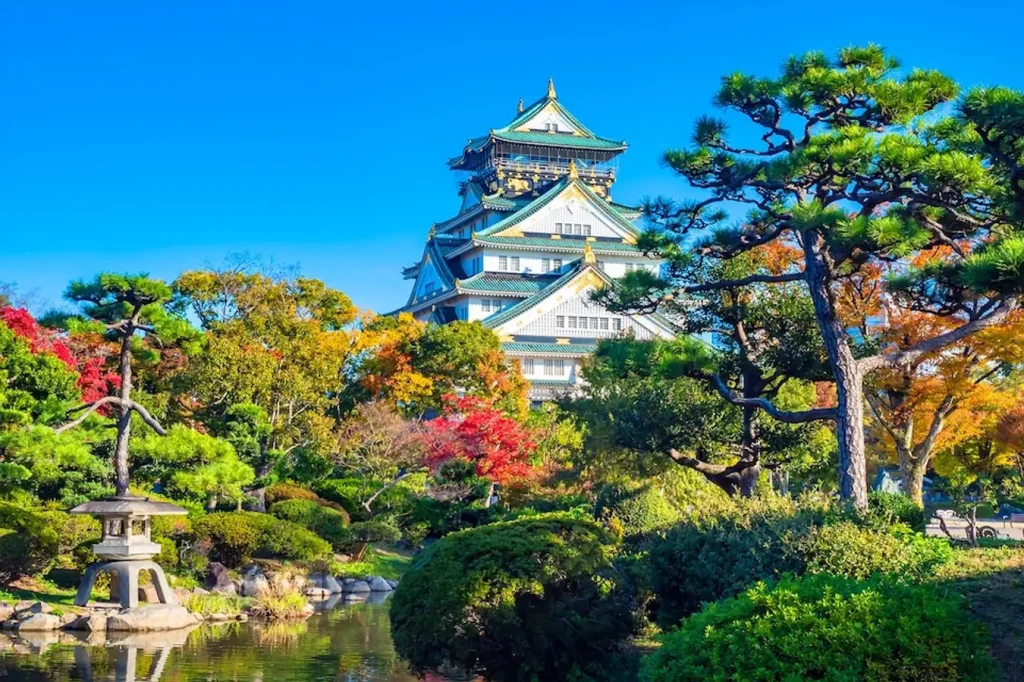
From Umeda, take the Osaka Loop Line to Morinomiya Station or the Osaka Metro Tanimachi Line to Tanimachiyonchome Station, then enjoy a pleasant walk to Osaka Castle Park. Explore the expansive castle grounds, which are wonderful for children to run around. While the main castle keep itself has many steps, making a baby carrier advisable if you plan to climb to the top, exploring the exterior and the surrounding park is a fantastic experience. Afterwards, unwind with a relaxing stroll or a delightful picnic in Nakanoshima Park, an urban oasis easily accessible via Osaka Metro, offering green spaces amidst the city’s hustle.
Evening (Dotonbori & Namba)
As evening approaches, hop on the Midosuji Line to Namba Station, where you will emerge into the electrifying, neon-lit Dotonbori area. This district is a vibrant spectacle that kids will absolutely love. Immerse yourselves in the atmosphere, sampling delicious street food like takoyaki (octopus balls) and okonomiyaki (savory pancakes), and be sure to snap a photo with the iconic Glico Man sign. Dotonbori is highly walkable and easily explored with a compact stroller or a baby carrier, offering an unforgettable taste of Osaka’s lively nightlife.
Day 2: Park & Play Adventure (Focus: Using local buses to reach green spaces)
Morning (Tennoji Park & Zoo)
Start your day by taking the Osaka Metro (Midosuji Line or Tanimachi Line to Tennoji Station) or the JR Loop Line to Tennoji Station. Here, you’ll find Tennoji Park, which is home to the Osaka Tennoji Zoo. The zoo is known for its family-friendly layout and diverse collection of animals, making it a big hit with children. The park itself is a spacious green oasis, perfect for a leisurely morning walk and boasts playgrounds where kids can burn off some energy before or after their zoo visit.
Afternoon (Universal Studios Japan or Kidzania)
For an afternoon of thrills, especially for older kids (or Universal fans of any age), head to Universal Studios Japan. Take the JR Yumesaki Line from Nishikujo (accessible via Osaka Loop Line) directly to Universal City Station. If you have younger children or prefer a different kind of indoor experience, consider Kidzania Koshien. This interactive edutainment facility requires taking the Hanshin Main Line to Koshien Station, followed by a short bus ride to the venue, offering kids the chance to try out various professions in a miniature city.
Evening (Shinsekai District)
Conclude your day by exploring the wonderfully nostalgic Shinsekai district. This area is famous for its retro-futuristic Tsutenkaku Tower and offers a unique glimpse into old Osaka. Indulge in some delicious Kushikatsu (fried skewers), a local specialty that even picky eaters might enjoy. Shinsekai is easily accessible via Osaka Metro (Ebisucho Station or Dobutsuen-mae Station). The district is relatively compact and truly fun to walk through, providing a distinct atmosphere compared to other parts of the city. These diverse destinations highlight the ease of getting around Osaka with kids using its public transport system.
Day 3: Day Trip Exploration (Focus: Regional rail or car rental)
For your third day, consider venturing beyond the immediate city limits. Regional rail offers excellent connections, making it easy to explore nearby gems, though a car rental might be suitable if you want to reach very specific, less-connected spots.
Option 1: Kyoto (Regional Rail)
Kyoto offers a rich cultural experience with numerous iconic temples, traditional gardens, and historical streets. It is suitable for all ages, though it does involve a fair amount of walking. Younger children might enjoy the open spaces of temple grounds and the serene atmosphere, while older children can appreciate the history and unique cultural experiences. To get there, take the JR Special Rapid Service (Shin-Kaisoku) from Osaka Station to Kyoto Station, which takes approximately 30 minutes and costs ¥580 per adult. From Kyoto Station, you can easily use the Kyoto City Bus system (a one-day pass for ¥700 per adult, ¥350 per child is a good option) or the subway for local transport. Many main attractions are accessible by bus, and major stations have elevators for stroller access. For Fushimi Inari Shrine, take the JR Nara Line from Kyoto Station (2 stops, approx. 5 minutes) to Inari Station.
Option 2: Nara (Regional Rail)
Nara is famous for its friendly wild deer that roam freely in Nara Park, making it an exciting and interactive experience for children of all ages. The park also houses the impressive Todai-ji Temple, featuring a colossal bronze Buddha statue, which is awe-inspiring. It is a relatively compact and mostly flat city, perfect for families with strollers or young walkers. From Osaka, the most direct options are the JR Yamatoji Rapid Service from Osaka Station or Tennoji Station to Nara Station (approx. 50 minutes, ¥810 per adult), or the Kintetsu Nara Line from Osaka-Namba Station to Kintetsu Nara Station (approx. 40 minutes, ¥680 per adult). Kintetsu Nara Station is generally closer to Nara Park (about a 5-minute walk). Nara Park itself is very stroller-friendly, with wide paths, ensuring smooth getting around Osaka with kids.
Option 3: Kobe (Regional Rail)
Kobe offers a blend of charming port city vibes, the legendary Kobe beef, and scenic views from Mount Rokko. Families might enjoy exploring Meriken Park, home to the Kobe Port Tower and Earthquake Memorial, or the vibrant Harborland with its shopping and Ferris wheel. A trip via ropeway to the Nunobiki Herb Gardens also offers beautiful panoramic views. To reach Kobe, take the JR Special Rapid Service (Shin-Kaisoku) from Osaka Station to Sannomiya Station, which takes about 21 minutes and costs ¥410 per adult. From Sannomiya, local trains or buses will take you to your desired attractions. For Meriken Park and Harborland, you can take the Kobe City Subway Kaigan Line from Sannomiya to Minato Motomachi Station.
Regional Excursions: Accessibility & Reach
Kyoto
Kyoto offers a profound cultural experience with its numerous ancient temples, serene traditional gardens, and historic districts like Gion. It is suitable for all ages, providing a stark contrast to Osaka’s modern vibe. Younger children might enjoy the open spaces of temple grounds, the famous bamboo forest, and perhaps even spotting maiko or geisha in Gion. Older children can appreciate the rich history, unique cultural shops, and scenic beauty. While extensive, many key areas are accessible, though some temple interiors and garden paths involve stairs or uneven terrain.
The most efficient way to reach Kyoto from Osaka is via the JR Special Rapid Service (Shin-Kaisoku) from Osaka Station. The journey takes approximately 30 minutes and costs ¥580 per adult, with children aged 6-11 paying half price. Once in Kyoto, the city has an excellent bus network and two subway lines (Karasuma Line and Tozai Line). Consider purchasing a Kyoto One-Day Bus & Subway Pass for unlimited travel (¥1,100 per adult, ¥550 per child) if planning to visit multiple sites. Many main attractions are accessible by bus, and major subway stations have elevators for stroller access. For Fushimi Inari Taisha, take the JR Nara Line from Kyoto Station (2 stops, approx. 5 minutes) to Inari Station. For the Arashiyama Bamboo Grove, take the JR Sagano Line from Kyoto Station to Saga-Arashiyama Station (approx. 15 minutes).
Nara
Nara is an excellent family day trip destination, primarily renowned for its Nara Park where over a thousand wild sika deer roam freely. This interactive experience of feeding and petting the deer is a huge hit with children of all ages. The park also houses the impressive Todai-ji Temple, which contains a colossal bronze Buddha statue, awe-inspiring for both kids and adults. Nara is relatively compact and mostly flat, making it very walkable and ideal for families with strollers or young walkers, simplifying getting around Osaka with kids in this charming locale.
From Osaka, you have two primary options for reaching Nara. The JR Yamatoji Rapid Service departs from Osaka Station or Tennoji Station to Nara Station, with this journey taking approximately 50 minutes and costing ¥810 per adult (children 6-11 half price). Nara Station is about a 15-20 minute walk to the main entrance of Nara Park. Alternatively, the Kintetsu Nara Line departs from Osaka-Namba Station to Kintetsu Nara Station. This route is slightly faster and often preferred as Kintetsu Nara Station is closer to Nara Park, about a 5-minute walk. The journey takes approximately 40 minutes and costs ¥680 per adult (children 6-11 half price). Both stations offer good accessibility, and Nara Park itself is very stroller-friendly, with wide, paved paths, making for a pleasant day out.
Noteworthy Local Transport Experiences
Osaka offers a few unique transit experiences that can double as fun activities for families, providing memorable ways to see the city from different perspectives. These options are fantastic for getting around Osaka with kids while also enjoying the journey itself.
- Osaka Loop Line (JR): While primarily a commuter train, a ride on the Osaka Loop Line can be an informal “tour” of Osaka’s diverse districts. Kids might enjoy looking out the window, watching the city pass by, and noticing the different designs of each station. It is a fundamental part of the city’s pulse and offers a genuine glimpse into daily life.
- Aqua-Liner Water Bus: These glass-domed water buses offer relaxing cruises along Osaka’s rivers, providing fantastic city views from a unique vantage point. You will glide past iconic landmarks like Osaka Castle, the retro buildings of Nakanoshima, and other vibrant urban scenery. It is a relaxing way to sightsee, especially enjoyable for younger children who might find a boat ride exciting. Departures are available from several piers, including Osaka Business Park and Yodoyabashi, with costs around ¥1,200 for adults and ¥600 for children (6-11).
- Tempozan Giant Ferris Wheel: Located near the Kaiyukan Aquarium (easily accessible via Osaka Metro Chuo Line, Osakako Station), this isn’t strictly transport but a giant observation wheel. It offers panoramic views of Osaka Bay, the city skyline, and surrounding areas. Standing at 112.5 meters tall, riding one of the clear “see-through” gondolas can be a thrilling experience for older kids and an exciting (and safe) high-up view for all, offering unique photo opportunities of Osaka from above.
- Hankai Tramway: For a nostalgic journey, consider a ride on the Hankai Tramway. This historic tram line, one of Japan’s oldest, offers a charming, slower-paced ride through some of the older, less-touristed southern parts of Osaka, including the majestic Sumiyoshi Taisha Grand Shrine. It provides a delightful glimpse into a different, more traditional side of the city and can be a quaint experience for families looking for something a bit different from the modern subway system.
- Osaka with Kids
- Things to Do in Osaka with Kids
- Family Travel Guides
- Ultimate Guide: Travel Car Seats for Kids
- Best Compact Airline-Friendly Strollers
- Best Kids Luggage Buying Guide
- Best Kids Backpacks Travel Guide
- Best Car Seat Travel Bags
- Most Child-Friendly Airports Worldwide
- Best Travel Adapters for Families
- Wikivoyage page on Osaka
Plan a trip your kids will actually enjoy.
Answer a few quick questions and get a free, personalized itinerary tailored to your destination and your children’s ages. No account required — your custom plan is ready in moments.
Filter out the noise and find what works for your family.
Every resort we review gets one of four Family Fit ratings. The rating is based on kids programming, amenities, vibe, and who the resort actually markets to - not just whether they allow children.
Discover My Ideal Resort →
![Ultimate Guide to [destination] Copenhagen](https://kiddometer.com/wp-content/uploads/2026/02/Ultimate-Guide-to-destination-pic-34-400x225.jpg)