Vienna, a city synonymous with imperial grandeur and classical music, is also remarkably family-friendly when it comes to getting around. Its compact city center, coupled with an extensive, efficient, and well-integrated public transportation network, makes navigating with children a breeze, often eliminating the need for a rental car. This comprehensive guide will help you understand the best ways of getting around Vienna with kids, ensuring your family adventure is as smooth and enjoyable as possible.
The cityscape is largely flat, particularly within the Ringstrasse, encouraging delightful strolls through historic streets and grand boulevards, perfect for families with strollers or young walkers. Sidewalks are wide and well-maintained, and many pedestrian zones offer safe spaces away from traffic. For those venturing further afield or managing multiple little ones, a mix of modern trams, reliable U-Bahn trains, and accessible buses ensures you can reach most attractions without hassle. While driving remains an option, particularly for day trips to the Austrian countryside, parking can be a challenge and costly in the inner districts. The city’s commitment to accessibility is evident, with many transport options designed to accommodate strollers and provide ease for parents, making Vienna a genuinely stress-free destination for family exploration. Prioritizing public transit and walking will not only save time and money but also immerse your family in the authentic rhythm of Viennese life.
Filter out the noise and find what works for your family.
Every resort we review gets one of four Family Fit ratings. The rating is based on kids programming, amenities, vibe, and who the resort actually markets to - not just whether they allow children.
Discover My Ideal Resort →Logistics at a Glance: Family Transport Options
Understanding your options for family travel guides is key to a smooth trip. Here’s a quick comparison of the main ways to get around Vienna with kids:
| Rental Cars | Public Transit | Ride-Sharing (Uber/Bolt) | Walking | |
|---|---|---|---|---|
| Convenience for Families | High for day trips, low for city center due to parking. Requires car seats. | Very high. Extensive network, frequent, stroller-friendly. Free for young kids. | Moderate. Convenient for direct routes, but car seats are unreliable. | Very high within the city center. Flat terrain, pedestrian zones. |
| Cost | High (rental fee, fuel, parking, car seats). | Low to moderate (multi-day passes offer great value). | Moderate to high (fares vary by demand, no guaranteed car seats). | Free! |
| Accessibility with Strollers | Easy once parked, but tricky for city navigation. | Excellent. Most U-Bahn, newer trams, and buses have low-floor access/elevators. Consider a compact airline-friendly stroller. | Can be difficult if drivers are not accommodating or car size is small. | Excellent on wide, well-maintained sidewalks and pedestrian zones. |
| Key Considerations | Legal requirement for child seats; book in advance. Costly parking in city center. | Children under 6 travel free; children up to 15 free on weekends/holidays/school breaks. Buy multi-day passes. | Car seats are not guaranteed. Pre-book private transfers if a car seat is essential. | Ideal for short distances and exploring the historic center. Combine with public transit for longer treks. |
The Transit Network: A Detailed Breakdown
Rental Cars
Driving in Austria is on the right-hand side of the road, and road quality in Vienna and throughout the country is excellent, with well-maintained highways and city streets. While a rental car offers flexibility for scenic drives outside the city, it’s generally not recommended for navigating central Vienna itself. Parking within the Ringstrasse and surrounding inner districts consists predominantly of short-term parking zones (“Kurzparkzonen”) from Monday to Friday, requiring tickets and often having strict time limits of 2-3 hours. These zones can be quite expensive, and public parking garages, while available, also come with a hefty price tag.
For families planning longer stays or day trips into the picturesque Austrian countryside, using Park & Ride facilities at the city outskirts, such as Park & Ride Spittelau or Erdberg, and then switching to Vienna’s efficient public transport system, is a much more practical and cost-effective approach. This allows you to easily access your vehicle for excursions without the hassle and expense of city parking.
When it comes to family logistics, it’s crucial to know Austria’s strict car seat laws. Children under 14 years old and less than 150 cm (approximately 4 feet 11 inches) tall must use an appropriate child restraint system suitable for their age, weight, and height. This means infants (up to 13 kg/approx. 29 lbs) require rear-facing infant carriers, toddlers (9-18 kg/approx. 20-40 lbs) typically need forward-facing seats with a 5-point harness, and older children (15-36 kg/approx. 33-79 lbs) will need booster seats. It is illegal for a child who does not meet these criteria to travel without proper restraint. Major international car rental agencies like Sixt, Hertz, Europcar, Avis, and Enterprise operate at Vienna International Airport (VIE) and various city locations, and all offer a range of child car seats for an additional daily fee, usually €10-€15 per day, with caps for longer rentals. It is highly advisable to book car seats well in advance to ensure availability, especially during peak travel seasons, or consider bringing your own if you have an ultimate guide to travel car seats for kids or ultimate guide to travel booster seats.
Public Transportation
Vienna’s public transportation system is a parent’s best friend. Operated by Wiener Linien, it includes the U-Bahn (underground metro), Straßenbahn (trams), and Busse (buses), all seamlessly integrated. For regional travel, including to the airport, the S-Bahn (commuter rail) network, operated by ÖBB (Austrian Federal Railways), works hand-in-hand with Wiener Linien services, making things to do in Vienna with kids easily accessible.
Accessibility is a major plus for families with strollers. Most U-Bahn stations feature elevators or escalators, and all U-Bahn trains are modern and offer low-floor access, making boarding and disembarking simple even with a pram or buggy. Many tram lines, particularly the newer “ULF” models, and buses are also low-floor, often indicated by a stroller symbol, though you might occasionally encounter older tram models that are less accessible (these are thankfully being phased out).
The best news for families is the fare structure: children under 6 years old travel free on all Wiener Linien services. Furthermore, children up to 15 years old (meaning until their 15th birthday) travel free on Wiener Linien on Sundays, public holidays, and during Vienna school holidays. These school holiday dates vary annually but generally include early July to early September, as well as shorter breaks like Easter and Christmas, offering significant savings.
For adult fares, individual tickets cost around €2.40 per single journey. However, families will find much better value in multi-day passes. Options include 24-hour (€8.00), 48-hour (€14.10), or 72-hour (€17.10) tickets, which provide unlimited travel. For longer stays, a weekly pass (€17.10) is an excellent choice if your trip aligns with its Monday-to-Sunday validity (it expires Sunday midnight regardless of purchase day). Another flexible option is the “8-Tage-Klimaticket” (8-day climate ticket, approximately €40.80), which allows 8 days of travel (not necessarily consecutive) within a year; each day can be validated for one person, meaning a family of four could use it for two days of travel across the city. Additionally, the Vienna City Card offers unlimited public transport along with discounts on various attractions, which can be valuable depending on your sightseeing plans and how many best things to do in Vienna with kids you aim to visit.
Taxis & Ride-Sharing
In Vienna, popular ride-sharing services like Uber and Bolt are widely available and frequently used. For traditional taxis, local apps such as Taxi 40100 and Taxi 31300 can be used to book a ride, or you can simply hail one directly from the street in designated taxi stands.
However, families traveling with young children who require car seats should be aware that the ease of securing one via ride-sharing apps like Uber or Bolt in Vienna is very limited. While Uber occasionally offers an “Uber Child Seat” option, its availability is unreliable and not guaranteed, especially for immediate rides. It’s generally not advisable for families to rely on these apps for rides where a car seat is essential. A far more reliable approach is to pre-book a taxi service known to provide child seats. Companies like Vienna Airport Cab often offer this, and some local taxi companies can arrange it if requested in advance, usually for an additional fee. Plan ahead to ensure your little ones are safely and legally restrained.
Both street-hailed official Vienna taxis and ride-sharing app services are generally considered safe in Vienna. Official taxis are metered and clearly marked with a roof sign, typically black or white cars. Ride-sharing apps offer the advantages of cashless payment, driver tracking, and upfront fare estimates, providing an added layer of convenience and transparency for families, which can be particularly helpful late at night or when navigating potential language barriers. Remember to consider your best kids luggage when choosing a taxi or ride-share.
Want a custom plan? Use our personalized Itinerary Generator for Vienna!
Your Arrival: Airport & Train Station Transfers
Vienna International Airport (VIE) is the primary international gateway to the city, while Wien Hauptbahnhof (Vienna Main Station) serves as the main train station, with Wien Meidling being another important hub, especially for trains arriving from the west. Knowing your transfer options from these points is crucial for a smooth start to your family holiday.
Here are the top two options for getting into the city with your family:
-
Fastest Train (City Airport Train – CAT): The City Airport Train (CAT) provides the fastest direct connection from Vienna International Airport (VIE) to Wien Mitte (Landstraße U-Bahn station), a central transport hub. The journey itself is swift, taking approximately 16 minutes with no stops, making it ideal for families seeking efficiency. A single adult ticket costs around €14.90 (purchased online or at a machine), and a huge bonus for families is that children under 15 travel free when accompanied by a paying adult. This option is particularly suitable for families staying near a U-Bahn line or those traveling with lighter luggage, allowing you to quickly connect to the rest of the city.
-
Most Convenient Private Transfer (Pre-booked Airport Taxi/Shuttle): For maximum convenience, especially after a long flight and with young children or a lot of luggage, a pre-booked private airport taxi or shuttle service is the most comfortable choice. Companies like Vienna Airport Cab or ATS Airport Transfer Service offer direct transfers right to your accommodation. The cost typically ranges from €35 to €50, depending on the number of passengers, luggage, and whether child seats are required (which you should book well in advance). The journey time is usually 20-30 minutes, though this can vary with traffic. This option minimizes stress and is perfect for families prioritizing comfort and door-to-door service, especially after arriving at one of the most child-friendly airports worldwide.
A 3-Day Transit-First Itinerary
This itinerary focuses on maximizing Vienna’s excellent public transit and walkability, perfect for families getting around Vienna with kids.
Day 1: City Center Discovery (Focus: Walkability and central trams/metro)
Start your Vienna adventure by exploring the historic Ringstrasse. Take the U-Bahn (U3 or U1) to Stephanplatz, where you can marvel at the magnificent St. Stephen’s Cathedral. From there, enjoy a leisurely walk through the charming pedestrianized Graben and Kohlmarkt to Michaelerplatz, which leads directly to the grand Hofburg Palace complex. Here, you can explore the Imperial Apartments, the fascinating Sisi Museum, and even catch a glimpse of the famous Spanish Riding School.
For lunch, you’ll find numerous cafes in the area that are well-suited for families. In the afternoon, take a relaxing stroll through the beautiful Burggarten or Volksgarten, where kids can enjoy some open space. Conclude your day by utilizing the excellent tram network (e.g., tram lines 1 or 2, or the special Ring Tram) to circle the entire Ringstrasse. This allows you to comfortably point out key landmarks like the Parliament, City Hall, and Vienna State Opera without tiring out little legs. The low-floor trams make this experience particularly easy with strollers.
Day 2: Park & Play Adventure (Focus: Using local buses to reach green spaces)
Dedicate this day to Vienna’s wonderful green oases, perfect for kids to burn off some energy. Begin your morning at the Prater amusement park. Easily accessible by taking the U1 or U2 to Praterstern station, this park offers a range of rides suitable for different ages, including the iconic Riesenrad (Giant Ferris Wheel) which provides fantastic views of the city. Beyond the rides, the Prater features vast green spaces where children can simply run and play freely.
For the afternoon, head to Donauinsel (Danube Island), a long, narrow island paradise. Take the U1 to Donauinsel station, and you’ll find playgrounds, extensive cycling paths, and even swimming opportunities, especially at CopaBeach during warmer months. If the walking distances seem too long for little legs, local buses (such as line 11A or 11B from Praterstern) can help you navigate the larger Prater area or reach specific spots on Donauinsel, ensuring a relaxed and enjoyable day for the whole family.
Day 3: Day Trip Exploration (Focus: Regional rail or car rental)
Today, venture slightly outside the city for a change of pace and to see more of Austria’s beauty.
Option A: Regional Rail to Melk Abbey & Wachau Valley
For a scenic and relaxed day trip, take a regional train (REX or R) from Wien Westbahnhof or Wien Hauptbahnhof directly to Melk. The journey takes approximately 1 hour and offers beautiful views of the Austrian countryside. Melk Abbey itself is an impressive Benedictine monastery perched atop a hill, with stunning architecture and historical significance that can captivate older children. From Melk, you can embark on boat trips on the Danube through the picturesque Wachau Valley. These boat tours (check DDSG Blue Danube schedules) are very popular with families, offering glimpses of charming castles, rolling vineyards, and medieval towns like Dürnstein or Krems along the riverbanks. This option relies entirely on the efficient regional rail network operated by ÖBB.
Option B: Car Rental to Seegrotte Hinterbrühl and Mayerling
If you prefer the flexibility of having your own vehicle for the day, consider renting a car. Drive south to Hinterbrühl, a journey of approximately 30 minutes, to visit Seegrotte. This unique attraction is Europe’s largest underground lake, which you explore by boat, offering a truly memorable and cool experience for all ages. Afterward, continue to the Mayerling hunting lodge, famous for its tragic history involving Crown Prince Rudolf. While the full historical context might be more suited for older children and adults, the intriguing story and setting can still capture their imagination. Renting a car for this day trip provides the freedom to make spontaneous stops for picnics, playgrounds, or simply to enjoy the Austrian landscape at your own pace, creating a personalized family adventure.
Regional Excursions: Accessibility & Reach
Schönbrunn Palace
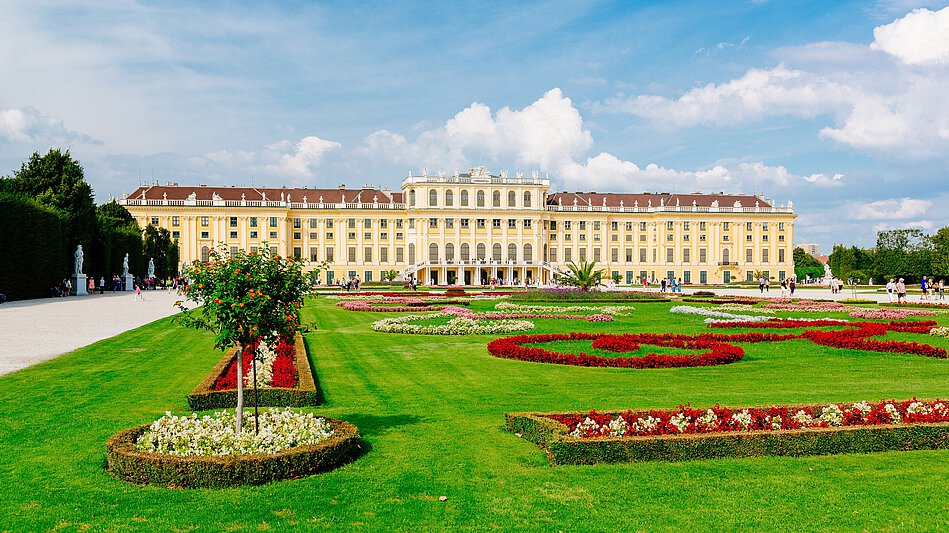
Schönbrunn Palace is an absolute must-do for families visiting Vienna, offering a truly comprehensive experience suitable for all ages. Younger children will be enchanted by the Schönbrunn Zoo, recognized as the oldest continuously operating zoo in the world, filled with fascinating animals. They’ll also love the Children’s Museum, where they can even try on imperial dress-up, and the expansive playgrounds scattered throughout the extensive gardens. Older children and parents alike will appreciate the historical tours of the palace, the stunning views from the Gloriette, and the fun challenge of navigating the garden’s maze. The palace gardens themselves are a vast green space, perfect for kids to run, explore, and simply enjoy being outdoors.
Getting to Schönbrunn Palace is incredibly easy thanks to Vienna’s efficient public transport system. The U-Bahn line U4 (green line) takes you directly to the “Schönbrunn” station, which is conveniently located right at the palace entrance. Alternatively, you can take tram lines 10 or 60 to either “Schönbrunn” or “Hietzing” (the latter is ideal for the zoo entrance), or hop on bus line 10A to “Schönbrunn”. The U-Bahn and newer tram models offer excellent stroller accessibility, making your journey stress-free.
Lainzer Tiergarten
Lainzer Tiergarten is a sprawling nature reserve and former imperial hunting ground, making it an exceptional destination for families craving outdoor adventure and wildlife viewing. It’s particularly appealing for children who love hiking, spotting wild animals like wild boars, deer, and mouflon in their natural habitat, and simply exploring vast natural spaces. The reserve features designated playgrounds where kids can let loose, and the Hermesvilla, a beautiful former imperial residence within the park, can be an interesting historical visit for older children. Lainzer Tiergarten offers a quieter, more natural escape from the city bustle, providing ample space and fresh air that appeals to children of all ages looking for a break from traditional sightseeing.
Reaching Lainzer Tiergarten is straightforward using public transport. Take U-Bahn line U4 (green line) to “Hütteldorf” station. From Hütteldorf, you can easily connect to bus lines 54A or 54B, which will take you directly to the “Lainzer Tor” (Lainz Gate), the main entrance of the Tiergarten. Another option is to take tram line 60 to “Rodaun” and then connect to bus line 55A to Lainzer Tor. Both the buses and the U-Bahn are generally stroller-friendly, ensuring a comfortable journey to this natural oasis.
Noteworthy Local Transport Experiences
Beyond simply getting from point A to point B, Vienna offers a few unique transport experiences that can turn an ordinary ride into a memorable part of your family’s trip.
Vienna Ring Tram: This distinctive yellow tram offers a complete circuit of the Ringstrasse, Vienna’s grand boulevard, showcasing many of the city’s most important sights. It provides engaging audio commentary in multiple languages, including versions specifically designed for children, highlighting landmarks such as the State Opera, Hofburg Palace, Parliament, and City Hall. While it’s not part of the regular public transport network and requires a special ticket (approximately €14 for adults, children under 13 €7, under 3 free), it’s a relaxed and entertaining way to absorb the city’s highlights without little ones getting tired from too much walking. It’s a fantastic option for a panoramic overview of the inner city.
Horse-drawn Carriages (Fiaker): For a truly classic Viennese experience, treat your family to a ride in a traditional horse-drawn carriage, known as a “Fiaker.” These charming tours depart from several central locations, including Michaelerplatz, Stephansplatz, and just outside Hofburg Palace. While they can be pricey (approximately €60-€100 for a 20-40 minute ride), they offer a unique, old-world perspective of the city that can be absolutely magical for children. It’s a wonderful way to slow down and enjoy the architectural beauty and bustling atmosphere. Remember to negotiate the price and duration upfront before you embark on your enchanting journey.
DDSG Blue Danube Boat Tours: While primarily known for longer Danube River cruises that venture into the picturesque Wachau Valley, DDSG Blue Danube also offers shorter sightseeing boat tours directly on the Danube Canal within Vienna. These “Donaukanalrundfahrten” provide a different vantage point of the city, allowing you to cruise past a fascinating mix of modern architecture juxtaposed with historic landmarks along the canal banks. These tours are generally suitable for all ages and offer a pleasant, relaxing break from walking, allowing you to see Vienna from a new perspective. Costs vary by tour, with shorter trips around €25 for adults, and children often receiving half-price or free admission depending on their age. It’s a delightful way to spend an hour or two on the water.
- Vienna with Kids
- Things to Do in Vienna with Kids
- Ranked Best Things to Do in Vienna with Kids
- Family Travel Guides
- Explore Our Destination Guides
- Ultimate Guide: Travel Car Seats for Kids
- Best Compact Airline-Friendly Strollers
- Most Child-Friendly Airports Worldwide
- Ultimate Guide: Travel Booster Seats & High Chairs for Kids
- Best Kids Luggage Buying Guide
- Wikivoyage page on Vienna
Plan a trip your kids will actually enjoy.
Answer a few quick questions and get a free, personalized itinerary tailored to your destination and your children’s ages. No account required — your custom plan is ready in moments.
Filter out the noise and find what works for your family.
Every resort we review gets one of four Family Fit ratings. The rating is based on kids programming, amenities, vibe, and who the resort actually markets to - not just whether they allow children.
Discover My Ideal Resort →
![Ultimate Guide to [destination] Copenhagen](https://kiddometer.com/wp-content/uploads/2026/02/Ultimate-Guide-to-destination-pic-34-400x225.jpg)