The dry-wet-hurricane framework that shapes when to visit Belize
generally applies to Ambergris Caye too — see our
best time to visit Belize guide
for that baseline. What’s specific to this island, and to Caribbean-facing
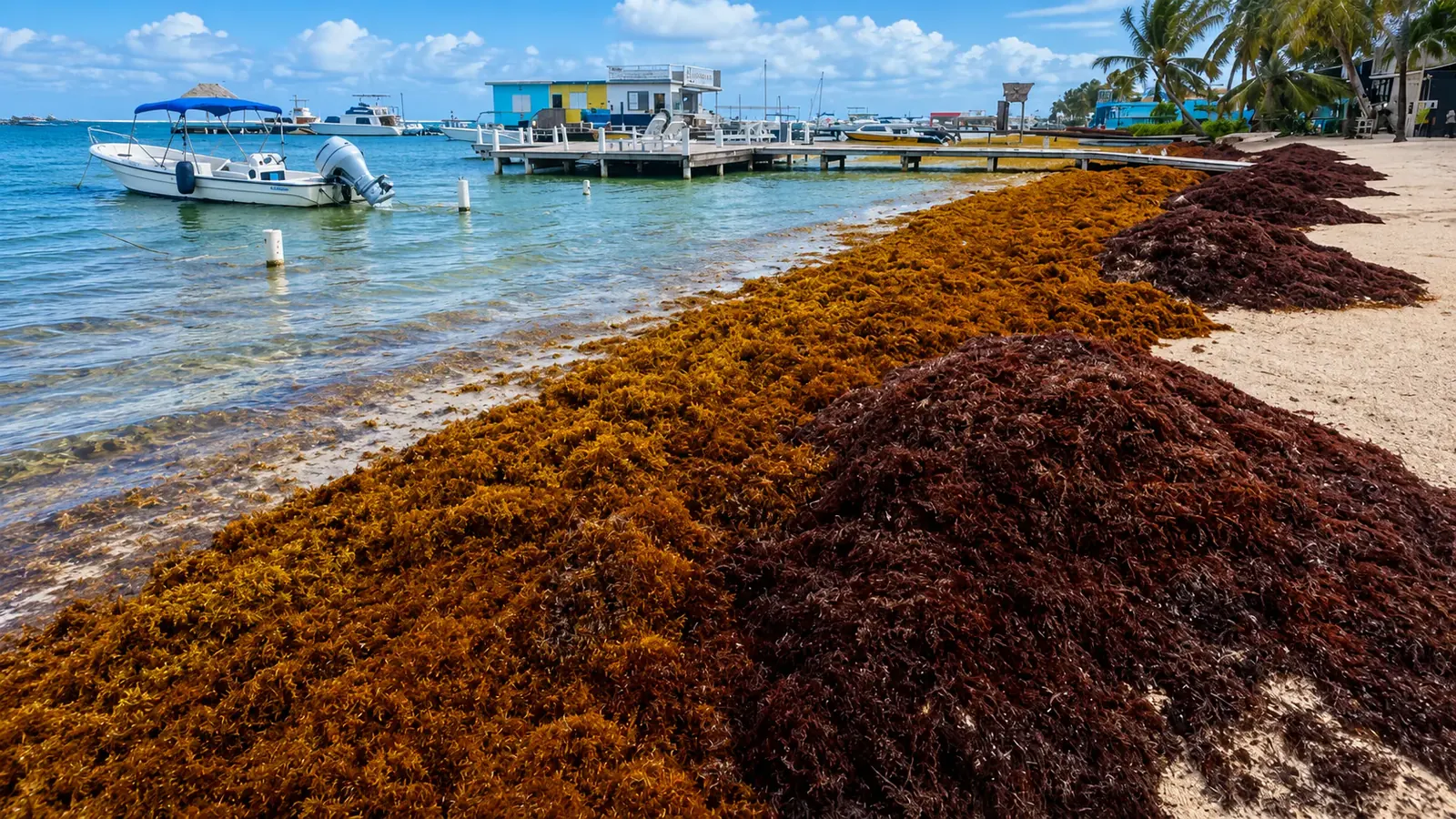
coastlines generally, is sargassum: a brown seaweed that washes ashore in
variable, sometimes heavy quantities in certain years, plus the fact that
Ambergris Caye is Belize’s most visited caye, which makes its peak-season
crowding and pricing swing harder than quieter destinations. Both are worth
planning around separately from the rain calendar.
What to Know
- Sargassum season is not the same as wet season — heavy seaweed years tend to cluster roughly April through August, independent of rainfall
- Sargassum volume varies significantly year to year and even week to week; some seasons bring only light, intermittent seaweed, others bring heavy mats that require daily beach raking
- Hotels with dedicated beach-raking crews and swim docks or piers extending past the seaweed line handle bad sargassum weeks far better than smaller properties without either
- Ambergris Caye is Belize’s busiest caye, so its December-April peak season books out and prices up more aggressively than Caye Caulker or the mainland coast
- Hol Chan and Shark Ray Alley snorkel conditions are affected far more by wind and visibility than by sargassum, since the marine reserve sits well offshore
- May, September, and October combine lower rates with lighter crowds, though sargassum risk during part of that window is a real tradeoff to weigh
Sargassum Season: What It Actually Means for a Family Trip
Sargassum is a free-floating brown seaweed that drifts across the Atlantic
and Caribbean and washes ashore on beaches from Mexico’s Riviera Maya down
through Belize and the eastern Caribbean. On Ambergris Caye, the worst years
bring thick mats piling up along the shoreline, which affects swimmability,
smells noticeably as it decomposes, and can turn a picture-postcard beach day
into a disappointing one if you land in the middle of a bad bloom. It isn’t
predictable a full season in advance — some years are light, some are heavy,
and forecasting beyond a few weeks out is genuinely unreliable, so it’s worth
checking recent conditions (hotels and local Facebook groups tend to post
real-time updates) as your trip approaches rather than relying on a general
seasonal average. Larger hotels with dedicated grounds crews typically rake
their swim areas daily during bad stretches, and properties with a long pier or
dock extending past the seaweed line let guests swim or launch kayaks past
the mess even when the immediate shoreline is affected — both are worth asking
about directly when you book, rather than assuming from photos alone. It’s
also worth remembering that Hol Chan and Shark Ray Alley sit well offshore on
the barrier reef, so a bad sargassum day on the beach doesn’t necessarily mean
a bad snorkeling day — see our Belize snorkeling guide
for what actually affects those conditions.
Filter out the noise and find what works for your family.
Every resort we review gets one of four Family Fit ratings. The rating is based on kids programming, amenities, vibe, and who the resort actually markets to - not just whether they allow children.
Discover My Ideal Resort →Crowds and Pricing: Ambergris Caye Runs Differently Than the Rest of Belize
Ambergris Caye is Belize’s most developed and most visited island, with far
more hotel rooms, restaurants, and daily flights than Caye Caulker or the
mainland coast — which means its peak season compresses harder. December
through April sees the heaviest demand, and popular family-friendly properties
routinely sell out for the December-January holiday stretch months in advance,
with rates climbing well above their shoulder-season baseline. Compared to
Caye Caulker, San Pedro also tends to run noticeably pricier across
restaurants and tours, a gap that widens further during peak weeks. If your
dates are flexible, May, September, and October are worth weighing seriously:
crowds thin out, rates drop meaningfully, and — outside of a heavy sargassum
stretch — the weather is often perfectly workable for a family trip, even with
some afternoon rain in the mix. If you’re comparing Ambergris Caye against a
quieter island base, our Ambergris Caye vs. Caye Caulker guide
breaks down how the two islands’ crowd levels and price points actually
compare beyond the general Belize seasonality numbers.
Planning Around Both Risks at Once
The tension for families is that the best-value shoulder-season windows
(May, and September-October) overlap partially with sargassum’s higher-risk
months, while the sargassum-light stretch from roughly December through March
overlaps with Ambergris Caye’s most expensive, most crowded weeks. There’s no
single “safe” month that avoids both tradeoffs entirely, so it comes down to
which risk your family can absorb better: a beach day disrupted by seaweed, or
a trip that costs more and requires booking well ahead. Families prioritizing
guaranteed clean beaches and don’t mind paying for it tend to lean toward
February-March, just past the busiest holiday crush but still solidly in the
dry, low-sargassum window. Families more focused on value and lighter crowds,
and willing to accept some sargassum risk, often do well in late September or
October, checking recent beach conditions in the weeks before departure. Either
way, booking a snorkeling or reef tour in advance for peak
weeks, or a flexible shoulder-season excursion you can
shift by a day if a sargassum bloom or a rain system rolls through, takes some
of the guesswork out of a trip built around either strategy.
Plan Your Days in Belize
Browse family-friendly tours, snorkeling trips, and day activities on Belize.
Quick Answers
When is sargassum usually worst on Ambergris Caye?
Roughly April through August in heavier years, though volume varies
significantly year to year and isn’t reliably predictable more than a few
weeks out.
Does sargassum affect Hol Chan and Shark Ray Alley snorkeling?
Not directly — those sites sit on the barrier reef well offshore, so a bad
sargassum day on the beach doesn’t necessarily mean poor snorkeling
conditions.
Is Ambergris Caye more expensive than Caye Caulker during peak season?
Generally yes — as Belize’s busiest caye, San Pedro’s restaurants, tours, and
hotel rates run noticeably higher during December-April than Caye Caulker’s.
Where to Stay in Ambergris Caye
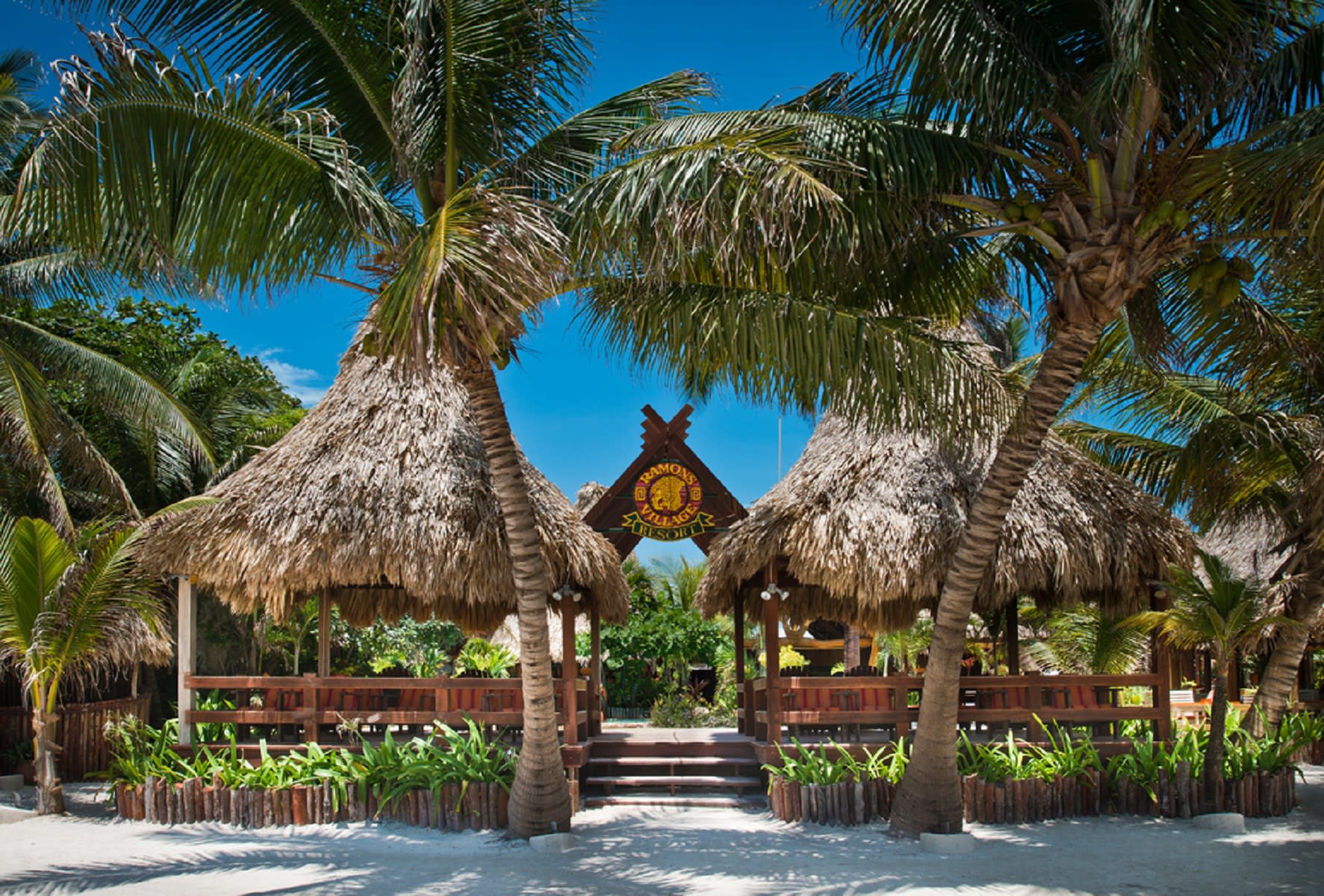
Ramon’s Village Resort
Thatched-roof cabanas directly on San Pedro’s beach, walkable into town.
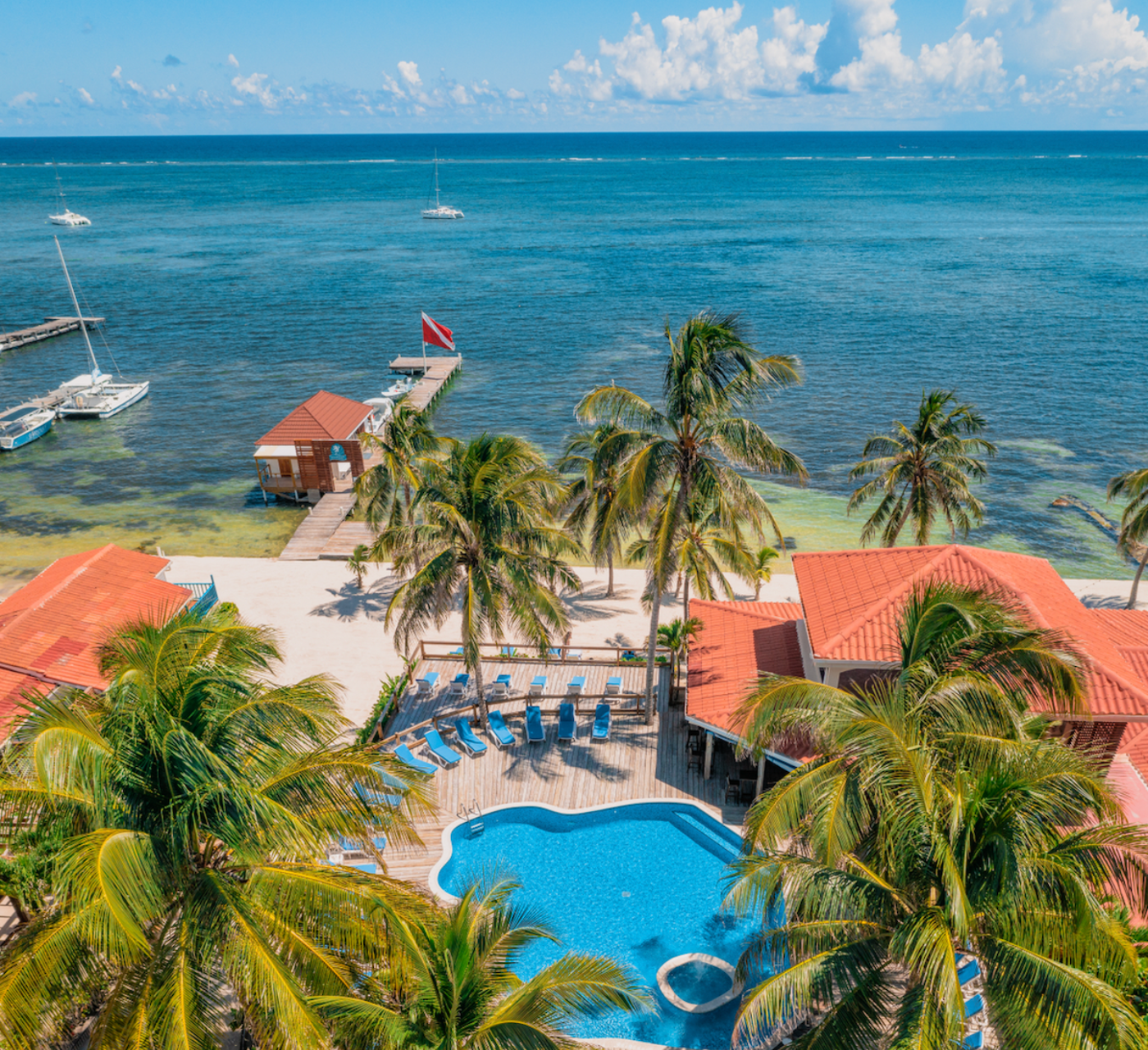
SunBreeze Suites
A beachfront pool and suite-style rooms in San Pedro town, an easy walk to restaurants and the town dock.
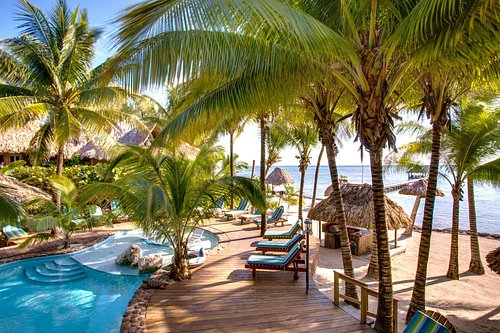
Xanadu Island Resort
Thatched suites with free kayaks on the north end of San Pedro; no on-site restaurant, so plan meals in town.
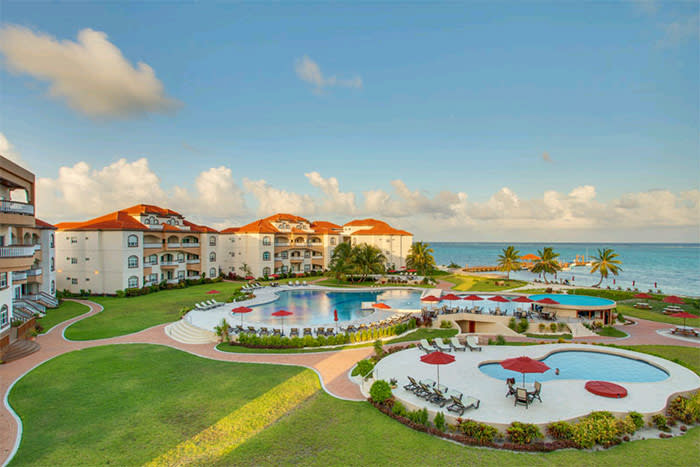
Grand Caribe Belize
Condo-style suites with six pools and full kitchens, a golf-cart ride north of San Pedro town.
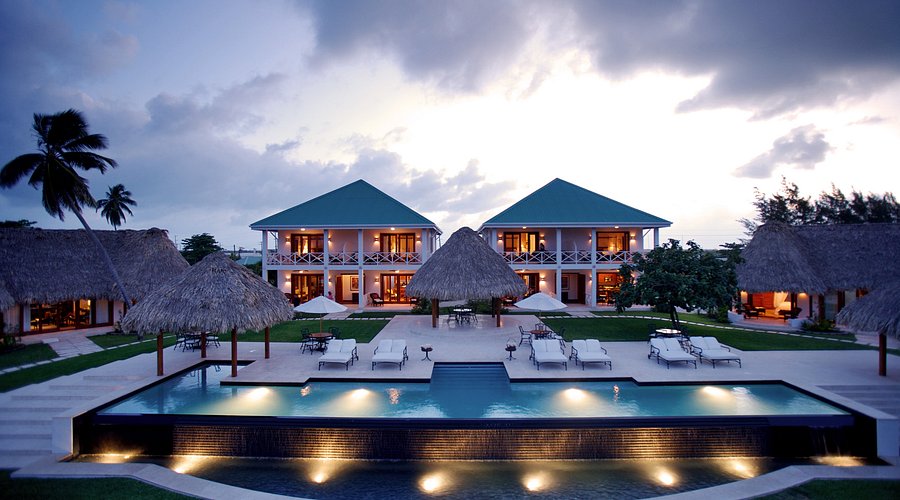
Victoria House Resort & Spa
Beachfront villas and a full-service spa a short golf-cart ride south of San Pedro town.
Ready to Plan Your Trip?
Get a personalized Belize itinerary built around your kids’ ages and your travel dates.