Anguilla’s beaches work beautifully with babies and toddlers — calm water, soft sand, and no rough surf at most family beaches. What the standard guides skip over is the logistics layer that makes or breaks a trip with a child under three: whether taxis carry car seats, where to find diapers when you run out, which beach stretches have real shade, and how to structure days around a nap schedule at a resort that wasn’t designed with that in mind.
Filter out the noise and find what works for your family.
Every resort we review gets one of four Family Fit ratings. The rating is based on kids programming, amenities, vibe, and who the resort actually markets to - not just whether they allow children.
Discover My Ideal Resort →This guide addresses those specifics directly, so you can plan the trip with accurate expectations rather than discovering the gaps on arrival.
Key Highlights
- Anguilla has no commercial car seat rental system — you must bring your own infant or convertible seat and arrange transport in advance
- Formula and branded diapers (Pampers, Huggies) are available at supermarkets in The Valley, but selection is limited and prices are higher than at home — pack a generous supply
- Rendezvous Bay and Shoal Bay East both offer significant natural shade from trees at the back of the beach, critical for under-12-month infants
- The ferry crossing from St. Maarten (approximately 20 minutes) is manageable with a lap infant but requires advance planning for strollers and gear — see our full guide to getting to Anguilla with kids
- Most luxury resorts will provide a crib on request — confirm in writing before arrival and ask about mattress type
- Shoal Bay East has extremely gentle entry water for paddling toddlers; Sandy Ground and Meads Bay are also calm but have occasional boat traffic
- Anguilla has one hospital (Princess Alexandra Hospital, in The Valley) and several clinics — the medical infrastructure is limited, so travel insurance and a well-stocked first aid kit are essential
- The island operates on Eastern Caribbean Time (UTC-4) year-round, with no daylight saving change — useful for planning nap schedules against your home time zone
I. Getting There: The Ferry, the Flight, and What Changes When You Have a Baby
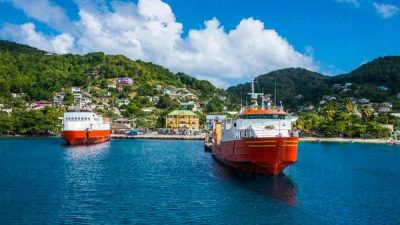
Most families arrive via St. Maarten/St. Martin, connecting through Princess Juliana International Airport (SXM) and then taking a ferry to Anguilla. The ferry crossing from Marigot Bay (French side) or Simpson Bay to Blowing Point takes roughly 20 minutes on a good day, closer to 25–30 in choppier winter swells. Lap infants travel free on most operators, but the boats are open-air, fast, and loud — bring ear protection for infants and a carrier rather than a stroller, since you’ll be boarding and disembarking quickly over a gangplank with limited space for gear. A structured carrier keeps your hands free for bags and older siblings.
Strollers go in the hold or on the bow — they’re not accessible during crossing, and salt spray is a real factor. Pack essentials (diapers, formula, snacks, a change of clothes) in a carry-on bag rather than checking anything into luggage you can’t reach. Check airport transfer options from SXM to the ferry in advance — getting from the airport to Marigot with a baby and luggage in a standard taxi is manageable, but coordinating it ahead of time removes significant stress on arrival day.
A small number of charter flights operate directly into Clayton J. Lloyd International Airport (AXA) from Puerto Rico and other regional hubs — if your routing allows it, this eliminates the ferry entirely and is worth comparing on price, especially with an infant who doesn’t yet have a predictable travel tolerance.
II. Car Seats and Ground Transport
This is the logistics gap that trips up the most families. Anguilla taxis are predominantly minivans and SUVs operated by independent drivers. There is no regulated car seat rental system through the taxi industry, and rental car companies on the island do not reliably stock infant or convertible seats. You need to bring your own.
A car seat travel bag protects the seat during ferry transit and checked luggage. If you’re renting a car — generally the most practical option for families on Anguilla, since taxis are not on-demand in the same way they are in larger destinations — browse rental car options before you travel and confirm with the operator directly that you can install your own seat in the specific vehicle class you’re booking. Anguilla drives on the left — if this is new territory for you, factor in time to adjust before driving with a child in the car.
Having a rental car, even for just a few days, changes what’s accessible with a toddler. The island is small — roughly 16 miles long and 3 miles wide — so driving from one end to the other takes about 25 minutes. This means you can return to your resort for naps without sacrificing significant beach time.
III. Supplies: What to Bring vs. What You Can Buy
Anguilla has supermarkets in and around The Valley — the largest is IGA-affiliated and carries a reasonable selection of basics. Pampers and Huggies diapers are stocked, as are some formula options, but the brand range is narrower than you’d find in the US or UK, and prices reflect import costs. If your baby is on a specific formula (especially a sensitive, hypoallergenic, or toddler-stage variety), bring the full trip supply plus a buffer of two to three days’ worth. Running out mid-trip and waiting on a delivery is not a realistic option here.
Sunscreen rated for infants under 6 months (zinc oxide, fragrance-free) is not reliably stocked on-island. Pack your own sunscreen, and pack more than you think you need — Caribbean sun at this latitude (18°N) is intense, and reapplication after every water session is not optional with under-3 skin. For babies under 6 months, shade and UV-protective clothing are more reliable than sunscreen.
Bring a baby and toddler first aid kit, including infant paracetamol/acetaminophen, antihistamine approved for your child’s age (confirm with your pediatrician), hydration sachets, and a thermometer. A reliable travel thermometer matters more than you’d think when you’re trying to assess a 2 a.m. fever at a resort with no pharmacy nearby. Princess Alexandra Hospital is in The Valley and handles emergencies, but for anything non-urgent, a telehealth call to your pediatrician back home is likely faster than navigating local clinic availability.
Other items that are difficult to source locally: swim diapers (bring at least double what you think you’ll use), portable white noise machines, blackout travel curtains, and toddler-specific snacks. Baby food pouches are occasionally available but selection is inconsistent.
IV. The Beach with a Baby: Shade, Sand, and Safe Water
Not all of Anguilla’s beaches work equally well with an infant or young toddler, and the difference often comes down to shade. Many of the most photographed stretches — Meads Bay, particularly in the middle section — are wide open with minimal natural tree cover behind the sand. At 11 a.m., there’s nowhere to retreat from direct sun without a tent.
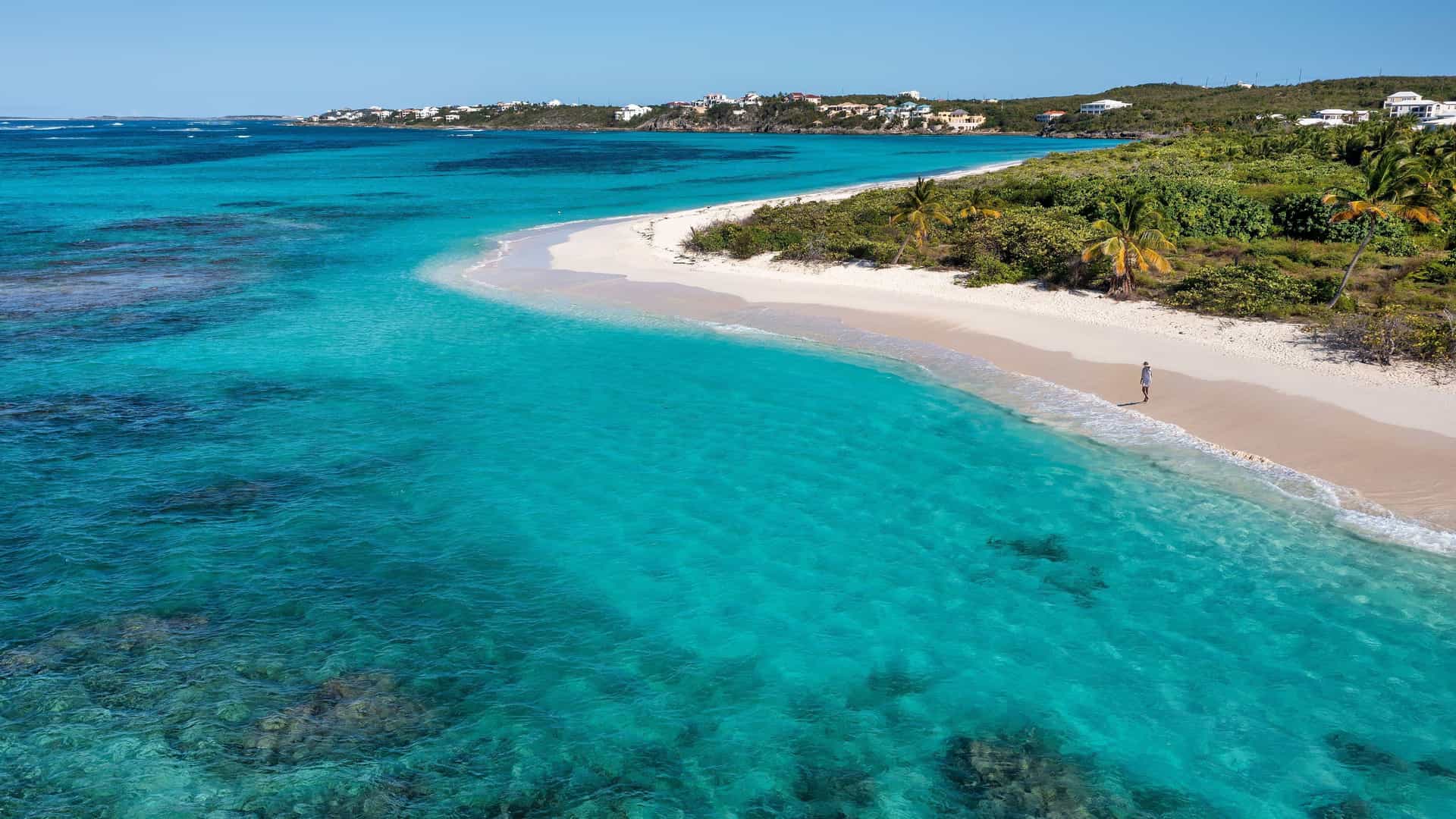
For shade, Rendezvous Bay has a tree line along the back of the beach that provides solid coverage in the morning and late afternoon. Shoal Bay East has Australian pines and sea grape trees at the northern end that cast real shade from mid-morning onward. Both beaches also have calm, shallow water — Shoal Bay East’s entry is particularly gradual, with no sudden drop-offs in the first 30–40 meters, making it practical for a toddler who wants to stand and wade.
Bring a sand-proof beach blanket and a UPF 50+ pop-up beach tent rather than relying on finding shade. For toddlers learning to walk on sand, water shoes protect against the occasional sharp shell — though Anguilla’s beaches are generally well-maintained and free of reef debris in the shallower entry zones.
Avoid the beach during midday (roughly 11 a.m. to 2 p.m.) in the peak sun months (December through April). Morning sessions from 7:30 to 10:30 a.m., followed by a resort nap through midday, then an afternoon session from 3:30 p.m. onward is the rhythm most families with under-2s find workable. Our ranked guide to Anguilla’s family-friendly beaches covers each beach’s conditions in more detail.
V. Nap Logistics and Resort Zones
The practical challenge for families with babies and toddlers isn’t finding things to do — it’s protecting the nap. A missed nap at a Caribbean resort cascades into an overtired, sunburned child by 4 p.m. and a miserable dinner. The resort you choose, and specifically your room’s location within it, matters considerably.
Ask specifically for a room away from pool areas and beach bars when booking. At larger resorts, this typically means requesting a garden-facing room, a room above the second floor with balcony access (so you can monitor sound levels), or a villa-style unit with physical distance from common areas. The most common complaint in parent reviews of Anguilla resorts is that a poolside room made naps impossible after 11 a.m.
A portable white noise machine makes a meaningful difference when outdoor ambient sound is a factor. Portable blackout curtains are equally useful — most Anguilla resort rooms have standard curtains that don’t fully block the afternoon light, and a sleeping toddler in a bright room at 1 p.m. will not stay asleep.
For families where the baby’s sleep is the organizing principle of the day (which is most families with under-18-month-olds), a villa or suite with a separate bedroom is more than a luxury — it means one parent can put the baby down while the other sits on the terrace. Many of the properties below offer suite configurations at this price point.
VI. Nearby Hotels and Resorts
Each of the properties below suits babies and toddlers differently. The notes here focus on the logistics most relevant to under-3 travel — room configuration, beach access, and quiet zones — rather than amenities aimed at older children.
CuisinArt Golf Resort & Spa sits on Rendezvous Bay, one of the better beaches for shade and shallow water. The resort has a hydroponic farm on-site (a genuine novelty for a curious toddler), multiple pools, and suite configurations that allow for a separate sleeping area. The beach here is long and wide enough that you can set up well away from any activity zones. For an in-depth look at this property (listed as Aurora Anguilla), see our full review of Aurora Anguilla Resort & Golf Club, which covers the waterpark and family facilities in detail.
Four Seasons Resort and Residences Anguilla at Meads Bay has the infrastructure — full concierge service, reliable crib delivery, kitchenette options in some suites, and staff accustomed to requests from families with very young children — that makes logistics easier. The beach at Meads Bay has less natural shade than Rendezvous Bay or Shoal Bay East, so a beach tent is non-negotiable here. The resort’s private beach area is managed, meaning crowds and activity levels are predictable.
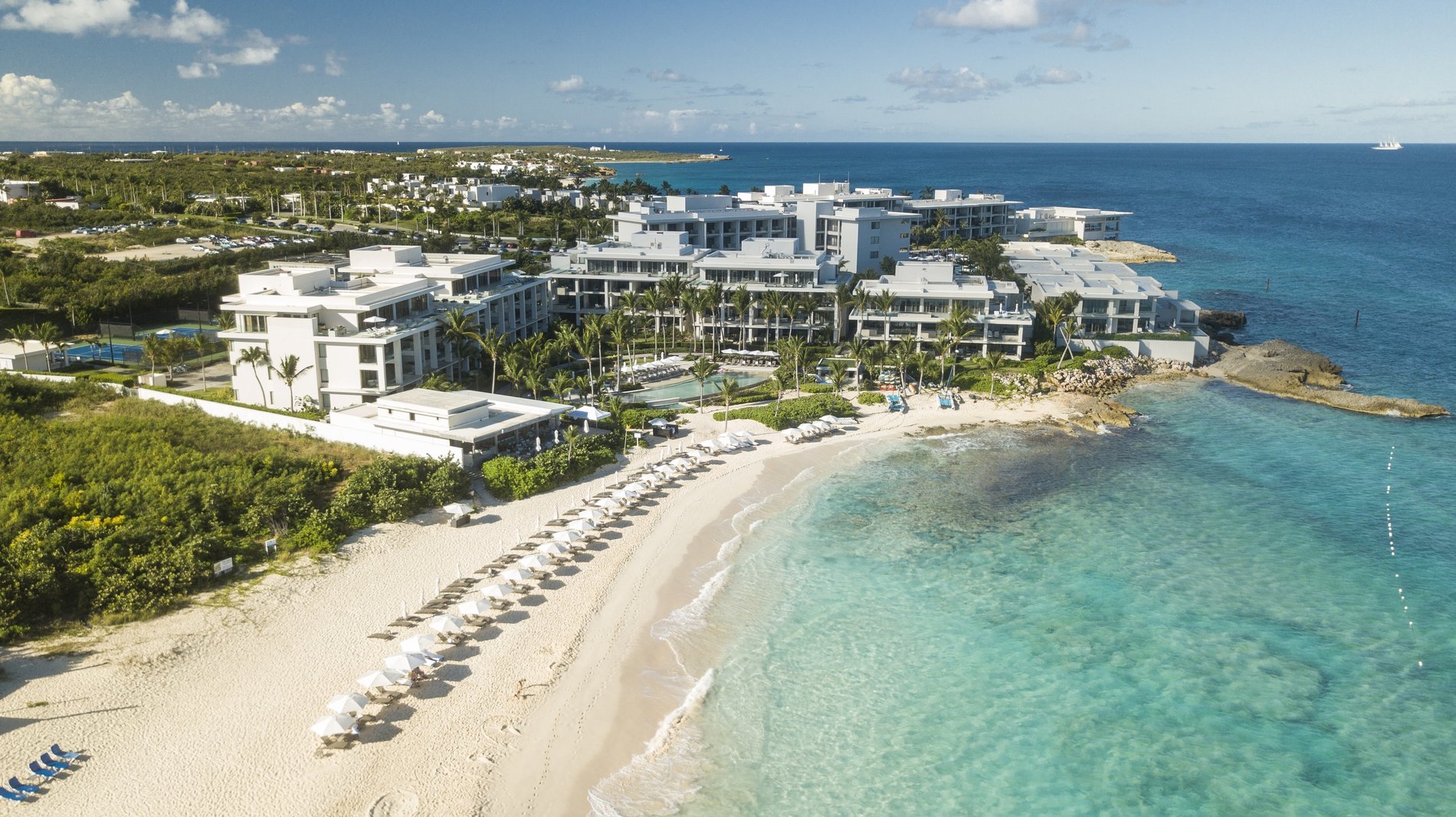 Four Seasons Resort and Residences Anguilla
Malliouhana, Auberge Resorts Collection is a clifftop property above Meads Bay with a quieter, more adult-leaning atmosphere that nonetheless accepts families. The pool area here is notably calmer than at larger resorts, which can be an asset for nap-dependent families who need predictable noise levels during the day. Access to the beach involves steps — manageable with a toddler who walks, more cumbersome with a baby in a carrier and a bag of gear.
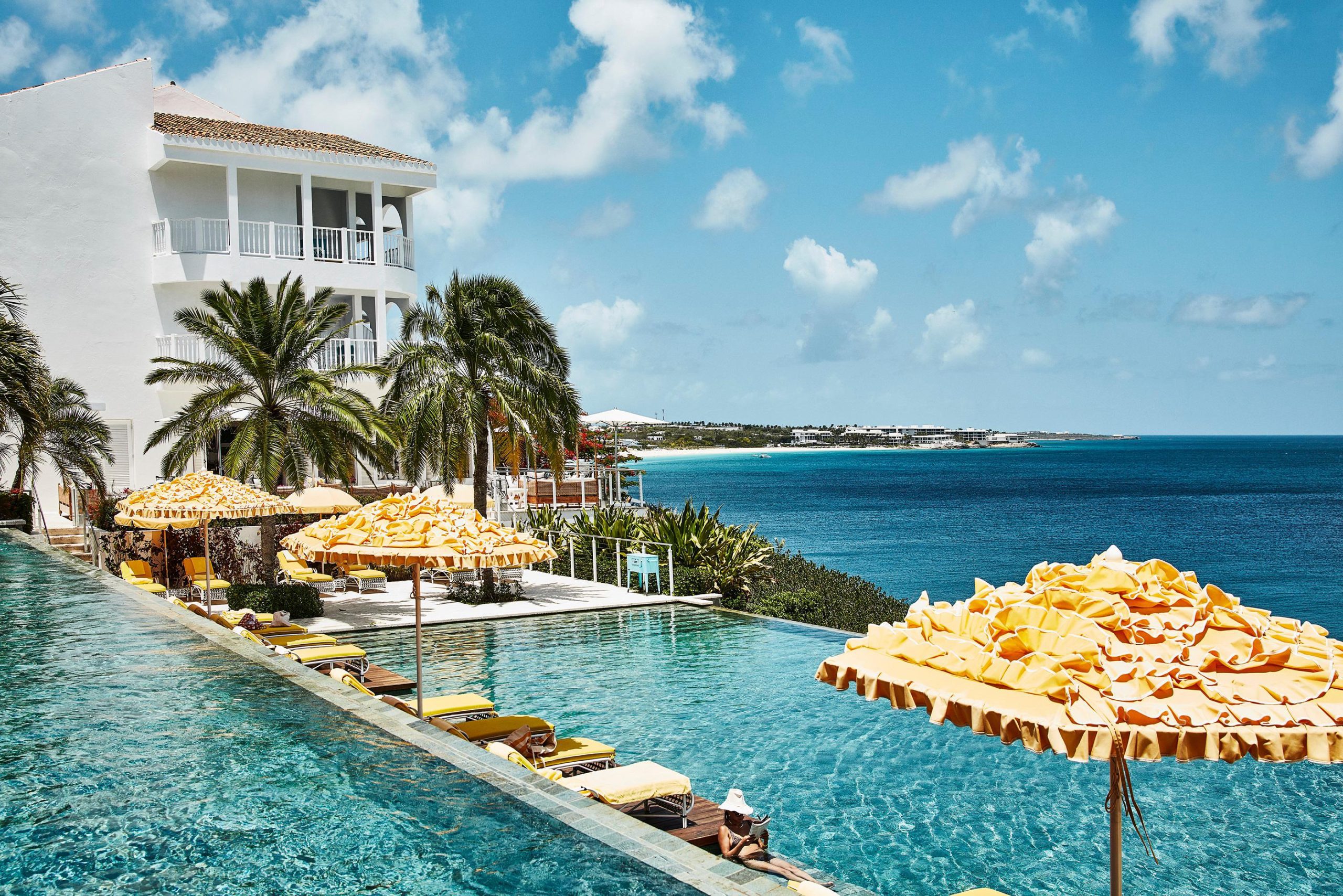 Malliouhana, Auberge Resorts Collection
Cap Juluca, A Belmond Hotel at Maunday’s Bay offers a long, crescent-shaped beach with calm water and room configurations that include private plunge pool villas. The moorish-style architecture means the property is spread out, so getting from your room to the beach takes a few minutes of walking — fine for an older toddler, more of a consideration if you’re making four trips a day with an infant in a carrier. The beach at Maunday’s Bay faces west and gets afternoon shade earlier than east-facing beaches.
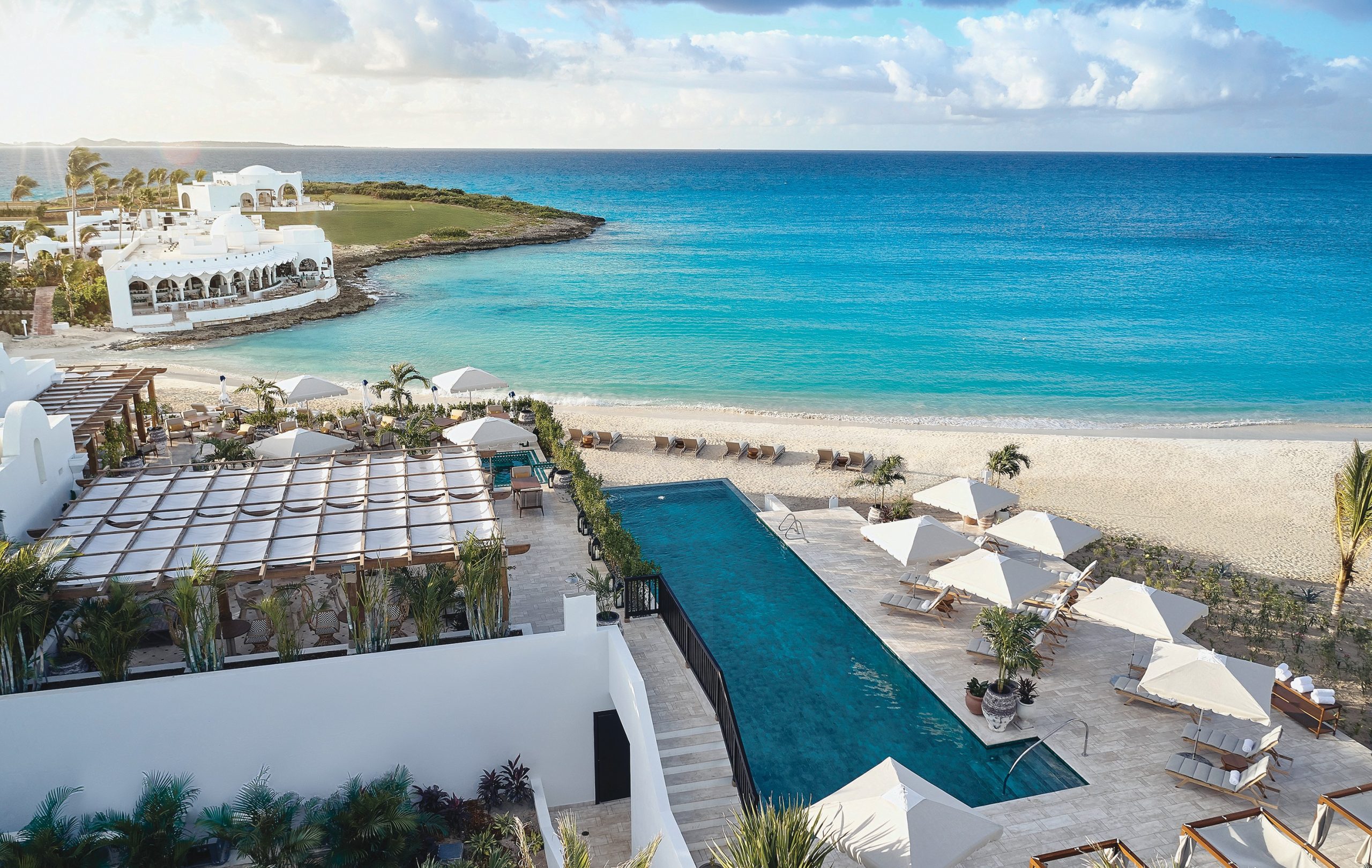 Cap Juluca, A Belmond Hotel
Shoal Bay Villas sits directly on Shoal Bay East — the beach with the best natural shade and the most gradual water entry on the island. The villas have full kitchens, which is a significant practical advantage for families making formula, heating baby food, or storing expressed breast milk. Not having to negotiate with a resort restaurant for a 6 a.m. bottle or a toddler-sized portion is a genuine convenience. For our detailed breakdown of the property, see the Kitchen-First, Beach-Always: Shoal Bay Villas Family Review.
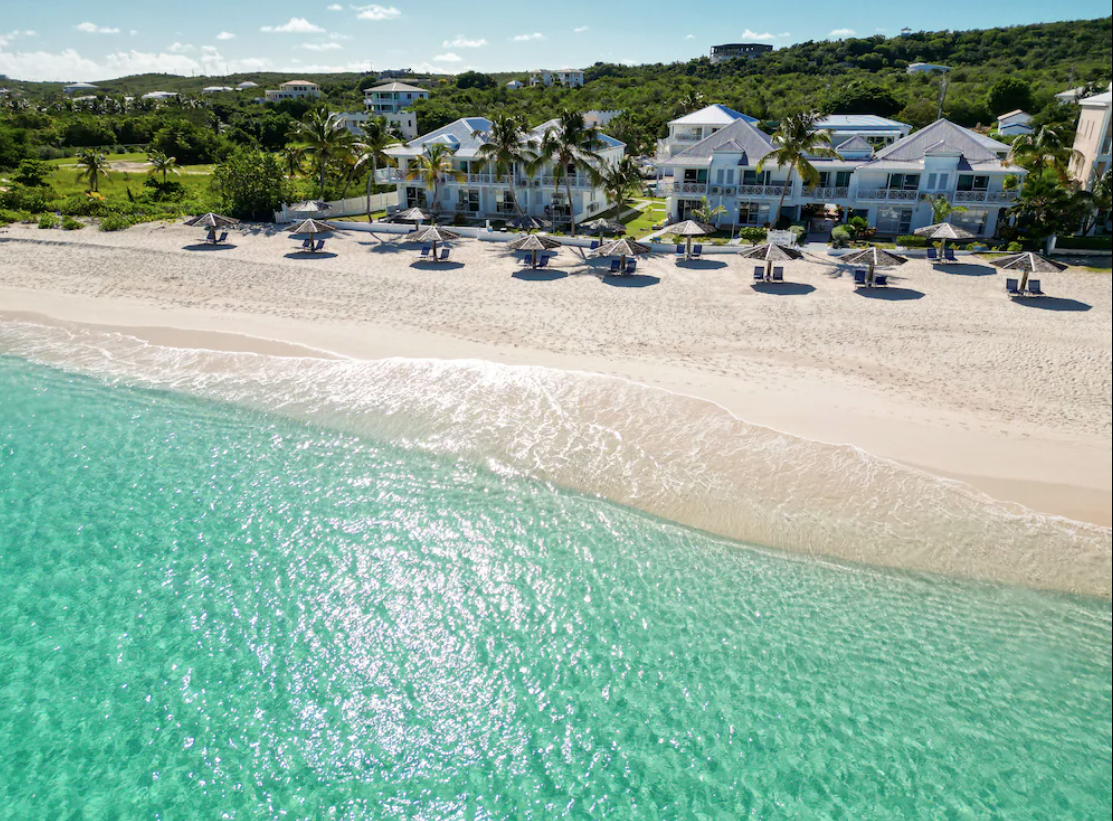 Shoal Bay Villas
VII. Activities and Day Planning with Under-3s
Anguilla’s activity roster — snorkeling, sailing, paddleboarding — is largely aimed at children who are old enough to participate. With a baby or young toddler, the realistic daily structure is: morning beach session, midday nap and resort time, afternoon beach or pool, early dinner. That is not a limitation unique to Anguilla, but it’s worth going in with that framework rather than trying to fill the itinerary with excursions.
Short boat trips — to Sandy Island (a 10-minute ride from Sandy Ground) or Prickly Pear Cays — are feasible with a toddler 18 months and older who handles boat motion reasonably well. Sandy Island has shade trees, a beach bar with simple food, and calm water. The ride is short enough that a toddler who doesn’t love boats won’t have time to deteriorate completely. Confirm current operator schedules locally and browse family-friendly tours and activities to see what’s currently running with flexible cancellation policies. You can also compare kid-friendly day tours for a broader look at options.
For older siblings in the 4–8 range traveling alongside a baby, Anguilla’s calm beaches offer plenty to do independently. Our ranked guide to things to do in Anguilla with kids covers the full range of activities across age groups.
For downtime in the room during naps — both the baby’s and the parents’ — having books on hand is useful. Counting books and bedtime picture books travel well and give toddlers a familiar routine anchor in an unfamiliar room.
VIII. Practical Safety Notes
Anguilla’s water is calm by Caribbean standards, but “calm” is relative — ocean water with a baby or non-swimming toddler requires constant hands-on supervision. There are no lifeguards posted at public beaches. Even in knee-deep water, a toddler can go under in seconds on uneven sand. Keep one adult designated as the water-watcher at all times, without a phone in hand.
Mosquitoes are present on Anguilla, particularly in the evening and near vegetation. Use an insect repellent formulated for your child’s age — check our guide to the safest options by age. Dengue cases have been reported in the Eastern Caribbean periodically; check current health advisories from your home country’s travel health authority before departure.
Dehydration moves faster in the Caribbean heat than parents typically expect, especially with a baby who isn’t verbally communicating thirst. Offer fluids more frequently than you would at home — every 20–30 minutes during beach time — and watch for reduced wet diapers, which is the clearest early indicator in infants. Keep a refillable water bottle accessible at all times, and for formula-fed infants, factor in that powdered formula mixed with local tap water may not be appropriate — use bottled water, which is widely available.
Travel insurance that covers medical evacuation is worth the cost for a trip to a small island with limited hospital capacity. For anything requiring specialized pediatric care, medical transport to Puerto Rico or Miami would be necessary.
Things to Do in Anguilla
Browse family-friendly tours and activities in Anguilla, ranked from real traveler reviews.
Ready to Plan Your Anguilla Trip?
Get a personalized family itinerary built around your kids’ ages, interests, and travel style — free.