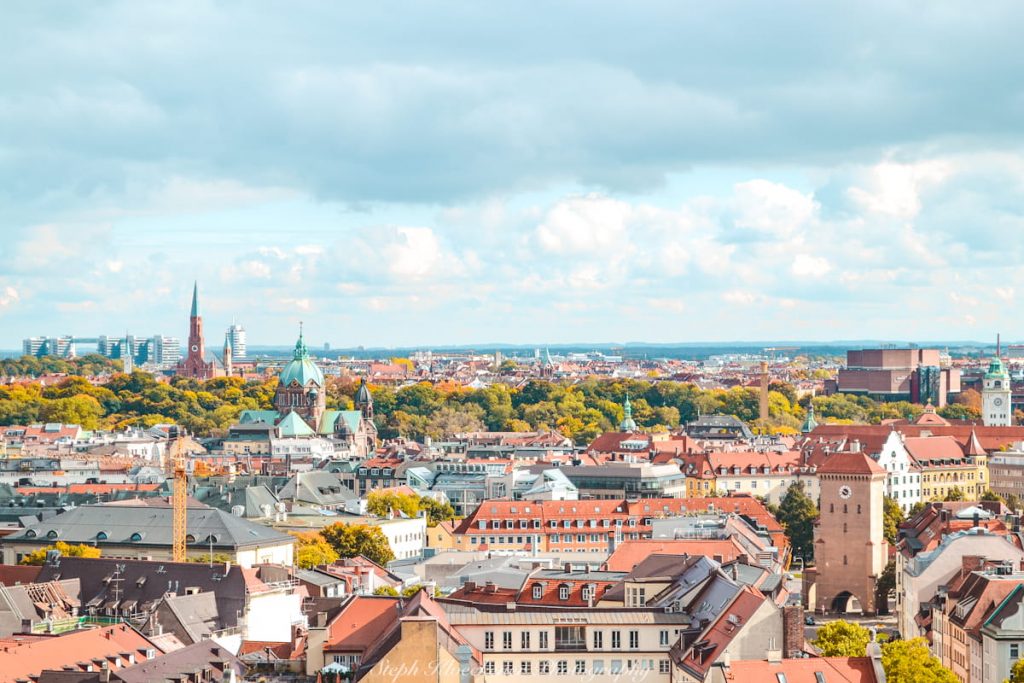
Munich’s transport landscape is characterized by an incredibly efficient, integrated public transit system (MVV), a wonderfully pedestrian-friendly city center, and good road infrastructure for private vehicles. The city is exceptionally walkable, especially in the central districts like Marienplatz, Viktualienmarkt, and the sprawling English Garden, making strollers a perfectly viable option for exploring with your little ones. For longer distances or those moments when tired little legs just can’t go any further, the U-Bahn (subway), S-Bahn (urban rail), trams, and buses provide extensive and reliable coverage across the city. While car ownership is common among residents, inner-city driving can be quite challenging for visitors due to widespread pedestrian zones, dedicated bicycle lanes, and the perennial scarcity of parking. Ride-sharing services and traditional taxis are readily available, offering convenience when needed. For families, the focus often shifts between maximizing public transport for ease and cost-efficiency, fully utilizing strollers for on-foot discovery, and occasionally opting for the convenience of a taxi or car for specific excursions, particularly to destinations outside the city center or when managing luggage during arrival or departure. Munich’s commitment to green spaces and numerous family-friendly attractions means that public transport routes are thoughtfully well-connected to all key points of interest for children, making getting around Munich with kids a breeze.
Logistics at a Glance: Family Transport Options
When planning how to navigate Munich with your family, you have several excellent options, each with its own set of advantages and considerations. Understanding these will help you choose the best mode of travel for your family’s needs and itinerary.
Filter out the noise and find what works for your family.
Every resort we review gets one of four Family Fit ratings. The rating is based on kids programming, amenities, vibe, and who the resort actually markets to - not just whether they allow children.
Discover My Ideal Resort →Rental Cars offer significant flexibility, especially if your family plans on day trips to the breathtaking Bavarian Alps or to iconic castles like Neuschwanstein, or up to Zugspitze. They are also a convenient choice if you have multiple car seats or a substantial amount of luggage, making packing and unpacking less of a hassle. However, be aware that parking can be quite expensive, particularly in the city center, and traffic congestion can be a factor, especially during peak hours. You’ll also need to navigate pedestrian zones and understand German car seat laws, which are very strict. Factor in fuel costs and the requirement for a green sticker (Umweltplakette) for environmental zones.
Public Transit (MVV) is arguably the most family-friendly option for exploring Munich itself. The extensive network of U-Bahn, S-Bahn, trams, and buses is incredibly efficient and cost-effective, especially when utilizing family passes. A major perk for parents is the excellent stroller accessibility on most vehicles and stations, and children under 6 years old often travel free, which is a big saving. Opting for public transport also aligns with environmentally friendly travel. While the system is robust, it can get crowded during peak hours, and understanding the ticket system initially might take a moment. It also offers less direct door-to-door service outside of main routes, and while rare, minor delays can occur.
Ride-Sharing (Uber, local taxis) provides door-to-door convenience, which can be a lifesaver with tired kids or when heading out late in the evening. These services are generally readily available throughout the city. However, pricing can be variable, with surge pricing during high-demand times, making it generally more expensive than public transit. A significant challenge for families is that it can be very difficult to guarantee a car seat, which is a critical safety consideration for young children. If you plan to rely on these, consider bringing your own travel car seat.
Walking is undoubtedly the best way to truly experience Munich’s charming pedestrianized zones and historic sights. It’s completely free, promotes discovery as you stumble upon hidden gems, and offers great exercise for older kids. However, walking can be very tiring for younger children, and your plans will be dependent on the weather. For longer distances, it’s less efficient, and navigating crowded sidewalks with non-compact strollers can sometimes be a challenge. Be sure your kids are wearing comfortable footwear to enjoy all the walking.
The Transit Network: A Detailed Breakdown
Munich’s transport network is designed for efficiency and ease of use, making it generally very accessible for families. Understanding the nuances of each mode of transport will help you master getting around Munich with kids seamlessly.
Rental Cars
In Germany, driving is on the right-hand side of the road, and the road quality in and around Munich is excellent, with well-maintained surfaces and clear signage. However, parking in the Munich city center, specifically within the Altstadtring, is very limited and can be quite expensive, often requiring payment in multi-story garages or metered street parking, which is scarce. Many hotels do offer parking, but typically for an additional fee. Munich also operates an environmental zone (Umweltzone) in its city center, meaning vehicles must display a green sticker (Grüne Plakette). Rental cars almost always come equipped with this sticker. Traffic can be heavy during peak rush hours, generally from 7-9 AM and 4-6 PM, so planning your drives outside these times is advisable.
For family logistics, German law mandates that children up to 12 years old or 150 cm (approximately 4 ft 11 inches) must use an appropriate child restraint system, whether a car seat or a booster seat. For infants and toddlers, rear-facing seats are mandatory up to 9 kg (20 lbs) and highly recommended for a longer period. Major rental agencies such as Sixt, Europcar, Avis, Hertz, and Enterprise operate conveniently at Munich Airport (MUC) and also have downtown locations. They typically offer child seats and booster seats for an additional daily fee, often ranging from €10-€15 per day, which may be capped per rental. It is absolutely crucial to book these car seats in advance, ensuring you specify the age and weight of your children to guarantee availability and the correct size. Bringing your own travel car seat can be a cost-saving option and ensures familiarity for your child, but remember to double-check its compatibility with European seatbelt systems before you travel.
Public Transportation
Munich’s excellent public transport is managed by the MVV (Münchner Verkehrs- und Tarifverbund), an integrated network that simplifies travel. This extensive system includes the U-Bahn (Subway/Underground) with 8 lines offering fast and frequent connections to major attractions and neighborhoods, and the S-Bahn (Urban Rail) with 8 main lines linking the city center to surrounding suburbs and the airport, with its “Stammstrecke” (main line) running directly through the city core. Trams (Straßenbahn) operate 13 lines, providing a scenic way to travel, particularly useful for shorter distances within the city and connecting to U-Bahn/S-Bahn stops. Finally, an extensive Bus network fills any gaps in U-Bahn/S-Bahn/tram coverage, including convenient night buses for evening excursions.
Stroller accessibility on Munich’s public transport is generally excellent, making getting around Munich with kids relatively stress-free. Most U-Bahn and S-Bahn stations are equipped with elevators and escalators, though a few older stations might require ramp access or a lift. Trams and newer buses feature low-floor designs, allowing for easy roll-on and roll-off with strollers. You’ll find designated spaces for strollers and wheelchairs, making travel comfortable. A major financial benefit for families is that children under 6 years old travel completely free on all MVV services when accompanied by an adult. For the best value family passes, consider the Group Day Ticket (Tageskarte), which covers up to 5 people (with a maximum of 2 over 14 years old) for an entire day across your chosen zones. For central Munich, Zone M covers most tourist sites. If traveling further, such as to the airport, a larger zone ticket is needed. For example, a Group Day Ticket for Zone M currently costs around €17,80 (as of early 2024, subject to change). Other options include the CityTourCard and Munich Card, which offer unlimited MVV travel along with discounts on attractions, available for 1-5 days. The IsarCard, a weekly or monthly pass, is more suitable for longer stays and offers better value for frequent use but is less flexible for typical tourist visits.
Taxis & Ride-Sharing
For those moments when door-to-door convenience is paramount, Munich offers both traditional taxis and ride-sharing options. Uber operates in Munich, and Bolt is another available service. For local taxi services, you can hail them on the street (look for the cream-colored cars with a “Taxi” sign) or book them via apps like Free Now (formerly MyTaxi) or Taxi Deutschland. These services can be very helpful for tired children or late-night returns to your accommodation.
However, securing car seats via ride-sharing apps or even traditional taxis in Munich presents a significant challenge. Neither Uber nor Bolt reliably offer car seat options, making it extremely rare to find a taxi with a pre-installed child seat when hailed on the street. While some taxi companies might offer car seats if pre-booked extensively in advance, for instance, by calling a direct taxi dispatch service, this is not guaranteed and requires explicit confirmation. Therefore, families requiring car seats for young children should strongly consider bringing their own travel car seat or prioritizing public transport or rental cars for their journeys. In terms of safety, both street-hailed taxis and app-based services (Uber/Bolt) are generally very safe in Munich. All licensed taxi drivers are regulated, and app services provide driver and vehicle details, adding an extra layer of reassurance for passengers.
Want a custom plan? Use our personalized Itinerary Generator for Munich to craft the perfect trip tailored to your family’s interests and your children’s ages!
Your Arrival: Airport & Train Station Transfers
Getting your family from Munich’s main arrival points to your accommodation is often the first logistical hurdle. Thankfully, Munich provides clear, efficient options for both its airport and central train station.
Primary Hubs
Munich Airport (MUC), officially known as Franz Josef Strauß International Airport, is located approximately 28 km (17 miles) northeast of the city center. It’s a modern, well-connected airport that serves as a major gateway to Bavaria. Munich Hauptbahnhof (Hbf) is the city’s main train station, centrally located and a bustling hub for national and international rail services, making it a convenient arrival point for many travelers.
Top 2 Options from MUC to city center
When arriving at Munich Airport with your family, you have two primary, reliable choices for reaching the city center.
S-Bahn
The S-Bahn offers a cost-effective and efficient transfer. A single adult ticket for Zone M-5 or an Airport-City-Day Ticket typically costs around €13,30. For families, a Group Day Ticket for Zone M-5 or the Gesamtnetz (entire network) would be more economical, for instance, a Group Airport-City-Day Ticket at approximately €25.80, with children under 6 traveling free. The journey to Munich Hauptbahnhof takes about 40-45 minutes. This option is very convenient for families, as S-Bahn trains provide ample space for both luggage and strollers, making it a stress-free and reliable way to begin your Munich adventure, perfect for getting around Munich with kids.
Private Transfer/Taxi
For maximum convenience, especially if you’re traveling with significant luggage or very young children, a private transfer or taxi offers door-to-door service directly to your accommodation. A standard taxi typically costs between €80-€100. Private transfer services, which can be pre-booked through companies like Welcome Pickups, might be slightly more, especially if you request a car seat, which incurs an additional charge. The travel time is approximately 35-45 minutes, depending on traffic conditions. Pre-booking a private transfer also allows you to explicitly request child seats, though this needs to be confirmed directly with the provider to ensure availability.
A 3-Day Transit-First Itinerary
This itinerary focuses on efficient use of Munich’s excellent public transport and walkability, designed to help families experience the city’s highlights comfortably.
Day 1: City Center Discovery (Focus: Walkability and central trams/metro)
Start your Munich adventure by immersing yourselves in the historic heart of the city. In the morning, arrive at Marienplatz, easily accessible via U-Bahn (U3/U6) or S-Bahn (all lines run to Marienplatz). Here, you can walk around, admire the stunning architecture, and witness the famous Glockenspiel at the New Town Hall chime its delightful tunes – a definite highlight for kids. Late morning, take a short 5-minute stroll to the bustling Viktualienmarkt, a vibrant open-air market perfect for grabbing local snacks and exploring its colorful stalls. In the afternoon, wander through the pedestrian zone along Kaufingerstraße, perhaps doing a little window shopping, before heading towards the magnificent Frauenkirche. From Karlsplatz/Stachus, hop on a tram (e.g., Tram 19/21) to explore the exterior of the Residenz and its serene Hofgarten. In the evening, enjoy a leisurely walk along Maximilianstraße or take the U-Bahn to Odeonsplatz to see the iconic Feldherrnhalle. Transport Tip: A Group Day Ticket for Zone M is your best friend for a full day of getting around Munich with kids in the central area.
Day 2: Park & Play Adventure (Focus: Using local buses to reach green spaces)
Day two is dedicated to Munich’s wonderful green spaces and family attractions. In the morning, take the U-Bahn (U3/U6) to Universität or Odeonsplatz, then enjoy a pleasant walk to the sprawling English Garden (Englischer Garten). Here, you can explore the famous Chinese Tower, watch the unique surfers at the Eisbach wave (located near the Prinzregentenstraße entrance), and let the kids burn off energy in the vast open spaces. For lunch, pack a picnic to enjoy amidst the greenery or grab a bite at one of the garden’s traditional Biergartens. In the afternoon, make your way to Hellabrunn Zoo (Tierpark Hellabrunn), which you can reach by taking a bus (e.g., Bus 54 from Chinese Tower to Gärtnerplatztheater, followed by a short walk and then U-Bahn to Thalkirchen (Tierpark)). The zoo is a fantastic experience for all ages, offering a chance to see animals in natural habitats. In the evening, return to the city center via U-Bahn/S-Bahn. Transport Tip: Continue using a Group Day Ticket for Zone M, or consider a multi-day CityTourCard if you plan on visiting other attractions. For more ideas on family activities, check out our guide to the Ranked Best Things to Do in Munich with Kids.
Day 3: Day Trip Exploration (Focus: Regional rail or car rental)
On your third day, venture beyond the city limits to explore the stunning Bavarian region. This is where you’ll decide between regional rail or the flexibility of a rental car, depending on your family’s preferences for getting around Munich with kids and beyond.
Option 1: Regional Rail to a Castle
For an iconic fairytale experience, head to Schloss Neuschwanstein via Füssen. This magnificent castle is perfect for older kids who can appreciate history and grand architecture, though it can be a long day for very young children. To get there, take a regional train (e.g., RE/RB) from Munich Hauptbahnhof to Füssen, a journey of approximately 2 hours. From Füssen train station, local buses (like 73 or 78) will take you to Hohenschwangau in about 10 minutes, from where you can walk or take a shuttle up to the castle. Transport Tip: The “Bayern Ticket” is an excellent value for this trip. It offers unlimited travel on regional trains and buses in Bavaria for up to 5 people, valid after 9 AM on weekdays and all day on weekends. As of early 2024, it costs around €29 for one person, plus €10 for each additional person up to five.
Option 2: Car Rental for Bavarian Alps
If stunning alpine scenery and outdoor activities appeal more, consider renting a car for a trip to Garmisch-Partenkirchen and Germany’s highest mountain, Zugspitze. Kids will absolutely love the ascent via cable car or cogwheel train. You can pick up a rental car from a city agency, perhaps near the Hauptbahnhof. Drive south on the A95 for about 1.5 hours to reach Garmisch-Partenkirchen. From there, you can take the cogwheel train or the Eibsee-Seilbahn cable car up to Zugspitze. Transport Tip: Car rental offers maximum flexibility for scenic drives, allowing you to stop at various points of interest at your leisure. Remember to pre-book your car and, crucially, your car seats well in advance. This option is ideal for families who prefer to move at their own pace and explore off the beaten path.
Regional Excursions: Accessibility & Reach
Beyond Munich’s city center, several regional excursions offer different experiences for families. Here’s how to reach them using public transport.
Dachau Concentration Camp Memorial Site
A visit to the Dachau Concentration Camp Memorial Site offers crucial historical education, generally recommended for older children (typically 12+) due to the sensitive nature of the exhibits and the extensive walking involved. It is not suitable for very young children due to the somber content. The site is easily accessible via MVV. Take the S2 S-Bahn from Munich Hauptbahnhof towards Dachau/Petershausen and alight at Dachau station, a journey of approximately 25 minutes. From Dachau station, bus 726 (direction “KZ-Gedenkstätte”) will take you directly to the Memorial Site in about 10 minutes, with the bus stop located opposite the main entrance. Transport Tip: Use a Zone M-1 or M-2 ticket or a Group Day Ticket for zones M-2 to cover your travel.
Starnberger See (Lake Starnberg)
Starnberger See, or Lake Starnberg, is an ideal destination for families with children of all ages, offering swimming, paddle boating, tranquil lakeside walks, and inviting playgrounds. It’s a popular recreational area just outside the city, perfect for a relaxing day away from the urban bustle, with many sections providing shallow entry points suitable for younger kids to splash safely. The lake is easily reachable by S-Bahn. Simply take the S6 S-Bahn from Munich Hauptbahnhof towards Tutzing and get off at Starnberg station, a ride of approximately 30 minutes. The picturesque lake promenade and various boat rental and swimming spots are just a short walk from the station. Transport Tip: A Zone M-3 ticket or a Group Day Ticket for zones M-3 will cover your journey to Lake Starnberg, making getting around Munich with kids for this excursion simple.
Noteworthy Local Transport Experiences
Beyond simply getting from A to B, Munich offers a few unique transport experiences that can be enjoyable in themselves for families.
Munich Trams: Riding the tram (Straßenbahn) through the city offers a charming, above-ground view of Munich, providing a different perspective than the underground metro. Lines like Tram 19 or 21 offer particularly scenic routes, passing through central districts, past museums, and historic buildings. Many trams are modern and low-floor, making them excellent for strollers and a comfortable, easy way for families to sightsee as the city passes by.
Munich Bus 100 (Museum Line): This specific bus line, affectionately known as the “Museumslinie,” is a fantastic, informal hop-on/hop-off experience for families. It travels between Ostbahnhof and Hauptbahnhof, conveniently passing many of Munich’s major museums, including the Deutsches Museum and the Pinakotheken. You can use a standard MVV ticket, and it offers an easy way to sightsee with children without constant metro changes. Some buses on this route might even offer commentary or audio guides, enhancing the experience.
Nymphenburg Palace Canal Boats: While not technically public transit, renting small rowing boats or pedal boats to navigate the canals around Nymphenburg Palace during the summer months is a delightful local “transport” experience. It offers a unique, leisurely perspective of the palace grounds and provides a fun, active activity for families to enjoy together. Nymphenburg Palace itself is easily accessed via Tram 17 or Bus 51/151 from the city center.
- Ranked Best Things to Do in Munich with Kids
- Getting Around Zurich with Kids
- Getting Around Vienna with Kids
- Getting Around Paris with Kids
- Getting Around Madrid with Kids
- Berlin with Kids
- Best Compact Airline-Friendly Strollers
- Ultimate Guide to Travel Car Seats for Kids
- Your Guide to the Best Kids Footwear
- Best Kids Backpacks Travel Guide
- Wikivoyage page on Munich
Plan a trip your kids will actually enjoy.
Answer a few quick questions and get a free, personalized itinerary tailored to your destination and your children’s ages. No account required — your custom plan is ready in moments.
Filter out the noise and find what works for your family.
Every resort we review gets one of four Family Fit ratings. The rating is based on kids programming, amenities, vibe, and who the resort actually markets to - not just whether they allow children.
Discover My Ideal Resort →
![Ultimate Guide to [destination] Copenhagen](https://kiddometer.com/wp-content/uploads/2026/02/Ultimate-Guide-to-destination-pic-34-400x225.jpg)