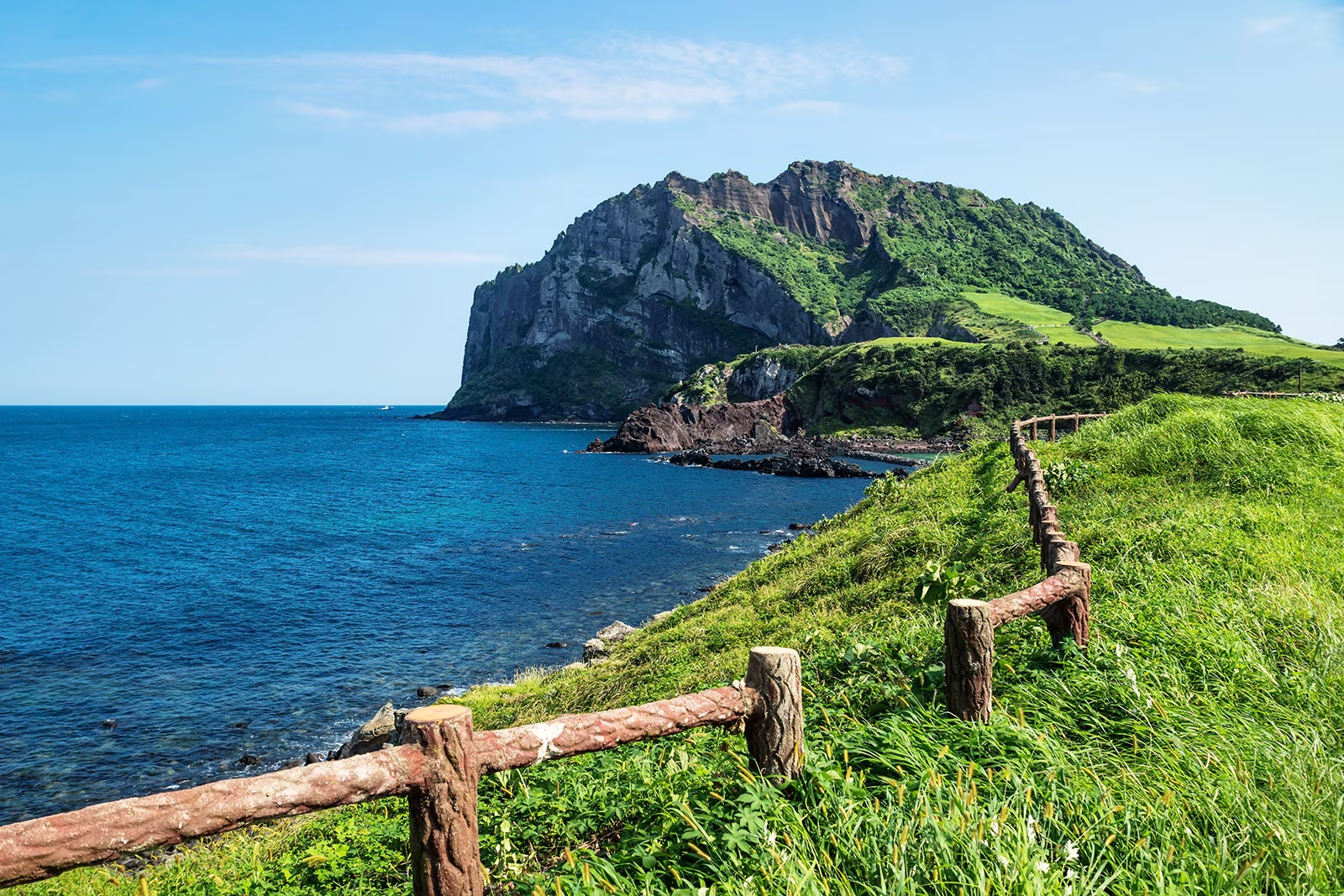
Jeju Island, affectionately known as the “Hawaii of Korea,” presents families with an enchanting landscape of volcanic wonders, serene beaches, and lush, green forests. Unlike the bustling mainland of South Korea, where intricate subway systems weave through cities like Seoul (for more on that, check out our guide on getting around Seoul with kids), Jeju operates without trains or subways. This means ground transportation is the sole way for families to explore its diverse and captivating attractions.
The island is quite compact, offering various transportation choices, but it’s important to remember that significant distances often separate popular sites. This makes strategic planning for family travel absolutely essential. When you’re traveling with children, practical considerations like securing a car seat, ensuring stroller accessibility on public transit, and understanding typical travel times become paramount. Jeju’s excellent road network makes self-driving a highly favored option, giving families the freedom to explore at their own pace. For those on a budget, the efficient bus system offers a reliable and cost-effective alternative. Ride-sharing apps and taxis provide convenient point-to-point travel, though finding a car seat through these services can be a real challenge. Ultimately, the best way of getting around Jeju Island with kids will depend on your specific itinerary, the ages of your children, and your family’s comfort level as you navigate everything from the vibrant urban centers of Jeju City and Seogwipo to the tranquil coastal roads and awe-inspiring volcanic formations.
Filter out the noise and find what works for your family.
Every resort we review gets one of four Family Fit ratings. The rating is based on kids programming, amenities, vibe, and who the resort actually markets to - not just whether they allow children.
Discover My Ideal Resort →Logistics at a Glance: Family Transport Options
Planning your family’s transportation on Jeju Island can feel like a big puzzle, but understanding the options available will help you pick the best fit. Each mode of transport comes with its own set of pros and cons, especially when you have little ones in tow. We’ve broken down the key factors to consider to help you make an informed decision for getting around Jeju Island with kids.
Rental Cars offer the highest flexibility, allowing you to go anywhere, anytime, a huge plus with unpredictable kids. The cost is medium to high, covering rental fees, gas, and parking, but the convenience for families with car seats, strollers, and luggage is generally very high. Korean law mandates car seats for children under 6, so you must reserve one in advance. Roads are excellent, and parking is usually available at attractions. Travel time is often the fastest for longer distances across the island.
Public Transit (Buses) provides moderate flexibility with fixed routes and schedules, but it’s very low cost, making it an excellent budget-friendly choice. Convenience with kids can be moderate; buses might get crowded, and you will likely need to fold your stroller. Car seats are not available on public buses, but children under 6 typically ride free. The bus network offers good coverage, with some low-floor buses for easier access, though travel times are slower due to stops and traffic.
Ride-Sharing (Kakao T Taxi) offers high flexibility with on-demand, point-to-point service, at a medium cost with metered fares and potential surge pricing. Convenience with kids is moderate to low due to the extreme difficulty in finding car seats and limited space for larger strollers. Car seats are extremely rare and not reliable to find through these services. The service is widely available via the Kakao T app, and travel times are fast for direct routes.
Walking is, of course, free and offers high convenience for short distances and scenic routes, especially with children who enjoy exploring on foot. However, its flexibility and accessibility are low, as it’s limited by terrain, distance, and the little legs of your travelers. This is best for exploring immediate vicinities or within a specific attraction.
The Transit Network: A Detailed Breakdown
Rental Cars
When you’re considering driving on Jeju Island, you’ll be happy to know that driving here is on the right side of the road, just like in mainland South Korea. The roads are generally well-maintained, providing a smooth journey, and you’ll find helpful signage often in both Korean and English, along with clear road markings. While traffic can get a bit heavy in Jeju City and Seogwipo during peak hours or holidays, it’s generally manageable. Parking is usually readily available at major tourist attractions, hotels, and resorts, though you might encounter fees in popular urban areas or at smaller, busy spots. Be prepared to pay for parking at some natural sites or beaches as well. To navigate like a local, we highly recommend using navigation apps such as Naver Maps or Kakao Maps.
For families, understanding car seat regulations is crucial. Korean law strictly mandates that children under 6 years old, or those under 135 cm tall, must be securely fastened in a car seat appropriate for their age and size. Reputable rental agencies like Lotte Rent-a-Car, SK Rent-a-Car, and Jeju Rental Car are widely available right at Jeju International Airport (CJU), and they all offer car seat rentals for an additional daily fee, typically ranging from 5,000-10,000 KRW. It’s incredibly important to reserve these car seats well in advance, especially if you’re traveling during peak season, as availability can be limited. Before you drive off, make sure you’re comfortable with installing the rented car seat correctly; a quick practice run at the rental counter can save you hassle later. For a comprehensive overview, consider our Ultimate Guide: Travel Car Seats for Kids to help you prepare.
Public Transportation
Jeju Island’s public transportation system is built around a comprehensive bus network, which is the island’s lifeline for those not renting a car. You’ll encounter different types of buses: Express Buses (easily identifiable by their red color) efficiently connect major cities and popular tourist sites with limited stops, making them ideal for covering longer distances. Intercity Buses (blue or green) serve local routes, weaving through towns and villages, perfect for exploring specific areas. Additionally, seasonal Tourist Shuttle Buses are often available, designed to connect visitors to popular routes during peak times. There are no metro or train systems here, so buses are your main public transit option. Payment is usually made with a T-Money card, a rechargeable smart card available at most convenience stores, or with cash. Using a T-Money card offers a slight discount on fares and allows for convenient transfers between buses, streamlining your travel experience.
When traveling with children, stroller accessibility on Jeju buses can vary. While you’ll increasingly find newer low-floor buses that are easier to board with a stroller, older models may require you to fold your stroller, especially when buses are crowded. We always recommend traveling with a compact, foldable stroller for maximum ease. Good news for families: children under 6 years old can typically ride free if they are accompanied by an adult and do not take up a separate seat. Kids aged 6-12 (elementary school) and youth aged 13-18 (middle/high school) are eligible for discounted fares, especially when using a T-Money card. While there aren’t specific “family passes” that offer bulk discounts beyond these individual child/youth benefits, the system is quite affordable. Bus stops are well-equipped with electronic displays indicating arrival times, and thankfully, these are often available in English, making planning your journey much simpler.
Taxis & Ride-Sharing
When it comes to hailing a ride or using a ride-sharing service on Jeju Island, the dominant app you’ll need is Kakao T. This app is ubiquitous across South Korea and allows you to call various types of taxis: standard taxis for everyday travel, larger K-VAN or Jumbo Taxis which are perfect for families with more luggage or a few extra passengers, and even premium black taxis for a more luxurious experience. It’s worth noting that Uber does not operate its standard private driver ride-sharing service in Jeju; instead, they partner with local taxi services, which means you’ll still be accessing a local taxi fleet, often through the Kakao T platform.
Here’s a crucial point for families: the likelihood of finding a taxi or ride-share with a child car seat via Kakao T or any standard taxi service in Jeju is extremely low. Taxis are simply not typically equipped with child car seats, and there’s no option within the app to request one. If car seats are a must-have for your family, your only reliable option is to pre-book a private transfer service. These services are often specialized for airport transfers or full-day tours and can explicitly guarantee a car seat if you arrange it in advance. For spontaneous street hails, taxis are generally safe, but using Kakao T provides an added layer of security by tracking your trip and providing driver details. Families traveling with infants or toddlers will likely find standard taxis less than ideal without bringing their own portable car seat. Planning ahead for car seats is truly the key to comfortable and safe taxi travel here.
Want a custom plan? Use our personalized Itinerary Generator for Jeju Island!
Your Arrival: Airport & Train Station Transfers
Your adventure on Jeju Island will begin at Jeju International Airport (CJU), which serves as the sole airport and primary entry point. Unlike mainland South Korea, there are no train stations on the island, so all your onward journeys will be by road.
When you land, you have a couple of top options for getting to your accommodation:
1. Fastest Option (Private Transfer/Taxi): For the quickest and most direct route, especially if you have tired little ones, a pre-booked private transfer or a readily available taxi from Jeju International Airport is your best bet. A standard taxi ride to central Jeju City typically takes about 15-20 minutes and costs around 10,000-15,000 KRW. If you need more space for luggage or a larger family, private transfer services like Jumbo Taxi or other van services are available. These can range from 30,000 KRW to 50,000+ KRW but offer the significant advantage of more room and the potential for pre-arranged car seats if you book with a specialized family transfer company. This option offers maximum convenience right after your flight, which can be a lifesaver, especially if you’ve had a long journey or arrived at one of the most child-friendly airports worldwide.
2. Convenient Public Option (Airport Limousine Bus / Express Bus 600): The Airport Limousine Bus (Route 600) is a comfortable and direct public transport choice, particularly if you’re heading towards the Jungmun Tourist Complex or Seogwipo City. A journey to Jungmun takes approximately 50 minutes and costs about 4,500 KRW per adult. For those staying in Jeju City, various local buses efficiently connect the airport to the city center and the Jeju Intercity Bus Terminal. These rides typically take about 20-30 minutes and cost around 1,300-2,000 KRW per adult when using a T-Money card. This is a very budget-friendly way of getting around Jeju Island with kids right from the start.
A 3-Day Transit-First Itinerary
Here’s a suggested 3-day itinerary focusing on efficient transit for families exploring Jeju Island.
Day 1: City Center Discovery (Focus: Walkability and central buses in Jeju City)
Morning: Begin your day by immersing yourselves in the vibrant atmosphere of Dongmun Market. This traditional market is a sensory delight with endless street food options and is very manageable for walking with kids. Afterwards, take a leisurely stroll through Tapdong Seaside Park, enjoying the ocean breeze and open space. It is a lovely way to ease into your Jeju adventure.
Afternoon: Head to Samseonghyeol Shrine, a historical site with easy walking paths that even younger children can enjoy. The ancient trees and peaceful grounds offer a quiet contrast to the market. For lunch, explore the famous Black Pork Street nearby, where you can savor Jeju’s specialty. This area is easily walkable and offers many dining options suitable for families.
Evening: Wind down your day with a relaxed evening stroll near the coast or in a local park. This provides a chance for kids to play and for the whole family to enjoy Jeju’s tranquil evenings. For transport throughout the day, you’ll primarily be walking within downtown Jeju City. For slightly longer distances within the city, local buses (like the blue or green lines) are readily available and efficient.
Day 2: Park & Play Adventure (Focus: Using local buses to reach green spaces and theme parks)
Morning: Start your day by taking an express bus (such as routes 101 or 102) to Jeju Stone Park. This vast outdoor museum is a fantastic place for kids to explore with its easily walkable paths, unique stone formations, and traditional Jeju village replicas. It’s an engaging blend of nature and culture that encourages active discovery.
Afternoon: From Jeju Stone Park, hop on another bus to Halla Arboretum. This beautiful botanical garden offers plenty of space for picnics and features playgrounds where children can burn off energy. It’s a wonderful natural escape where the kids can run free and enjoy the lush surroundings. Wearing comfortable footwear, like the best cushioned kids’ sneakers for family travel, will make these explorations even more enjoyable.
Evening: After a day of outdoor fun, take the bus back to your accommodations for a restful evening. Throughout Day 2, you will rely on Jeju’s extensive bus network, utilizing express and intercity routes to cover longer distances efficiently and comfortably.
Day 3: Day Trip Exploration (Focus: Regional bus or rental car for coastal exploration)
Option 1 (Bus-focused): Embark on an express bus journey (e.g., routes 111 or 112) along the picturesque eastern coast, heading towards Seongsan Ilchulbong Peak. This iconic UNESCO site offers a scenic hike and breathtaking views that are truly unforgettable. Afterwards, explore the charming nearby coastal village and try to catch the unique Haenyeo (female diver) show, a captivating cultural experience.
Option 2 (Rental Car recommended): For maximum flexibility and the freedom to make spontaneous stops, renting a car is highly recommended for today. Drive along the scenic coastal road towards the southwest. Your options could include visiting the beautiful Cheonjeyeon Waterfall, exploring the whimsical Teddy Bear Museum in the Jungmun Tourist Complex, or marveling at the unique columnar joint rock formations at Jusangjeolli Cliff. A rental car allows you to customize your day, stopping at various scenic points and attractions at your own pace, which is ideal for families with young children. While public buses are available for major attractions, a rental car offers unparalleled freedom for scenic coastal drives and multiple stops, making getting around Jeju Island with kids on this day much smoother.
Regional Excursions: Accessibility & Reach
Seongsan Ilchulbong Peak
Why: Seongsan Ilchulbong Peak, a designated UNESCO World Heritage site, is an iconic volcanic crater that promises breathtaking panoramic views of the ocean and the captivating surrounding landscape. The ascent to the peak is incredibly well-maintained with stairs, making it a manageable and rewarding hike for active children, especially those aged 6 and up, typically completed within an hour. For families with younger children, a comfortable carrier or frequent breaks might be necessary. Beyond the stunning views, the adjacent coastal area is home to daily Haenyeo (female diver) shows, offering a unique and authentic cultural experience that fascinates visitors of all ages.
How:
- Rental Car: Getting to Seongsan Ilchulbong Peak from Jeju City takes approximately 1 hour by car. You can follow Road 1132 (Iljudong-ro) or Road 1136 (Jungsangan-ro) eastward to reach this stunning location. You’ll find ample paid parking conveniently located at the entrance, ensuring a smooth start to your visit.
- Public Bus: For a budget-friendly option, take Express Bus 111, 112, or 113 from Jeju International Airport or the Jeju Intercity Bus Terminal. Alight at the “Seongsan Ilchulbong Entrance” bus stop. The bus journey takes a bit longer, typically ranging from 1 hour 30 minutes to 2 hours, but it’s a scenic and reliable way to get there.
Hallasan National Park (Eoseungsaengak Trail)
Why: Hallasan, standing majestically as South Korea’s highest mountain, offers a variety of trails, but the Eoseungsaengak Trail is particularly well-suited for families with children of all ages. From toddlers comfortably nestled in carriers to energetic school-age kids, this trail is a fantastic introduction to the park’s natural beauty. It’s a relatively easy 1.3 km (one-way) hike that typically takes about an hour round trip to reach the summit. On clear days, you’ll be rewarded with stunning views of Jeju City, the sparkling coastline, and the majestic peak of Hallasan itself. It’s a rewarding nature experience that feels adventurous without being overly strenuous, perfect for little legs and adventurous spirits. Don’t forget to pack the best hiking shoes for kids for this trek!
How:
- Rental Car: Driving from Jeju City to the Eoseungsaengak Entrance parking lot (located on 1100-ro, Jeju-si) takes approximately 30-40 minutes. Parking is conveniently available at the trailhead, making it an easy drive for families.
- Public Bus: From the Jeju Intercity Bus Terminal, you can take Express Bus 240 and get off at the “Eoseungsaengak Entrance” bus stop. The bus journey typically takes about 40-50 minutes, offering a scenic ride up the mountain.
Noteworthy Local Transport Experiences
While Jeju Island doesn’t boast unique public transport modes like urban ferries that serve as primary transport for getting around Jeju Island with kids, there’s one local transport experience that truly stands out for families: a ferry ride to Udo Island. This charming smaller island lies just off Jeju’s coast and makes for a delightful day trip.
The passenger ferry from Seongsan Port to Udo Island is a short, pleasant journey in itself, often sparking excitement in children as they glide across the water. Once you arrive on Udo, the adventure continues. Families can rent electric bicycles (adults often find models equipped with child seats for younger kids) or pedal carts, which are fantastic, recreational ways to explore the island’s scenic loop road. This offers a memorable and interactive way to take in Udo’s picturesque landscapes, from its beautiful beaches (where kids’ water shoes might come in handy!) to its charming villages, creating lasting family memories.
- Getting Around Seoul with Kids
- Ultimate Guide: Travel Car Seats for Kids
- Best Compact Airline-Friendly Strollers
- Most Child-Friendly Airports Worldwide
- Getting Around Vancouver with Kids: Family Transport Guide
- Seoul with Kids
- Family Travel Guides
- Best Cushioned Kids’ Sneakers for Family Travel
- Best Hiking Shoes for Kids
- Best Kids’ Water Shoes for Rocky Beaches Guide
- Wikivoyage page on Jeju Island
Plan a trip your kids will actually enjoy.
Answer a few quick questions and get a free, personalized itinerary tailored to your destination and your children’s ages. No account required — your custom plan is ready in moments.
Filter out the noise and find what works for your family.
Every resort we review gets one of four Family Fit ratings. The rating is based on kids programming, amenities, vibe, and who the resort actually markets to - not just whether they allow children.
Discover My Ideal Resort →
![Ultimate Guide to [destination] Copenhagen](https://kiddometer.com/wp-content/uploads/2026/02/Ultimate-Guide-to-destination-pic-34-400x225.jpg)